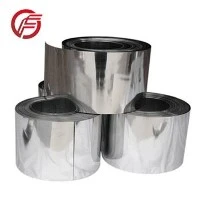

What is the hardness of nickel foil?
As a reliable nickel foil supplier, I am constantly asked about the various properties of nickel foil, with hardness being a frequently queried aspect. In this blog post, I will delve into the topic of the hardness of nickel foil, exploring what it means, how it is measured, and the factors that influence it.
Understanding Hardness in the Context of Nickel Foil
Hardness is a fundamental material property that refers to a material's resistance to local deformation, such as indentation, scratching, or abrasion. In the case of nickel foil, hardness plays a crucial role in determining its performance in different applications. For instance, in battery applications, a certain level of hardness is required to ensure that the Nickel Strip for Batteries can withstand the mechanical stresses during the battery assembly process and operation without being easily damaged.
Measuring the Hardness of Nickel Foil
There are several methods to measure the hardness of materials, and for nickel foil, the most commonly used methods are the Vickers hardness test and the Rockwell hardness test.
The Vickers hardness test involves applying a known load to a diamond indenter with a square - based pyramidal shape. The indenter is pressed into the surface of the nickel foil for a specified period, and the size of the indentation left on the surface is measured. The Vickers hardness number (HV) is then calculated based on the applied load and the surface area of the indentation. This method is highly accurate and can be used for a wide range of hardness values.
The Rockwell hardness test, on the other hand, measures the depth of penetration of an indenter under a minor load followed by a major load. The difference in penetration depth between the two loads is used to determine the Rockwell hardness number. There are different scales in the Rockwell hardness test (e.g., Rockwell B and Rockwell C), and the choice of scale depends on the expected hardness of the nickel foil.
Factors Influencing the Hardness of Nickel Foil
Purity
The purity of nickel foil has a significant impact on its hardness. High - purity nickel foils, such as the ASTMB162 High Purity Micro Nickel Foil, tend to have lower hardness compared to those with impurities. Impurities can act as obstacles to the movement of dislocations within the nickel crystal structure, increasing the material's resistance to deformation and thus raising its hardness.
Cold Working
Cold working is a process where the nickel foil is deformed at room temperature, typically through rolling or drawing. This process introduces dislocations into the crystal structure, which interact with each other and impede further deformation. As a result, cold - worked nickel foil has a higher hardness than annealed (softened) nickel foil. For example, the ASTM B162 JIS H4550 Nickel 200 Foil can be cold - worked to achieve different levels of hardness according to specific application requirements.
Heat Treatment
Heat treatment can be used to modify the hardness of nickel foil. Annealing is a common heat-treatment process that involves heating the nickel foil to a specific temperature and then slowly cooling it. This process allows the dislocations in the crystal structure to rearrange and reduce in number, resulting in a softer and more ductile material. On the other hand, other heat-treatment processes like precipitation hardening can increase the hardness of the nickel foil by forming fine particles within the crystal structure that impede dislocation movement.
Alloying
Alloying nickel with other elements can also significantly change its hardness. For example, adding elements like chromium, molybdenum, or copper to nickel can form nickel - based alloys with enhanced hardness and other mechanical properties. The Nickel 201 Strip ASTM B162 contains a small amount of additional elements compared to pure nickel, which can affect its hardness and make it more suitable for certain applications.
Impact of Hardness on Applications
The hardness of nickel foil can have a profound impact on its performance in various applications:
Battery Industry
In the battery industry, nickel foil is widely used as an electrode material or a current collector. The hardness of the Nickel Strip for Batteries affects its formability, weldability, and durability. A foil with the right hardness is easy to cut, form into the required shape, and weld to other components without cracking or deforming excessively. At the same time, it must be hard enough to resist mechanical damage during battery cycling and handling.


Electronic Industry
In electronics, nickel foil may be used for shielding, circuit boards, or in other components. The hardness of the foil determines its ability to maintain its shape during the manufacturing process and its resistance to wear and tear during use. For high - precision electronic applications, a consistent and appropriate hardness is essential to ensure reliable performance.
Aerospace and Automotive Industries
In the aerospace and automotive industries, nickel foil may be used in various components such as sensors, connectors, or heat exchangers. The demanding operating conditions in these industries, including high temperatures, vibrations, and mechanical stresses, require nickel foil with the right hardness to ensure long - term reliability and performance.
Our Offerings as a Nickel Foil Supplier
As a supplier of nickel foil, we understand the importance of hardness in different applications. We offer a wide range of nickel foil products, including N02201 N02200 Pure Nickel Foil, with varying levels of hardness to meet the diverse needs of our customers. Our products are manufactured to strict quality standards, and we can provide detailed hardness specifications and test reports for each batch of nickel foil.
Whether you need soft nickel foil for easy forming or hard - worked nickel foil for high - stress applications, we have the expertise and capabilities to supply the right product. Our team of technical experts can also provide advice and support on selecting the most suitable nickel foil based on your specific hardness requirements.
Conclusion
The hardness of nickel foil is a critical property that is influenced by factors such as purity, cold working, heat treatment, and alloying. Understanding the hardness and its impact on different applications is essential for choosing the right nickel foil for your needs. As a trusted nickel foil supplier, we are committed to providing high - quality products with the appropriate hardness and other properties to meet your specific application requirements.
If you are interested in purchasing nickel foil or have any questions about its hardness or other properties, please feel free to contact us. We are ready to engage in in - depth discussions and provide you with customized solutions to meet your procurement needs.
References
- Callister, W. D., & Rethwisch, D. G. (2018). Materials Science and Engineering: An Introduction. Wiley.
- ASM Handbook Committee. (2000). ASM Handbook Volume 8: Mechanical Testing and Evaluation. ASM International.