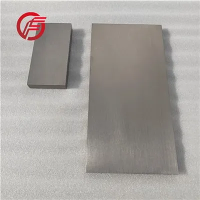

If you've ever worked with niobium-whether in aerospace components, high-purity electronics, or medical devices-you know its exceptional properties: excellent corrosion resistance, high melting point, and unique superconducting characteristics. But even a premium material like pure niobium sheet, specified to standards like ASTM B393 UNS R04200 R04210 Pure Niobium, can fall short of its full potential if its plate surface is dull, uneven, or marred by tiny imperfections. As a niobium plate supplier that's supported manufacturers and researchers for over a decade, I've seen firsthand how proper polishing transforms a good niobium part into a great one-boosting its performance, longevity, and reliability. Polishing niobium isn't just about making it look shiny; it's a precise process that balances science, technique, and patience to preserve the metal's inherent strengths while refining its surface.
Before we dive into the how-to, it's worth pausing to understand why niobium polishing is so critical. Unlike metals like aluminum or steel, niobium forms a thin, stubborn oxide layer naturally when exposed to air-this layer is what gives it its corrosion resistance, but it also interferes with adhesion for coatings, electrical conductivity for superconducting parts, and even biocompatibility for implants. A poorly polished niobium plate might have a rough, inconsistent oxide layer that leads to uneven coating peeling, reduced superconducting efficiency, or irritation in medical applications. That's why every step of the process-from prepping the plate to the final polish-needs to be tailored specifically to niobium, not a one-size-fits-all metal polishing approach. If you're working with certified pure niobium, like the ASTM B393 UNS R04200 R04210 Pure Niobium sheet we supply, it's especially important to avoid techniques that can introduce contamination or damage its fine grain structure.

First, you need to prepare your niobium plate for polishing-and this step is make-or-break. Skipping prepping or doing it haphazardly will lead to scratches, uneven polish, or even warping in the final result. Let's break it down: start by inspecting the plate for any surface defects from manufacturing-like rolling marks, light oxidation, or handling scratches. For raw niobium plate straight from production, we always recommend a degreasing step first, because oils, coolant residues, or even light fingerprints can act as barriers to effective polishing. To degrease niobium, use a mild alkaline cleaner-avoid harsh acids here, as they can etch the surface unevenly-and apply it with a lint-free cloth, or immerse the plate in a heated (120–150°F/49–66°C) cleaner bath for 5–10 minutes. Rinse thoroughly with deionized water, then dry immediately with compressed air (low-pressure, filtered air to avoid introducing dust particles) to prevent water spots.
Next, if your plate has deeper scratches or significant oxidation, you'll need to do a mechanical grinding step. This isn't sanding-for niobium, we use a progressive grit approach to avoid leaving deep scratches that will be impossible to remove later. Start with a medium-grit, non-ferrous abrasive (80–120 grit) mounted on a flexible backer pad, applied at a low speed (1,000–1,500 RPM) to avoid overheating the plate. Overheating is a big risk with niobium; it can cause the surface to discolor (turning a faint blue or gray) and even alter its grain structure, ruining the material's properties. Always keep the plate cool-you can do this by spraying it with a mist of deionized water during grinding to keep the temperature below 200°F/93°C. Once the surface is free of deep scratches, move to a finer grit (320–400 grit) and repeat, maintaining the same low speed and cooling. After grinding, you'll need to perform a "deburring" step by gently brushing the edges with a nylon bristle brush dipped in a mild polishing compound to remove any sharp burrs that could scratch the plate during subsequent steps.
Now we move to the actual polishing stage, which is where niobium's unique properties really require careful handling. There are two main polishing methods for niobium: mechanical polishing for general purposes and electrochemical polishing for higher precision, which is ideal for applications like superconducting RF cavities or medical implants. Let's start with mechanical polishing, which is more accessible for small to medium-scale projects. For mechanical polishing, you'll need a polishing wheel (felt or canvas works best for niobium) and a polishing compound formulated for refractory metals like niobium-avoid compounds for softer metals like aluminum, as they don't cut effectively. Start with a medium polish (like 1200-grit aluminum oxide) applied thinly to the wheel, using moderate pressure and a speed of 1,800–2,200 RPM. Move the plate in a consistent, circular motion, overlapping each pass by at least 50% to ensure even coverage. Don't press too hard-this can cause the polishing wheel to dig into the niobium surface, creating fine, deep scratches that will take forever to remove. Keep the plate cool with deionized water mist, just like during grinding, to prevent overheating and oxidation. After the medium polish, switch to a fine polish (3000-grit silicon carbide) and repeat the process, this time at a slightly higher speed (2,000–2,500 RPM) to create a smoother finish. Once you're happy with the mechanical polish, clean the plate again with deionized water and compressed air to remove all polishing compound residue-any leftover grit will ruin the final step.
For applications where extreme surface uniformity and a mirror-like finish are non-negotiable-like superconducting niobium cavities used in particle accelerators or high-precision medical implants-electrochemical polishing (ECP) is the gold standard. Unlike mechanical polishing, which works by physically removing material, ECP dissolves tiny, uneven surface peaks in a controlled way, resulting in a flawless, stress-free surface that preserves niobium's purity. The ECP process requires a specialized bath, typically a mix of phosphoric and sulfuric acids at a controlled temperature (120–140°F/49–60°C), and a power source that applies a precise voltage (8–12 volts, depending on the niobium grade) between the plate (anode) and a cathode. The key here is to ensure uniform current distribution-so you'll need to mount the plate securely and avoid any contact with other materials during the process. ECP typically takes 5–15 minutes, depending on the desired finish; check the surface periodically to avoid over-etching, which can create a matte, pitted surface instead of a mirror. After ECP, the plate must be rinsed repeatedly in deionized water to remove all acid residue, then soaked in a mild neutralizing solution (like sodium bicarbonate) to ensure no acids remain on the surface. This is a critical step because leftover acids can cause corrosion over time, especially in high-performance niobium parts.
No matter which polishing method you use, there's a final step that can make or break the longevity of your polished niobium plate: passivation. As I mentioned earlier, niobium forms a natural oxide layer, but polishing can disrupt this layer or leave behind microscopic contaminants that weaken it. Passivation restores and strengthens the oxide layer, making the plate more resistant to corrosion. To passivate, immerse the polished plate in a 10–15% nitric acid solution heated to 120°F/49°C for 15–20 minutes. Rinse thoroughly with deionized water and dry with filtered compressed air-again, avoid contact with dirty surfaces or tools after passivation, as even a tiny bit of oil or dust will compromise the finish.
Now, let's talk about common mistakes I see people (even some experienced manufacturers) make when polishing niobium, because avoiding these can save you hours of work and a ruined plate. First, using generic polishing compounds for other metals-aluminum oxide for steel isn't the same as a niobium-specific compound, and it can leave residual particles embedded in the niobium surface, leading to corrosion. Second, overheating the plate during polishing-niobium's melting point is over 4,000°F, but even lower temperatures can alter its grain structure, making the surface brittle or less conductive. Third, skipping degreasing or cleaning steps-oil and residue under polishing compound will scratch the surface and make it impossible to get a uniform finish. Fourth, using too much pressure-mechanical polishing should be a gentle cutting process, not a sanding process that forces material off the plate too quickly.
If you're sourcing niobium plate for polishing projects, working with a reputable supplier that provides certified material is key. The ASTM B393 standard (the specification that covers ASTM B393 UNS R04200 R04210 Pure Niobium sheet) ensures that your niobium has consistent purity, grain structure, and mechanical properties-which makes polishing more predictable and reliable. At our company, we supply niobium plates that meet this exact standard, with strict quality control checks to ensure no defects are present that would add extra steps to your polishing process. We also provide technical support to clients, whether they're polishing a small batch for a research project or a large order for aerospace components.
Whether you're polishing niobium for an aerospace turbine component, a superconducting magnet, a medical implant, or an electronics part, the process boils down to patience and attention to niobium's unique characteristics. You don't need fancy equipment-basic polishing tools and a focus on technique will get you a great result, but for high-precision applications, investing in electrochemical polishing is worth the cost. The final polish not only improves the look of the plate but also enhances its performance, lifespan, and ability to meet the strict requirements of your application.
If you're ready to source high-quality niobium plate for your polishing project, or you have questions about the process, feel free to reach out to discuss your specific needs. We're here to help you get the most out of your niobium material, from supply to final surface refinement.
References
ASTM International. (2022). Standard Specification for Niobium and Niobium Alloy Sheet, Plate, and Strip (B393). ASTM International.
Bennett, J. E. (2018). Polishing Techniques for Refractory Metals. Journal of Materials Processing Technology, 255, 412–421.
Smith, L. K. (2020). Electrochemical Polishing of Pure Niobium for Superconducting Applications. Nuclear Instruments and Methods in Physics Research Section A: Accelerators, Spectrometers, Detectors and Associated Equipment, 952, 162875.