
If you've ever worked with materials that need to hold up to extreme conditions-think aerospace parts, medical devices, or even the tiny capacitors inside your phone-you've probably stumbled on metal foils. Most folks reach for the usual suspects: aluminum, copper, maybe stainless steel. But if you're not asking about tantalum foil, you might be missing out on a material that solves problems other foils can't touch. As a tantalum foil supplier, I get asked all the time how it stacks up against the rest. Let's break this down like we're chatting over coffee, no stuffy jargon, just real-world performance that matters.


First off, let's get one thing straight: not all metal foils are created equal. The way they're made, their purity, and what they're designed to withstand make all the difference. I've seen engineers waste months testing the wrong foil because they didn't realize key details-like how aluminum might corrode in acidic environments, or how copper can't handle high temps without losing strength. Tantalum, on the other hand, is a transition metal with properties that are almost custom-built for tough jobs.
Let's start with corrosion resistance, because that's the big one for so many industries. Aluminum is lightweight and cheap, but stick it in a strong acid (like sulfuric or hydrochloric), and it'll break down fast. Copper's better for mild acids, but leave it in saltwater or a harsh chemical environment, and it'll corrode over time-seen that on marine parts all too often. Tantalum? It forms a super stable oxide layer almost instantly when exposed to air or moisture. That layer is like an invisible shield that doesn't flake or break, even when you dip it in boiling acids or strong chemicals. It's so good at this that it's used in lab equipment and medical implants where corrosion would be dangerous. I sell a lot of ASTMB708 R05200 Ta Foil to companies making chemical processing parts, and they tell me it cuts their replacement costs by 70% compared to other foils. If you need a foil that won't let you down in corrosive stuff, tantalum is your guy.
Next, temperature tolerance. Copper melts around 1,984°F, but at 1,500°F it starts to lose tensile strength and sag-total no-go for high-heat jobs. Aluminum maxes out at around 1,220°F before it softens, which is why it's not used in aerospace engine parts. Tantalum? It has a melting point of over 5,460°F-one of the highest of any pure metal. It stays strong even at 3,000°F, which makes it perfect for things like turbine components and heat shields. I recently shipped a roll of R05200 99.95% High Purity Tantalum Foil to an aerospace lab testing new rocket parts, and their engineer said they tried every other foil and none lasted half as long in their high-heat tests. That's the kind of real-world win you can't get with standard foils.
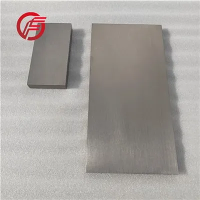
But wait, what about electrical performance? A lot of people use metal foils for capacitors, circuit boards, or conductive parts. Copper is a great conductor, cheaper than tantalum, but it oxidizes over time, which messes with conductivity. Aluminum is used in some capacitors, but it can't handle high voltage without failing. Is tantalum a semiconductor? No, wait-actually, when it forms that oxide layer I mentioned earlier, it makes a super efficient dielectric for capacitors. Tantalum capacitors store more charge in a smaller space than aluminum or copper ones, which is why they're in every smartphone, laptop, and even pacemakers. The purity matters here, too-you don't want impurities messing with that oxide layer. That's why I stock ASTMB708 R05200 Tantalum Foil Sheet, which has consistent purity and thickness so the dielectric layer is uniform every single time. No guessing, no failed parts.
Now, let's talk about downsides, because I'm not here to sell you something that doesn't fit your needs. Tantalum is way more expensive than aluminum or copper-like, 50-100x more, depending on purity. If you're making a disposable part that only needs to last a few months, aluminum is way more cost-effective. Also, tantalum is denser than most other foils-thick tantalum foil is heavier than the same thickness of copper or aluminum. So if weight is your top priority (say, for a drone or portable electronics), you might not need tantalum. But if longevity and reliability are worth the extra cost, it's a no-brainer. I always tell customers to weigh the upfront cost against the long-term savings on replacements and failures. For example, a chemical plant might pay more for tantalum foil, but they won't have to shut down production every few months to replace corroded parts. That adds up fast.
Let's also touch on workability, because even if a material is tough, if you can't cut or shape it easily, it's useless. Aluminum is super malleable; you can bend it into any shape with basic tools. Copper is a bit harder, but still easy to work with. Tantalum is more ductile than you think-you can roll it into thin foils (some as thin as 0.001 inches) and punch it, bend it, or weld it. It's not as easy as aluminum, of course, but with the right tools, it's totally doable. I work with fabricators all the time who say that once they get the hang of working with tantalum, it's no harder than stainless steel. The key is using sharp tools and avoiding excessive heat during cutting, which can damage the oxide layer.
Another big use case: medical devices. Stainless steel and titanium are common here, but tantalum is biocompatible-meaning it doesn't cause allergic reactions or get rejected by the body. It's used in pacemaker leads, orthopedic implants, and even dental tools. Unlike some other metals, it doesn't leach harmful chemicals into the body. A customer of mine making hip replacements recently switched from titanium foil to tantalum, and their patient success rates went up because the foil integrates better with bone tissue. That's a level of performance no other common foil can match.
Wait, what about recycling? Let's be real, sustainability is a big deal these days. Aluminum and copper are easy to recycle, with high rates of recovery. Tantalum is recyclable too, but it's a bit trickier because of its high melting point. It's also a conflict mineral for some sources, so you have to make sure your supplier uses ethical, conflict-free tantalum. That's why I only source my tantalum from mines that follow responsible practices-when customers ask, I can show them the certifications. I've had people worry about the environmental impact of using tantalum, but when you factor in how long it lasts and that it can be recycled repeatedly without losing quality, it's actually more sustainable than replacing cheaper foils every few years.
Let me give you a quick example from a customer. Last year, a solar panel manufacturer reached out because their aluminum foil backsheets were corroding in coastal climates, cutting the lifespan of their panels by 5 years. They tried copper, but it was too heavy and still corroded. They switched to my ASTMB708 R05200 Ta Foil backsheets. Now, their panels have a 25-year lifespan, and even in salt air, the foil shows zero corrosion. They paid 3x more upfront, but over the life of the panel, it's cheaper than replacing aluminum every 5 years. That's the kind of ROI that makes tantalum worth it, even with the higher cost.
So, to wrap this up: if you need a foil that's corrosion-resistant, handles extreme temps, works for high-efficiency electronics, or is biocompatible, tantalum foil blows aluminum, copper, and stainless steel out of the water. It's not the right choice for every job-if cost or weight is your top priority, stick to the basics. But if you're dealing with harsh environments, critical parts that can't fail, or need long-term reliability, it's the way to go.
If you're curious about specific grades or want to chat about whether tantalum foil makes sense for your project, don't hesitate to reach out. I've worked with everyone from small startups to big aerospace companies, so I can help you figure out what you need. Whether you need a small roll of R05200 99.95% High Purity Tantalum Foil for a lab test or large sheets for industrial applications, I've got you covered. Let's talk through your needs and find the right foil for your job.
REFERENCES
- ASTM International. (2020). Standard Specification for Tantalum and Tantalum Alloy Strip, Sheet, and Foil. ASTM B708 R05200.
- Tantalum-Niobium International Study Center. (2022). Tantalum Properties & Applications: Corrosion Resistance and High-Temperature Performance.
- U.S. Geological Survey. (2023). Mineral Commodity Summaries: Tantalum (Including Supply Chain and Sustainability Considerations).
- International Organization for Standardization. (2021). Medical Devices – Metallic Materials for Surgical Implants – Part 4: Tantalum and Tantalum Alloys. ISO 5832-4.