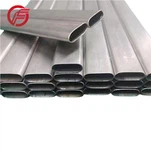


Hot rolling and cold rolling are two key methods in titanium processing, with significant differences in processing temperatures, processes, and properties of the resulting products.
Hot-rolled titanium plates are mainly performed at high temperatures and are often used to produce thick plates and sections. This method can improve the plasticity of metal, reduce deformation resistance, improve production efficiency, reduce costs, and improve the processing performance of metal. However, the surface of hot-rolled products is rough, and the dimensional accuracy may not be high enough due to shrinkage during cooling. In addition, it is difficult to accurately control the mechanical properties of the product during hot rolling and may cause internal non-metallic inclusions to be pressed into thin sheets, forming a delamination phenomenon that affects the performance of the steel.

In contrast, cold-rolled titanium sheets are processed at room temperature, usually as a result of further processing of hot-rolled products. Cold rolling can improve the mechanical properties and dimensional accuracy of the material, and the product surface is smooth. However, cold rolling may cause cold work hardening of the material, resulting in a decrease in stamping performance, its strength and hardness are usually higher than hot-rolled products, but its toughness is poorer.

Specifically, the main differences between the two are:
Forming and performance: Hot rolling can destroy the casting structure of titanium ingots, refine the steel grains, and improve mechanical properties. Cold rolling causes large plastic deformation of titanium materials through cold working and increases the yield point. However, the cross-section form of cold-rolled profiles is mostly open, with low free torsional stiffness and poor torsion resistance.
Residual stress: The residual stress of hot-rolled profiles is mainly caused by uneven cooling, while the residual stress of cold-rolled profiles is related to the cold working process. The residual stress distribution forms of the two are also very different. The residual stress of hot-rolled profiles is film type, while the residual stress of cold-rolled profiles is bending type.

Sectional buckling: Cold-rolled profiles allow local buckling of the section to utilize the bearing capacity after buckling; while hot-rolled profiles do not allow local buckling of the section.
To sum up, hot-rolled and cold-rolled titanium plates have their characteristics, and which processing method to choose depends on the specific product needs and application scenarios.

Tel: +86-0917- 3664600
Whatsapp: +8618791798690