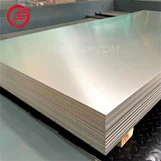

The fatigue life of titanium (Ti) foil is a critical parameter that significantly impacts its performance and application scope. As a reliable Ti foil supplier, we understand the importance of this characteristic and are committed to providing in - depth knowledge about it to our customers.
Understanding Fatigue in Ti Foil
Fatigue refers to the progressive and localized structural damage that occurs when a material is subjected to cyclic loading. In the case of Ti foil, cyclic loads can result from various factors such as mechanical vibrations, thermal cycling, or repeated stress applications in service. When these cyclic loads are applied, microscopic cracks start to initiate at stress - concentrated areas within the Ti foil. Over time, these cracks propagate, and eventually, the foil may fail completely.
The fatigue life of Ti foil is defined as the number of stress cycles that the foil can endure before it fails under a specific cyclic loading condition. This life is influenced by multiple factors, including the chemical composition of the titanium, its microstructure, the amplitude and frequency of the cyclic load, and the environmental conditions in which it operates.
Factors Affecting the Fatigue Life of Ti Foil
Chemical Composition
The purity and alloying elements in Ti foil play a crucial role in determining its fatigue life. Pure titanium generally has good corrosion resistance and a certain level of fatigue performance. However, when specific alloying elements are added, the fatigue properties can be significantly altered. For example, the addition of elements like aluminum and vanadium in Ti - 6Al - 4V alloy can enhance its strength and fatigue resistance compared to pure titanium. These alloying elements can refine the grain structure and improve the overall mechanical properties of the foil, thus increasing its ability to withstand cyclic loads.
Microstructure
The microstructure of Ti foil, such as grain size, grain orientation, and the presence of phases, has a direct impact on its fatigue life. A fine - grained microstructure usually provides better fatigue resistance because it can impede the propagation of cracks. The orientation of the grains also matters. If the grains are oriented in a way that aligns with the direction of the cyclic stress, the foil may have better fatigue performance. Additionally, the presence of secondary phases in the microstructure can either enhance or degrade the fatigue properties depending on their nature and distribution.
Cyclic Loading Conditions
The amplitude and frequency of the cyclic load are key factors affecting the fatigue life of Ti foil. A higher stress amplitude will generally lead to a shorter fatigue life. As the stress amplitude increases, the rate of crack initiation and propagation accelerates. The frequency of the cyclic load also has an influence. At very high frequencies, the material may experience more heat generation due to internal friction, which can affect its mechanical properties and potentially reduce the fatigue life. On the other hand, low - frequency cyclic loads may allow more time for crack growth and can also lead to premature failure.
Environmental Conditions
The environment in which the Ti foil operates can have a significant impact on its fatigue life. Corrosive environments, such as those containing saltwater or acidic solutions, can cause corrosion of the foil surface. Corrosion can create pits and notches on the surface, which act as stress - concentration points and accelerate crack initiation. High - temperature environments can also affect the fatigue properties of Ti foil. At elevated temperatures, the material may experience creep, which can interact with fatigue and reduce the overall fatigue life.
Measuring the Fatigue Life of Ti Foil
To determine the fatigue life of Ti foil, various testing methods are employed. One of the most common methods is the rotating - beam fatigue test. In this test, a specimen of the Ti foil is rotated while a constant bending stress is applied. The number of rotations until failure is recorded, and this data is used to estimate the fatigue life of the foil under the specific test conditions.
Another method is the axial fatigue test, where the specimen is subjected to cyclic axial tension or compression. This test can simulate real - world loading conditions more accurately in some applications. The test results are usually presented in the form of an S - N curve, which shows the relationship between the stress amplitude (S) and the number of cycles to failure (N).
Applications and the Importance of Fatigue Life
Ti foil has a wide range of applications in different industries, and the fatigue life is of utmost importance in each of these applications.


In the aerospace industry, Ti foil is used in components such as aircraft wings, engine parts, and fasteners. These components are subjected to cyclic loads during flight, including vibrations from the engine and aerodynamic forces. A long fatigue life is essential to ensure the safety and reliability of the aircraft. For example, if a Ti foil used in an engine component fails due to fatigue, it can lead to catastrophic consequences.
In the medical field, Ti foil is used in implants such as dental implants and orthopedic plates. These implants are subjected to cyclic loads from the normal movement of the human body. A sufficient fatigue life is necessary to ensure that the implants can function properly over an extended period without failure.
In the electronics industry, Ti foil is used in flexible printed circuit boards and battery components. The cyclic bending and flexing during the normal use of electronic devices require the Ti foil to have a good fatigue life to maintain its electrical and mechanical properties.
Our Offerings as a Ti Foil Supplier
As a leading Ti foil supplier, we offer a wide range of Ti foils with different chemical compositions, thicknesses, and surface finishes to meet the diverse needs of our customers. We ensure that our Ti foils have excellent fatigue properties through strict quality control measures.
We use advanced manufacturing processes to produce Ti foils with a fine - grained and uniform microstructure, which enhances their fatigue resistance. Our quality control team conducts comprehensive fatigue tests on each batch of Ti foil to ensure that it meets the specified fatigue life requirements.
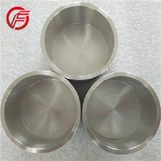
In addition to Ti foil, we also provide related products such as ANSI/ASME B16.5 Grade2 Weld Neck Titanium Flange, Tungsten Crucible, and ASTM B493 ASTMB550 R60702 Pure Zirconium Rod. These products are of high quality and can be used in conjunction with Ti foil in various applications.
Conclusion
The fatigue life of Ti foil is a complex but crucial characteristic that depends on multiple factors. Understanding these factors and accurately measuring the fatigue life is essential for ensuring the proper application of Ti foil in different industries. As a Ti foil supplier, we are dedicated to providing high - quality Ti foils with excellent fatigue properties to our customers.
If you are interested in our Ti foil products or have any questions about the fatigue life and application of Ti foil, please feel free to contact us for procurement and further discussion. We are committed to providing you with the best solutions and services.
References
- Dieter, G. E. (1986). Mechanical Metallurgy. McGraw - Hill.
- Suresh, S. (1998). Fatigue of Materials. Cambridge University Press.
-ASM Handbook Volume 13C: Corrosion: Materials. ASM International.