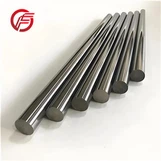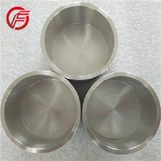

Titanium, a remarkable transition metal, has been a cornerstone in various industries due to its unique properties such as high strength - to - weight ratio, excellent corrosion resistance, and biocompatibility. In addition to these well - known applications, titanium also plays a crucial role in catalysis. As a titanium supplier, I am excited to delve into the catalytic applications of titanium and how it can benefit different sectors.


Titanium in Heterogeneous Catalysis
Heterogeneous catalysis involves a catalyst in a different phase from the reactants. Titanium - based catalysts are widely used in this field. One of the most well - known titanium - containing catalysts is titanium dioxide ($TiO_2$).
Photocatalysis
$TiO_2$ is a prime example of a photocatalyst. When exposed to ultraviolet (UV) light, $TiO_2$ can generate electron - hole pairs. These electron - hole pairs can react with water and oxygen in the environment to produce highly reactive hydroxyl radicals ($\cdot OH$) and superoxide anions ($O_2^-$). These reactive species are powerful oxidants that can break down organic pollutants in air and water.
For instance, in air purification systems, $TiO_2$ - based photocatalysts can be used to degrade volatile organic compounds (VOCs) such as formaldehyde, benzene, and toluene. In water treatment, they can be employed to remove pesticides, dyes, and other organic contaminants. The use of $TiO_2$ in photocatalysis is not only effective but also environmentally friendly as it uses sunlight as an energy source.
Olefin Polymerization
Titanium - based catalysts are also essential in the polymerization of olefins. The Ziegler - Natta catalysts, which typically contain titanium compounds, are widely used in the production of polyolefins such as polyethylene and polypropylene. These catalysts allow for the controlled polymerization of olefins, resulting in polymers with specific molecular weights and structures.
The use of titanium - based Ziegler - Natta catalysts has revolutionized the plastics industry, enabling the large - scale production of high - quality polyolefins with a wide range of applications, from packaging materials to automotive parts.
Titanium in Homogeneous Catalysis
Homogeneous catalysis occurs when the catalyst and the reactants are in the same phase. Titanium complexes can act as homogeneous catalysts in several reactions.
Epoxidation Reactions
Titanium complexes, such as titanium(IV) alkoxides, are effective catalysts for the epoxidation of alkenes. Epoxides are important intermediates in the synthesis of pharmaceuticals, polymers, and other fine chemicals. The titanium - catalyzed epoxidation reaction is highly selective and can be carried out under mild conditions.
For example, the Sharpless epoxidation, which uses a titanium(IV) tartrate complex as a catalyst, is a well - known method for the enantioselective epoxidation of allylic alcohols. This reaction has been widely used in the synthesis of chiral compounds, which are important in the pharmaceutical industry.
Titanium in Electro - catalysis
Electro - catalysis is an important area of research for energy conversion and storage. Titanium - based materials can be used as electro - catalysts in fuel cells and water electrolysis.
Fuel Cells
In proton - exchange membrane fuel cells (PEMFCs), titanium can be used as a support material for platinum - based catalysts. Titanium has good chemical stability and electrical conductivity, which can improve the performance and durability of the fuel cell catalysts. Additionally, titanium - based catalysts can be used in the oxygen reduction reaction (ORR) and the hydrogen oxidation reaction (HOR), which are crucial reactions in fuel cells.
Water Electrolysis
Titanium - based electrodes are also used in water electrolysis, which is a process for producing hydrogen and oxygen from water. Titanium anodes coated with ruthenium and iridium oxides are commonly used in industrial water electrolysis due to their high catalytic activity and corrosion resistance.
Our Titanium Products for Catalytic Applications
As a titanium supplier, we offer a wide range of titanium products that can be used in catalytic applications.
- ASTMB265 3.7105 UNS R53400 Gr12 Titanium Sheet: This high - quality titanium sheet is suitable for various catalytic applications. Its excellent corrosion resistance and mechanical properties make it a great choice for constructing catalytic reactors and other equipment. You can find more information about this product here.
- PVD Metal Target 99.9% Titanium Plate Targets: These titanium plate targets are used in physical vapor deposition (PVD) processes to deposit titanium - based thin films, which can be used as catalysts or catalyst supports. The high purity of these targets ensures the quality of the deposited films. Check out our PVD metal targets here.
- Lightweight corrosion - resistant Gr2 Titanium Rectangular Tube: This titanium tube is ideal for transporting reactants and products in catalytic processes. Its lightweight nature and corrosion resistance make it a practical choice for various catalytic systems. More details about this product can be found here.
Conclusion
Titanium's catalytic applications are diverse and far - reaching, spanning from environmental protection to the production of high - value chemicals and energy conversion. As a titanium supplier, we are committed to providing high - quality titanium products to support these catalytic applications. Whether you are involved in research, development, or large - scale production, our titanium products can meet your needs.
If you are interested in our titanium products for catalytic applications, we encourage you to reach out to us for more information and to discuss your specific requirements. We look forward to the opportunity to collaborate with you and contribute to your catalytic projects.
References
- Bockris, J. O'M., & Reddy, A. K. N. (1970). Modern Electrochemistry. Plenum Press.
- Somorjai, G. A. (1994). Introduction to Surface Chemistry and Catalysis. John Wiley & Sons.
- Sheldon, R. A., Arends, I. W. C. E., & ten Brink, G. J. (2007). Green Chemistry and Catalysis. Wiley - VCH.