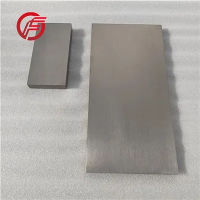

Titanium is a remarkable metal known for its exceptional strength-to-weight ratio, corrosion resistance, and biocompatibility. These properties make it a highly sought-after material in various industries, including aerospace, medical, and chemical processing. One question that often arises is whether titanium can be welded. As a titanium supplier, I am frequently asked this question, and in this blog post, I will explore the welding of titanium in detail.
Understanding Titanium's Welding Characteristics
Titanium has unique physical and chemical properties that affect its weldability. One of the primary challenges in welding titanium is its high reactivity with oxygen, nitrogen, and hydrogen at elevated temperatures. When titanium is heated during the welding process, it can absorb these gases from the surrounding atmosphere, leading to the formation of brittle compounds that can compromise the integrity of the weld.
Another factor to consider is titanium's relatively low thermal conductivity compared to other metals. This means that heat tends to accumulate in the welding area, increasing the risk of distortion and cracking. Additionally, titanium has a high coefficient of thermal expansion, which can cause stress and deformation during the cooling process.
Despite these challenges, titanium can be successfully welded using the appropriate techniques and equipment. The key is to control the welding environment to prevent contamination and minimize the effects of heat.
Welding Techniques for Titanium
There are several welding techniques that can be used to join titanium, each with its own advantages and limitations. The most commonly used methods include:
Gas Tungsten Arc Welding (GTAW)
Also known as TIG (Tungsten Inert Gas) welding, GTAW is one of the most popular methods for welding titanium. This process uses a non-consumable tungsten electrode to create an arc between the electrode and the workpiece. A shielding gas, typically argon or helium, is used to protect the weld area from atmospheric contamination.
GTAW offers excellent control over the welding process, allowing for precise weld placement and depth. It is suitable for both thin and thick titanium materials and can produce high-quality, clean welds. However, it is a relatively slow process and requires a high level of skill and experience to achieve optimal results.
Gas Metal Arc Welding (GMAW)
GMAW, also known as MIG (Metal Inert Gas) welding, uses a consumable wire electrode to create the weld. A shielding gas is used to protect the weld area from oxidation. This method is faster than GTAW and can be used for larger welding projects.
However, GMAW is more prone to porosity and spatter compared to GTAW, and it may require additional cleaning and finishing steps. It is also less suitable for thin titanium materials due to the higher heat input.
Laser Beam Welding (LBW)
LBW is a high-energy welding process that uses a laser beam to melt and join the titanium materials. This method offers several advantages, including high welding speed, minimal heat-affected zone, and excellent weld quality. It is particularly suitable for welding thin titanium sheets and complex geometries.
However, LBW requires specialized equipment and is relatively expensive compared to other welding methods. It also requires precise alignment and focusing of the laser beam, which can be challenging.
Electron Beam Welding (EBW)
EBW is another high-energy welding process that uses a beam of electrons to create the weld. This method offers similar advantages to LBW, including high welding speed and minimal heat-affected zone. It is suitable for welding thick titanium materials and can produce deep, narrow welds.
Like LBW, EBW requires specialized equipment and a vacuum environment to prevent contamination. It is also a relatively expensive process and may not be suitable for all applications.
Preparing for Titanium Welding
Proper preparation is essential for successful titanium welding. This includes cleaning the workpiece, selecting the appropriate welding consumables, and setting up the welding equipment.
Cleaning the Workpiece
Before welding, the titanium workpiece must be thoroughly cleaned to remove any contaminants, such as oil, grease, dirt, and oxide layers. This can be done using a combination of mechanical and chemical cleaning methods.
Mechanical cleaning methods include grinding, sanding, and wire brushing to remove surface impurities. Chemical cleaning methods involve using solvents or acids to dissolve the oxide layer and other contaminants. It is important to use cleaning agents that are compatible with titanium to avoid any damage to the material.
Selecting Welding Consumables
The choice of welding consumables, such as filler metals and shielding gases, is crucial for achieving high-quality titanium welds. The filler metal should have similar chemical composition and mechanical properties to the base metal to ensure a strong and durable weld.
For GTAW and GMAW, pure argon or a mixture of argon and helium is commonly used as the shielding gas. These gases provide excellent protection against oxidation and contamination.
Setting Up the Welding Equipment
The welding equipment must be properly set up and calibrated to ensure optimal performance. This includes adjusting the welding current, voltage, and travel speed, as well as setting the flow rate of the shielding gas.
It is also important to use a high-quality welding torch and electrode to ensure a stable arc and consistent weld quality.
Post-Weld Treatment
After welding, the titanium workpiece may require post-weld treatment to improve its mechanical properties and corrosion resistance. This can include heat treatment, stress relieving, and surface finishing.
Heat Treatment
Heat treatment is often used to improve the strength and ductility of the weld. This involves heating the workpiece to a specific temperature and holding it for a certain period of time before cooling it slowly.
The heat treatment process can vary depending on the type of titanium alloy and the specific application. It is important to follow the manufacturer's recommendations and industry standards when performing heat treatment.
Stress Relieving
Stress relieving is a process used to reduce the internal stresses in the weld and the surrounding material. This can help to prevent cracking and distortion and improve the long-term performance of the weld.
Stress relieving can be achieved by heating the workpiece to a moderate temperature and holding it for a period of time before cooling it slowly.
Surface Finishing
Surface finishing is often required to improve the appearance and corrosion resistance of the weld. This can include grinding, sanding, polishing, and coating the surface of the weld.
The choice of surface finishing method depends on the specific application and the desired appearance of the weld.
Applications of Welded Titanium
Welded titanium is used in a wide range of applications across various industries. Some of the common applications include:
Aerospace Industry
Titanium is widely used in the aerospace industry due to its high strength-to-weight ratio and corrosion resistance. Welded titanium components are used in aircraft structures, engines, and landing gear, among other applications.
For example, the Titanium Foil Sheet can be welded to create lightweight and strong parts for aircraft interiors and exteriors.
Medical Industry
Titanium is biocompatible, which means it is well-tolerated by the human body. Welded titanium components are used in medical implants, such as hip and knee replacements, dental implants, and spinal fusion devices.
The high corrosion resistance of titanium ensures that these implants can withstand the harsh environment of the human body for long periods of time.
Chemical Processing Industry
Titanium is highly resistant to corrosion in a variety of chemical environments, making it an ideal material for chemical processing equipment. Welded titanium vessels, pipes, and heat exchangers are used in the production of chemicals, pharmaceuticals, and food products.


For instance, Elliptical Tank Heads made of welded titanium can be used in chemical storage tanks to prevent corrosion and ensure the safety of the stored chemicals.
Marine Industry
Titanium's corrosion resistance makes it a popular choice for marine applications. Welded titanium components are used in shipbuilding, offshore oil and gas platforms, and desalination plants.
The Black Surface Titanium Gr1 Wire in Spool For Wire Mesh Making can be welded to create wire mesh for marine applications, such as fish cages and offshore structures.
Conclusion
In conclusion, titanium can be successfully welded using the appropriate techniques and equipment. While it presents some challenges due to its high reactivity and unique physical properties, with proper preparation and post-weld treatment, high-quality titanium welds can be achieved.
As a titanium supplier, I am committed to providing my customers with the highest quality titanium products and technical support. If you are interested in purchasing titanium materials or have any questions about titanium welding, please feel free to contact me for more information. We can discuss your specific requirements and help you find the best solutions for your projects.
References
-ASM Handbook, Volume 6: Welding, Brazing, and Soldering.
-Welding Metallurgy of Titanium Alloys, by John C. Lippold and David J. Kotecki.
-Titanium: A Technical Guide, by J.R. Davis.