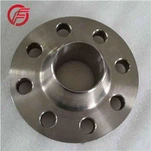


Titanium expansion joints are significantly more expensive than stainless steel ones. Is this purchase really worthwhile?
A: The initial purchase cost of titanium expansion joints is indeed higher. Based on market prices, for example, a DN300 titanium expansion joint costs approximately 2000 RMB per unit, while the same size stainless steel or copper composite joint costs approximately 1200 RMB per unit. Furthermore, the price ratio of titanium and titanium alloy corrugated pipes to stainless steel corrugated pipes is as high as 10:1.
Despite the higher initial investment, titanium expansion joints offer significant economic advantages from a total lifespan cost perspective. Steel equipment typically has a lifespan of only 2 to 3 years, while titanium corrugated pipes can last for over 20 years with almost no repair costs. For highly corrosive environments such as chemical and marine engineering fields, even using materials like 2507 double-sided stainless steel cannot fundamentally solve the corrosion problem. Titanium expansion joints can fundamentally avoid frequent downtime, replacement, and maintenance due to corrosion, resulting in extremely high overall economic benefits.

What is the theoretical lifespan of a titanium expansion joint? When must it be replaced?
A: Under standard operating conditions, the design life of titanium and titanium alloy expansion joints is typically 15 to 30 years, far exceeding the 2 to 3 years of ordinary stainless steel expansion joints. Their lifespan depends primarily on the number of fatigue cycles, not a fixed number of years. Generally, the rated fatigue cycles for general-purpose expansion joints are approximately 1500 cycles (one cycle consists of one thermal expansion and one cold contraction/compression). Replacement is recommended after reaching this number. If the pipeline is started and stopped daily, it is recommended to use an expansion joint with a rated compensation of twice the actual compensation, which can achieve an actual fatigue life of 26,000 cycles, easily meeting 20 years of usage requirements.
Furthermore, design pressure, actual displacement, and whether the fixed support is misaligned will also significantly affect its actual lifespan. It is recommended that users conduct a routine inspection quarterly and a deep maintenance and performance evaluation annually, determining the replacement time based on the inspection results, typically considering replacement every 5-10 years.
Selection and Design: How to choose the most suitable model for my operating conditions?
What key parameters do I need to consider for correct model selection? A: Improper selection can lead to expansion joint failure, and in severe cases, even safety accidents. When selecting an expansion joint, users should focus on matching the following four key factors:
Structural Parameters:
Diameter: Standard sizes range from DN50 to DN4000, determined based on the pipe diameter.
Number of Bellows Layers: Single-layer bellows for low-pressure applications; double-layer bellows for pressures not exceeding 2.5 MPa; triple-layer bellows for high-explosive applications exceeding 4.0 MPa.
Connection Method: Select flanges conforming to Chinese National Standard (GB/T), American Standard (ANSI), or European Standard (EN) based on the pipe standard.
Performance Parameters:
Displacement Compensation Capacity: Determine the axial tensile/compression capacity (typically ±20 to 300 mm) or lateral offset (typically ±10 to 150 mm) of the pipe to ensure the expansion joint's compensation covers actual requirements.
Pressure-Temperature Ratings: Confirm that the maximum working pressure (typically 0.25 to 6.4 MPa) and working temperature (titanium materials are suitable for -253℃ to 600℃) are within the expansion joint's operating range. Fatigue Life: Select the fatigue life level based on the expected start-up and shutdown frequency of the pipeline (basic standard ≥1000 cycles, enhanced design can reach ≥5000 cycles).
Material Parameters: In highly corrosive environments such as those with high chloride ion content, acidic media, or seawater, titanium alloys (TA1/TA2, etc.) should be preferred.
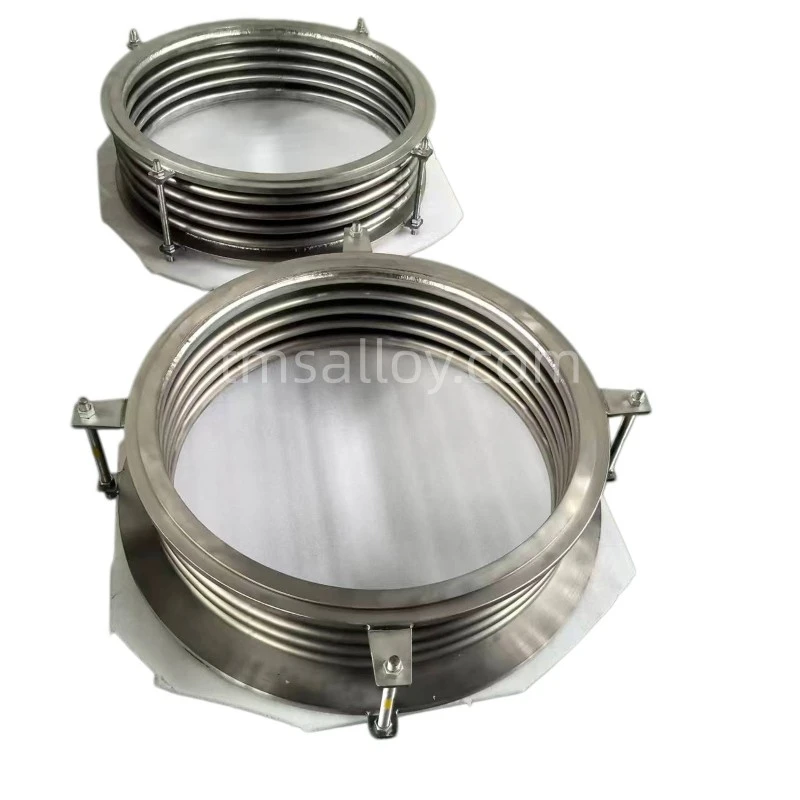
For applications involving the transport of strong alkalis (such as sodium hydroxide), pure nickel expansion joints are a better choice.
Installation Requirements: Ensure the straight pipe section length at the installation location is ≥4 times the nominal diameter to allow sufficient space for the free expansion and contraction of the expansion joint.
Both ends of the expansion joint must have sturdy fixed supports, and the guide support should be positioned at 2D (D is the nominal diameter) to prevent twisting.
Contact information:
Tel: +86-0917- 3664600
WhatsApp: +8618791798690