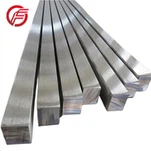


Niobium (Nb), tantalum (Ta), and titanium (Ti) are all excellent corrosion-resistant metals, but they each have their own strengths and applications. If niobium and tantalum are high-performance "twins," then titanium is an "all-rounder" with excellent overall performance and cost-effectiveness.
| Characteristic Dimension | Niobium (Nb) | Tantalum (Ta) | Titanium (Ti) |
|---|---|---|---|
| Melting Point (°C) | ~ 2468 | ~ 2980 (Highest among the three) | ~ 1668 (Relatively low) |
| Density (g/cm³) | 8.57 (Moderate) | 16.6 (Very high, about twice that of Niobium) | 4.51 (Very low, lightweight) |
| Corrosion Resistance | Excellent. Second only to Tantalum. Stable against most acids (including Aqua Regia), but soluble in hydrofluoric acid. More stable than Titanium in fluoride-containing environments. | Ultimate. Known as the "Corrosion Resistance Champion." Almost completely immune to all acids (except hydrofluoric acid and fuming sulfuric acid) and alkalis. | Excellent. Forms a dense protective oxide layer. Resists corrosion in many media, but is not resistant to strong reducing acids and fluorides. |
| Superconductivity | Highest Critical Temperature (9.2 K). The core base material for manufacturing superconducting materials (e.g., NbTi, Nb₃Sn alloys). | Non-superconducting | Non-superconducting |
| Biocompatibility | Good. Non-toxic to the human body, suitable for medical devices. | Exceptional. Known as a "biophilic metal," it can bond with bone tissue and is widely used for implants. | Exceptional. Widely used in dental and orthopedic implants; currently, the most widely used biomedical metal. |
| Thermal Neutron Capture Cross-section | Very Low, suitable for the nuclear industry. | Insufficient data, but the application focus differs. | High; unsuitable for use in nuclear reactor core structures. |
| Primary Applications | Superconducting Magnets (MRI, accelerators), Steel Additive (over 86% of total usage), Aerospace superalloys, Chemical corrosion-resistant equipment. | Electronic Components (Tantalum capacitors, accounting for over half of its usage), Chemical Corrosion-Resistant Equipment, and Biomedical Implants. | Aerospace (airframe, engine components), Biomedical (artificial joints, dental implants), Chemical Industry (heat exchangers). |

How to Choose Based on Requirements?
The choice among these three metals mainly depends on your specific needs:
Need ultimate heat and corrosion resistance, with an adequate budget? Tantalum is your best choice. It has the highest melting point and unbeatable corrosion resistance, holding a solid position in high-end chemical and medical applications.
Require superconductivity, low neutron absorption, or use as a steel alloying element? Niobium is the only choice. Its role is irreplaceable, especially in superconducting technologies (like MRI, particle accelerators) and the nuclear industry.
Looking for a balance of properties, lightweight design, and cost-effectiveness? Titanium is an excellent "balancer." It offers high strength, low density, good corrosion resistance, and is significantly cheaper than Niobium and Tantalum, making it the most widely used among the three.
Contact information:
Tel: +86-0917- 3664600
WhatsApp: +8618791798690