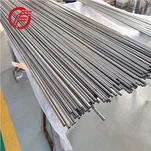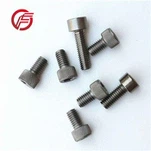


Titanium is one of the most versatile materials in engineering, thanks to its unique combination of strength, lightness, and corrosion resistance. This makes it an ideal choice for the production of flanges, which are used to connect pipes, valves, and other components in complex fluid systems. Titanium flanges come in a wide range of shapes, sizes, and configurations, and are designed to withstand extreme conditions in a variety of industries, from aerospace to chemical processing.
There are two main types of titanium flanges: welded and screw-threaded. Welded flanges are designed for permanent installations, where the flange and the pipe are joined together using a welding process. Screw-threaded flanges, on the other hand, are designed to be easily assembled and disassembled, making them ideal for applications where the system needs to be frequently modified or repaired. Both types of flanges can be produced from a variety of grades and standards of titanium to suit different applications.

One common standard for titanium flanges is the American Society of Mechanical Engineers (ASME) B16.5 spec, which outlines the dimensions, materials, and testing requirements for flanges used in pressure systems. This standard covers both welded and screw-threaded flanges in sizes ranging from 1/2 inch to 24 inches in diameter. ASME B16.5 specifies several grades of titanium, including Grade 1, Grade 2, Grade 5, and Grade 7. Other standards for titanium flanges include ASTM B348, which covers the chemical and mechanical properties of titanium bars, and ASTM B381, which covers the production of forged titanium bars and billets.
In addition to these standards, titanium flanges can be produced according to specific industry requirements. For example, flanges used in the aerospace industry must meet stringent quality, precision, and safety standards, as they are used to connect critical components in aircraft engines, fuel systems, and hydraulic systems. Similarly, flanges used in the chemical processing industry must be resistant to corrosive fluids and high temperatures, making Grade 5 and Grade 7 titanium ideal choices due to their high strength, low density, and excellent corrosion resistance.
Other factors to consider when selecting titanium flanges include the type of sealing mechanism used, such as gaskets or o-rings, and the method of attachment, such as bolts or studs. These factors can affect the performance, longevity, and ease of maintenance of the flange system.

In summary, titanium flanges come in two main types: welded and screw-threaded. They can be produced from a variety of grades and standards of titanium, such as ASME B16.5, ASTM B348, and ASTM B381, to suit different applications and industries. The choice of titanium grade, sealing mechanism, and attachment method will depend on a range of factors, including the operating conditions of the system and the requirements of industry standards.