

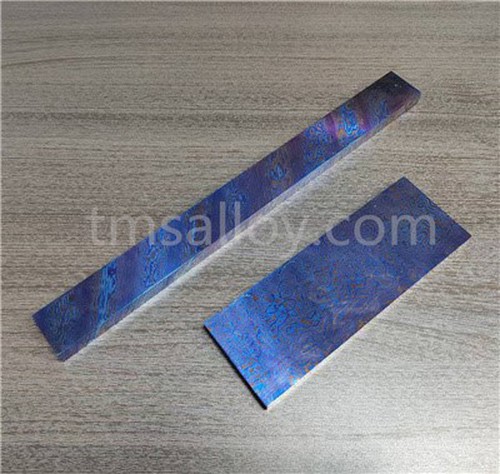
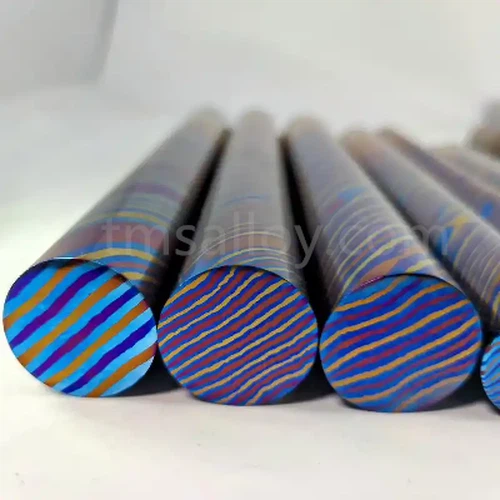
Simply put, it's made by repeatedly folding and pressing together sheets of different grades of titanium (or zirconium) alloy, like layering a pancake. Through anodizing or heating, different oxide films of varying colors (such as blue, purple, and gold) are formed on the surface of the different materials, ultimately creating a beautiful gradient texture or pattern on the metal surface, much like the grain of wood.
Making this type of material requires high-quality technology and raw materials, and is difficult to process, thus incurring high costs. It's particularly common to make various EDC (Everyday Carry) toys, such as cool fidget spinners, knives, Zippo lighter cases, and even exquisite wedding rings.
The main differences between these two materials are as follows:
Base Material: Titanium Maestro uses a titanium alloy, while zirconium Maestro uses a zirconium alloy.
Appearance and Performance: Zirconium Maestro typically has a more vibrant and eye-catching color, and its surface hardness and wear resistance are also higher.
Weight difference: Titanium alloys are very light, while zirconium alloys have a higher density, so the finished products will feel heavier.
| Comparison Aspect | Titanium Damascus | Zirconium Damascus |
|---|---|---|
| Weight | Light (4.51 g/cm³) | Heavier, more substantial feel |
| Colors | Bright and vivid: yellow, blue, purple, green, etc., with strong luster | Deep and understated: mainly gray-black, dark blue, dark purple, etc. |
| Hardness | Relatively high | Higher, more wear-resistant after oxidation |
| Cost | Relatively lower | Relatively higher |
FAQ
Q: 1. How durable is the color? Will it fade?
A: Core Answer: The color will gradually "wear down" with use, but it can be repaired.
The vibrant colors of titanium damascus and zirconium damascus are not from pigments, but from a very thin (nanoscale) transparent oxide film on their surface, produced by the interference effect of light. Therefore, this film can be physically worn away. Long-term handling or friction with hard objects may indeed cause the surface color to gradually fade. Daily contact with sweat will generally not have a significant impact, but over time, the overall gloss and vibrancy will decrease.
Maintenance Tips:
Gentle Cleaning: It is recommended to use a soft cotton cloth or sponge dampened with warm water and neutral detergent to wipe the surface to keep it clean.
Avoid Corrosion: Keep away from acidic/alkaline cleaners, strong organic solvents, and other chemicals, it may damage the oxide film or even cause fading.
Storage Environment: Store the item in a place with suitable humidity (ideally below 60%) and away from direct sunlight. If possible, regularly applying a specialized oxidation protection paste or spray to the item can effectively slow down wear and fading, allowing the color to last longer.
Professional Repair: If the color is indeed severely worn, the most reliable method is to entrust a professional craftsman or manufacturer to "re-anodize" or heat-treat the item to restore its original vibrant color.
Q: 2. Are titanium/zirconium damascus prone to scratches? How to repair them?
A: Core Answer: Both are prone to scratches, but zirconium damascus has better abrasion resistance.
The oxidized surface of both, especially the very thin oxide film formed through oxidation coloring, cannot withstand scratches from hard objects. Scratches will damage the integrity of this film, affecting not only appearance but also causing the color to fade at the scratched area. However, their performance in the face of daily wear and tear differs:
Titanium damascus: The surface oxide film is relatively thin, and its hardness and strength are relatively limited, so minor scratches are quite common in daily use.
Zirconium Maestro: Thanks to the inherent properties of zirconium alloys, the surface layer formed after oxidation and coloring has significantly higher strength and hardness than the oxide layer of titanium alloys. Therefore, its overall wear resistance is superior, and it is better able to withstand minor everyday scratches. However, this does not mean it is completely scratch-free.
Maintenance Tips:
Strengthen Protection: When storing items, it is best to place them in a separate velvet bag or storage box to avoid direct contact and scratching with other hard metal objects.
Professional Polishing: For shallow scratches, you can try using high-grit sandpaper for minor polishing. However, be aware that this may remove the original oxide film and color layer. Therefore, the safest method for scratch repair is still to have it professionally recolored.
Q: 3. Is Titanium/Zirconium Damascus suitable for making knives/rings?
A: Core Answer: Suitable for decorative parts, not suitable for blades; very suitable for jewelry.
Applications as Knives: Titanium/Zirconium Maestro is very suitable for knife handles, plates, or decorative structural parts such as the shank. It possesses unique artistic value, and thanks to the lightweight, high specific strength, non-magnetic nature, and excellent corrosion resistance of titanium alloys, it can significantly reduce the weight of knives and improve their durability.
Important: Absolutely unsuitable for blades!
Titanium/zirconium alloys have very low hardness, generally only around HRC 30-40, far below the standard required for a qualified knife blade. Therefore, knives made from it cannot maintain a sharp edge and have no practical value.
As a jewelry material, Titanium/zirconium damascus is an excellent material for making rings, pendants, and other personalized jewelry. Besides its beauty, it also has advantages such as good biocompatibility, hypoallergenic properties, and extreme corrosion resistance, making it ideal for long-term contact with the skin.
Application Selection: When making a specific choice, the weight characteristics of both materials can also be considered:
Titanium masquerades: Due to its low density and lighter weight, it is very suitable for eyeglass frames, handles, or patches for large pocket knives, and EDC toys to reduce overall weight.
Zirconium Damascus: Due to its higher density and heavier feel, it's often used in high-end knives for decorative elements like the clip and push button on the handle, features that don't directly determine the handle's weight. However, its substantial feel and understated color also make it popular in high-end, minimalist rings and other jewelry.
Q: 5. What's the difference between titanium/zirconium Damascus and Damascus steel?
A: This is a common question for beginners. All three share the same "processing principle" but are made from completely different materials. When someone claims their knife is "Damascus," you should pay close attention to its material.
Based on the above information, the following points can help you make your final purchase decision:
For lightweight and colorful looks → Choose Timascus/Mokuti
If you're an EDC enthusiast looking to reduce the weight of your gear and prefer bright, vibrant colors like blue, purple, and gold, then the richly colored and incredibly lightweight Timascus is the ideal choice.
For rarity, prestige, and a sophisticated feel → Choose Zircuti
If you not only value visual uniqueness but also the rarity of the material and the solid feel of the finished product, and prefer deep, understated tones like gray-black, dark blue, and dark purple, then Zircuti is undoubtedly a superior choice that showcases your taste.
Contact information:
Tel: +86-0917- 3664600
WhatsApp: +8618791798690


