

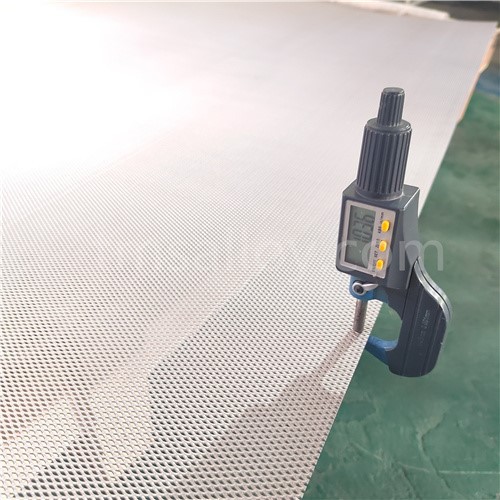
The key differences in structure and performance between diamond-shaped titanium mesh (stretched mesh) and woven titanium mesh determine their different application areas.
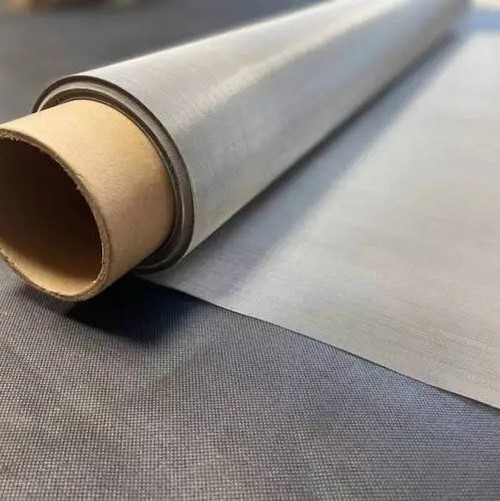
Simply put, woven titanium mesh is made by interlacing individual titanium wires like weaving cloth, resulting in a flexible structure and high filtration accuracy; while diamond-shaped titanium mesh is made by mechanically cutting and stretching a single sheet of titanium, resulting in a monolithic structure with high strength and stability.
1. Manufacturing Process and Characteristics
Woven Titanium Mesh:
Process: Individual titanium wires are interlaced according to specific patterns (such as plain weave or twill weave) to form a stable mesh structure.
Structure: Independent metal wires interweave to form nodes, and the mesh openings are mostly square or rectangular.
Performance: Advantages include good flexibility, allowing it to conform to curved surfaces or complex shapes. However, the weaving nodes are potential weak points in the structure, and due to the difficulty in stretching the titanium wires themselves, manufacturing high-mesh-count (high-precision) woven mesh is challenging.
Diamond-shaped titanium mesh (stretched mesh):
Process: A single, continuous titanium plate is cut and stretched in a specific pattern to create diamond or hexagonal openings in a single operation.
Structure: Constructed entirely from a single titanium plate, without welding or weaving joints.
Performance: Advantages include high mechanical strength and a stable structure, maintaining its shape for extended periods even under harsh conditions such as burial or immersion. However, due to its rigid structure, it is less flexible than woven mesh.
2. Main Application Areas
Woven Titanium Mesh:
Electrochemical Field: In electroplating (chromium, nickel, etc.), it is often used as a frame anode because its flexibility allows it to perfectly conform to the shape of the plating frame. It is also used in PEM (proton exchange membrane) electrolytic cells to prepare membrane electrode assemblies.
Precision Filtration: Suitable for seawater filtration, chemical and pharmaceutical filtration, medical filtration, food processing, etc.
Others: Electromagnetic shielding, high-temperature electric furnace heat treatment support mesh, oil filtration, etc.
Diamond-shaped titanium mesh (stretched mesh):
Electrochemical Field: Suitable for large-scale cathodic protection systems, such as protecting buried pipelines, storage tanks, and offshore platforms. Its uniform current distribution and robust structure are key advantages.
Industrial applications: It is used to manufacture anode meshes for electrolyzers (such as ion-exchange membrane electrolyzers), where its large surface area promotes reaction efficiency.
3. Side-by-Side Comparison: How to Choose?
The table below compares the two materials in typical electrochemical applications (e.g., anodes), highlighting their key differences:
| Property | Diamond (Expanded) Titanium Mesh | Woven Titanium Wire Mesh |
|---|---|---|
| Structural Integrity | High. One-piece construction, no joints or nodes, high strength. | Medium. Crossed wires create potential weak points at the intersections. |
| Current Distribution | Uniform. Current is evenly distributed along each strand. | Concentrated at crossover points. This can lead to locally high current density. |
| Installation Flexibility | Rigid. Suitable for flat surfaces or pre-designed layouts. | Flexible. Can be cut and shaped to fit curved or irregular surfaces. |
| Filtration Precision | Medium. The mesh size is limited by the sheet thickness and the stretching process. | Higher. Very high precision (from several millimeters down to microns) is achievable by adjusting weave count. |
| Cost | Medium. The manufacturing process is relatively fast. | Higher. Weaving is labor-intensive and slower. |
Summary
Choose Diamond (Expanded) Titanium Mesh when the application primarily demands mechanical strength, structural stability, and uniform physical or current distribution - for example, in heavy-load platforms or large-scale cathodic protection systems.
Choose Woven Titanium Mesh when the application requires high filtration precision, material flexibility, or the ability to conform to complex shapes - for example, in precision chemical filtration or plating anodes with irregular geometries.
Diamond Expanded Titanium Mesh and Woven Titanium Mesh Specifications and Quick Selection Reference
| Category | Diamond (Expanded) Titanium Mesh | Woven Titanium Wire Mesh |
|---|---|---|
| Key Parameters | Mesh opening: 0.3×0.5 mm to 10×20 mm (wider range up to 0.5×30 mm) Sheet thickness: 0.04 mm to 5 mm Width: 100 mm – 1200 mm, custom available |
Mesh count: 1 – 400 mesh, very wide range Wire diameter: 0.05 mm – 3 mm Width: 5 mm – 2000 mm Length: can be continuous |
| Typical Standard Choices | Prefer standard opening combinations (e.g., 3×6 mm, 5×10 mm) and thickness (e.g., 0.8 mm, 1.0 mm) for lower cost. | Prefer standard mesh counts (e.g., 20, 40, 60, 80, 100 mesh) and wire diameter combinations – most common. |
| Core Selection Logic | Priority: thickness > opening (L×W) > width. Opening size affects flow rate; thickness determines rigidity. | Priority: mesh count > wire diameter > (mesh count × wire diameter). Higher mesh count = higher filtration precision. Opening size ≈ (25.4 mm / mesh count) – wire diameter. |
| Typical Applications | Electrolyzer electrodes, cathodic protection anodes, battery current collectors, and high-strength filtration. | Precision filtration, plating anodes, gas/liquid separation, and electromagnetic shielding. |
| Pros / Cons | Pros: Structurally stable, high strength, uniform current distribution. Cons: Rigid, not suitable for curved or irregular shapes. |
Pros: High precision, good flexibility, large surface area. Cons: Many woven nodes; coatings may fail at crossover points. |
FAQ
Q: 1. What is the difference between black and white titanium mesh?
A: This difference lies in the surface treatment, usually distinguished by visual inspection.
Black titanium mesh: The surface has a graphite emulsion coating, primarily used for corrosion protection and lubrication, extending service life.
White (glossy) titanium mesh: The surface has no coating, displaying the natural color of titanium metal. It offers higher cleanliness and is suitable for applications requiring high cleanliness, such as battery anodes and pure water filters.
Q: 2. Which type of titanium mesh has a higher production technology barrier?
A: High-mesh-count woven titanium mesh is more difficult to produce.
Due to the low elongation and high elasticity of titanium wire, it is difficult to draw. Currently, the finest titanium wire with mature domestic technology can only be stably produced at 0.1mm, greatly limiting the production of high-mesh-count titanium mesh.
In contrast, the production process of diamond-shaped stretched mesh is mature, with stronger mass production capacity and generally lower costs.
Q: 3. Does the mesh shape affect the performance?
A: Yes, but the impact is mainly visual and manufacturer preference.
Diamond-shaped titanium mesh: The standard mesh shape is diamond, suitable for most industrial applications.
Woven titanium mesh: The standard mesh size is square, formed by the intersection of warp and weft threads. Special weaves (such as tight weaves) can achieve higher filtration precision.
In most electrochemical and filtration applications, the mesh shape has little impact; the main factor is the fit.
Q: 4. When is coating (such as MMO coating) required?
A: This mainly applies to applications using it as an anode.
Pure titanium mesh itself has generally low conductivity, but if used as an anode, especially for oxygen evolution or chlorine evolution reactions, a coating is strongly recommended.
The most commonly used coating is a mixed metal oxide (MMO) coating (such as ruthenium iridium oxide). Through thermal decomposition, an electrochemically active surface is formed on the titanium substrate, which can significantly reduce overpotential, save power consumption, and greatly extend service life.
Caution: When coating woven titanium mesh with MMO, the coating adhesion at the weave joints is poor, and localized corrosion may occur over time. Therefore, for anode applications requiring coating, diamond-shaped titanium mesh is a more reliable choice.
Contact information:
Tel: +86-0917- 3664600
WhatsApp: +8618791798690


