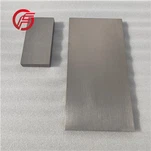


I. Key Characteristics of Tantalum Foil
1. Physical Properties
High density: 16.6 g/cm³ (20°C), relatively heavy.
Ultra-high melting point: Approximately 2996–3020°C, ranking fourth among all metals.
Low coefficient of thermal expansion: 6.6 × 10⁻⁶ /°C, high dimensional stability under drastic temperature changes.
Good thermal/electrical conductivity: Electrical conductivity approximately 13.5% IACS, resistivity 13.5 µOhm·cm.
2. Chemical Properties
Extremely strong corrosion resistance:** Almost unreactive to hydrochloric acid, concentrated nitric acid, aqua regia, etc., thanks to its dense and self-healing Ta₂O₅ passivation film.
High-temperature stability:** Extremely stable to most chemicals below 150°C. Strong alkalis and hydrofluoric acid are its main corrosive agents, requiring special attention.
3. Mechanical and Machining Properties:
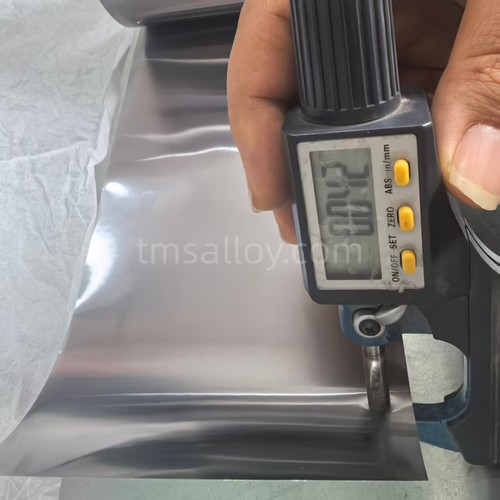
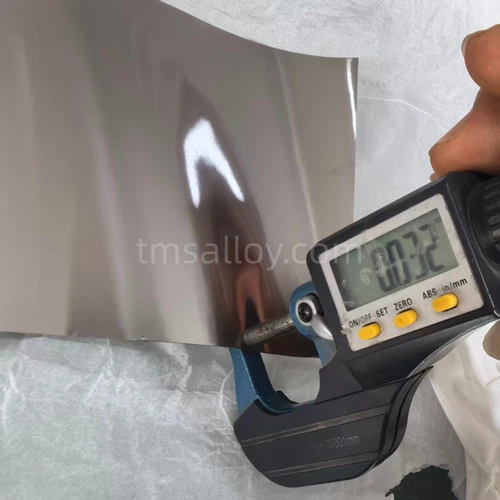
Excellent ductility:** Can be rolled into extremely thin foils with a thickness of only 0.001–0.025 mm, and is easy to stamp, stretch, and form in complex shapes.
Elastic modulus:** Approximately 185.7 GPa, with high stiffness.
Tensile strength (annealed state):172–207 MPa, with moderate strength in the soft state.
4. Biological Properties and Others:
Excellent biocompatibility:Non-toxic, with no rejection reaction in the human body, widely used in medical devices.
High Purity Grades: Commercially available purity levels range from 99.95% to 99.999%, meeting the needs of various high-end applications.
II. Main Application Areas
1. Electronics and Semiconductor Industry
Tantalum foil is a core material in the manufacture of tantalum capacitors; its stable oxide film, acting as a dielectric layer, is crucial for capacitor performance. It is also used as a diffusion barrier layer in integrated circuits, a sputtering target, and a source material for vacuum deposition. High-purity (5N and above) tantalum foil is an indispensable material in advanced process chips.
2. Chemical and Processing Industry
Due to its superior corrosion resistance, tantalum foil is widely used as a corrosion-resistant lining for reactors, heat exchangers, and piping systems, especially performing exceptionally well in strongly acidic environments. It is also used to manufacture fasteners, flanges, and other corrosion-resistant components.
3. Aerospace and Defense
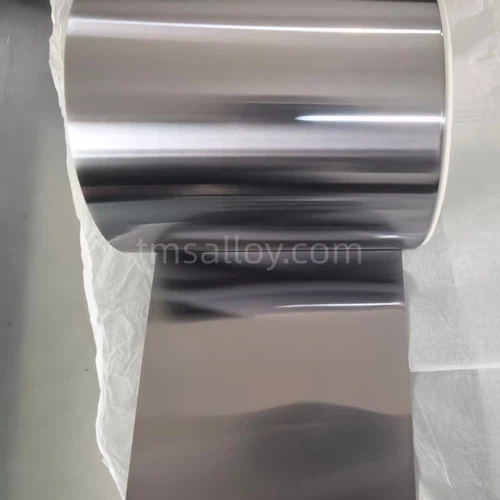
Its extremely high melting point and stability make it suitable for rocket engine nozzles, missile components, nuclear reactor components, and radiation shielding layers.
4. High Temperature and Vacuum Technology
Tantalum foil is commonly used in heating elements, heat shields, and crucibles of vacuum high-temperature furnaces, as well as protective barriers in evaporation boats and electron beam systems.
5. Emerging Fields
These include optical coatings, light shields in OLED manufacturing, and electrode patches for high-end beauty devices.
FAQ
Q: 1. What is the current market price of tantalum foil? What is the recent price trend?
A: As of May 2026, tantalum raw material prices have stabilized from the previous "tantalum storm" highs and begun a rebound. According to Mysteel weekly report data, the current price of tantalum oxide is stable at 4200 yuan/kg, and the price of tantalum ingots (Ta≥99.95%) is in the range of 6000-6100 yuan/kg. According to SMM analysis, the tantalum market has recently reached a turning point, with prices bottoming out and stabilizing, and the industry's upward trend is gradually becoming clearer.
Looking back at this round of price fluctuations, since December 2025, tantalum prices have risen sharply. As of early March 2026, the average price of tantalum ingots surged from 2800 yuan/kg to 5200 yuan/kg in less than three months, an increase of 85.7%. Currently, prices have fallen back to a rational level and are stabilizing.
Note: The above prices are reference prices for raw material tantalum ingots/tantalum oxide. Tantalum foil prices are typically significantly higher than raw material prices due to factors such as rolling yield, processing precision, thickness and width, and purchase volume. Specific prices need to be inquired with manufacturers based on technical specifications.
Q: 2. What are the main factors affecting tantalum foil prices?
A: Tantalum foil prices mainly consist of "high-purity tantalum ingot cost + rolling processing cost amortization." Key factors influencing pricing include:
* Thickness and Width: Ultra-thin foil (<0.025mm) or extremely narrow wide products are more difficult to process, and the price can potentially double.
* Purity Grade: From industrial grade (99.9%) to semiconductor grade (99.9995%), higher purity results in more significant price differences.
* Tolerance Requirements: Electronic-grade applications have stringent requirements for thickness tolerance and surface roughness (Ra < 20nm), while general industrial applications have more lenient tolerances, leading to significant price differences.
* Supply Status: Annealed (soft) and hard (Y) states have different processing techniques, resulting in price differences.
* Purchase Volume: Larger batches result in lower unit amortization costs.
Q: 3. How to Choose the Right Tantalum Foil? What Key Points Should Be Considered When Purchasing?
A: When purchasing tantalum foil, the following core dimensions should be considered:
1. Application-Oriented Priority:
Electronics/Semiconductors: Prioritize high purity (4N5 or higher), strictly controlling oxygen, nitrogen, carbon, and alkali metal impurities. For chip applications, the surface roughness of tantalum foil must reach Ra < 5nm; for high-end processes, Ra < 2nm is required.
Chemical Corrosion Resistance: Focus more on alloy composition and substrate flatness; purity can be appropriately relaxed (99.9%-99.95%). The type of corrosive medium and temperature conditions must be clearly defined, and the corrosion rate of the supplier's product under these conditions must be confirmed.
High-Temperature Applications: The operating temperature and atmosphere (vacuum/inert) must be clearly defined. If necessary, Ta-2.5W or Ta-10W alloys can be selected to improve high-temperature strength.
2. Precision and Tolerance – Matching to Application Scenarios
High-precision scenarios: Electronic applications have stringent requirements for thickness tolerance and surface roughness (Ra < 20nm). Micron-level scratches, pits, oxide spots, or particles > 0.1μm are not permitted on the surface.
Regular industrial scenarios: More lenient tolerances are acceptable, with significant price differences.
3. Batch Stability – Hidden Value
For large-scale procurement (especially sputtering targets), the consistency of micro-structure and the stability of impurity control directly affect the yield of downstream products. Insufficient purity may lead to impurities forming residues during etching, causing short circuits or poor contact in interconnects, directly impacting chip yield.
4. Delivery Status Confirmation When ordering, it is necessary to clearly specify whether the product is in "annealed (soft)" or "hard" state. Annealed state (M) is more conducive to forming and deep drawing processes such as stamping and stretching, with an elongation of up to 30%-40%; hard state (Y) has higher mechanical strength, with the strength of the cold-rolled state increasing to over 800MPa, while maintaining more than 10% plastic deformation capacity.
Contact information:
Tel: +86-0917- 3664600
WhatsApp: +8618791798690