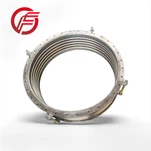


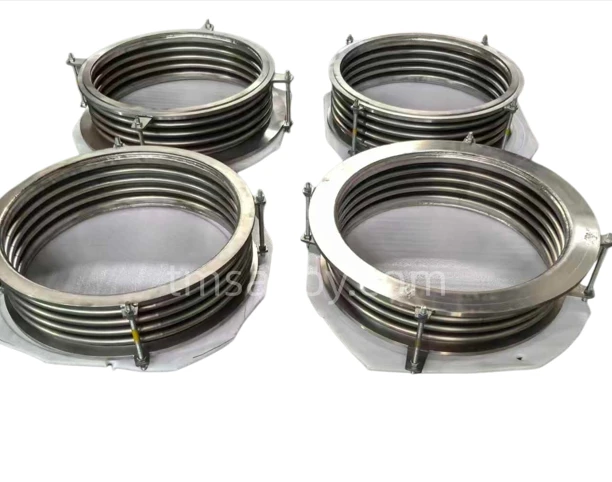
Titanium expansion joint bellows, with their superior corrosion resistance and excellent specific strength, have become key compensation components in pipeline systems operating under highly corrosive and extreme conditions, such as in chemical engineering, marine engineering, and energy and power generation. However, corrosion leakage and fatigue fracture remain the two core failure modes they face during service.
This paper systematically elucidates the causal mechanisms of corrosion and fatigue failure in titanium expansion joint bellows and provides corresponding technical solutions from five dimensions: material selection, structural design, manufacturing process, installation and construction, and operation and maintenance. Research shows that by adapting materials to the corrosive environment through material grading, optimizing waveform parameters to reduce stress concentration, strictly controlling welding quality and iron ion contamination, standardizing installation and pressure testing operations, and establishing a full life-cycle inspection and maintenance system, the safety, reliability, and service life of titanium expansion joint bellows can be significantly improved. This paper can provide theoretical and practical references for engineering design and operation and maintenance management.
In demanding operating conditions such as chemical engineering, oil refining, and marine engineering, pipeline systems face the combined effects of high temperature, high pressure, and highly corrosive media for extended periods. As a core component for pipeline thermal compensation and vibration damping, the reliability of expansion joint bellows directly affects the operational safety of the entire system. Titanium and titanium alloy bellows, with their excellent corrosion resistance (especially stability in chloride ions, wet chlorine gas, and various acidic media), lightweight design (weight reduction of over 30% compared to stainless steel), and good fatigue performance, are becoming a new generation of core components replacing traditional stainless steel products.
However, titanium expansion joint bellows still face two major challenges in actual service: first, pitting corrosion, crevice corrosion, and stress corrosion cracking caused by media corrosion; and second, fatigue fracture under cyclic loading, especially the "corrosion-fatigue" coupled failure under the combined effects of high temperature, high pressure, and corrosive media. These two failure modes are interconnected and mutually reinforcing, posing a severe challenge to pipeline system safety.
This article, following the logic of "problem cause analysis → multi-dimensional solutions," systematically outlines solutions for corrosion and fatigue failure of titanium expansion joint bellows, aiming to provide practical technical guidance for engineering designers and operation and maintenance managers.
1. Corrosion Failure and System Solutions
1.1 Main Forms and Causes of Corrosion Failure
Corrosion failure is the most prevalent type of failure in bellows expansion joints. Analysis of numerous failed components reveals that corrosion failure typically manifests as pitting corrosion and stress corrosion cracking, with chloride ion stress corrosion cracking accounting for approximately 95% of all corrosion failures.
While titanium is renowned for its excellent corrosion resistance, it can still experience corrosion failure under the following conditions:
(1) Galvanic corrosion caused by iron ion contamination. Titanium is extremely sensitive to iron ion contamination. If iron filings or rust adhere to the surface, galvanic corrosion (titanium as the cathode and iron as the anode) will occur, leading to localized corrosion and perforation.
(2) Corrosion risk in high-temperature, high-concentration chloride ion environments. Although titanium hardly corrodes in seawater at room temperature, crevice corrosion or pitting corrosion can still occur under harsh conditions of high temperature (>70℃), high chloride ion concentration, and low pH.
(3) Coupling effect of medium concentration and temperature. Under the combined effects of multiple factors such as media corrosion, high-temperature creep, low-temperature embrittlement, and flow-induced vibration, the stagnant areas at the bottom of the corrugations are prone to localized pitting corrosion, significantly accelerating performance degradation.
1.2 Material-level solutions
(1) Material selection based on corrosive media classification. Ordinary stainless steel is almost ineffective against highly corrosive media such as hydrochloric acid (at any concentration), and titanium corrugated pipes must be selected. For general corrosive conditions, industrial pure titanium (Gr1/Gr2) can meet basic requirements; for conditions with higher stress levels and stronger corrosion, titanium alloys (such as Gr7/Gr12/TC4) should be selected to improve overall performance.
(2) Strict control of iron ion contamination. The installation site must be isolated from carbon steel and stainless steel construction areas, with a dedicated storage area. Rubber mats or wooden boards should be laid on the ground to prevent direct contact between titanium pipes and carbon steel supports. Before construction, iron filings and dust must be removed with a vacuum cleaner. Tools (wrenches, pliers) must be dedicated or degreased and rust-removed; direct contact between carbon steel tools and the surface of the titanium pipe is strictly prohibited. (3) Surface Protection and Cleaning Management. Wipe the surface of titanium pipe fittings monthly with a neutral detergent and a soft cloth or sponge, avoiding strong acidic or alkaline detergents that could damage the material; regularly check the condition of seals and joints, replacing any aged or damaged parts promptly.
1.3 Corrosion Control Measures at the Design Level
(1) Streamlined Internal Cavity Design. Optimize the corrugation shape using computational fluid dynamics (CFD) simulation to avoid media stagnation and dead zones, fundamentally preventing localized concentration corrosion.
(2) Avoiding Crevice Structures. Optimize flange connections, welded joints, and other areas to minimize gaps and prevent crevice corrosion.
(3) Using Reinforced Corrugated Structures. For operating conditions with high stress corrosion risk, use reinforced U-shaped corrugations instead of ordinary U-shaped corrugations to effectively alleviate stress concentration at the corrugation valleys and reduce stress corrosion sensitivity.

2. Fatigue Failure and System Solutions
2.1 Mechanism and Characteristics of Fatigue Failure
During long-term service, bellows compensators experience fatigue damage under cyclically changing stress and strain, eventually leading to fatigue failure. The key stress concentration areas for fatigue failure are typically located at the troughs of the bellows and welded joints.
Fatigue studies on unreinforced U-shaped titanium bellows show that, compared to austenitic stainless steel, titanium bellows have a lower fatigue life. Their design safety factor is relatively large, and designing according to the ASME B31.3 Appendix X302.1.3 formula is considered safe. The fatigue fracture mode is the same as that of traditional austenitic stainless steel bellows, with cracks initiating at both ends and propagating towards the middle, exhibiting typical ductile fracture.
In practical engineering, a bellows expansion joint (304 stainless steel, design life 8 years) in a heating network heat exchanger showed potential failure after only 5.2 years of actual service. Stress concentration reached 1.3 times the material's yield strength, becoming the main source of fatigue crack initiation.
2.2 Structural Design and Optimization
(1) Waveform Optimization – From "V" to "U" and then to "Hyperbolic Tangent". U-shaped corrugated pipes have a larger radius at the transition between crests and troughs, resulting in a more uniform stress distribution and better fatigue resistance compared to V-shaped corrugated pipes. Using a gradual curvature instead of sharp angles significantly reduces local stress peaks, and the smooth transition between corrugation peaks and troughs effectively avoids stress concentration points. Furthermore, the corrugated core structure can be reconstructed using the biomimetic honeycomb topology principle, optimizing the traditional circular arc corrugated profile into a "hyperbolic tangent" shape, ensuring uniform stress transmission and reducing local stress overload when the corrugated pipe wall is subjected to frequent displacement.
(2) Multi-layer Corrugated Structure Design. For high-pressure or large-displacement conditions, multi-layer corrugated pipe design disperses stress, allowing each layer of corrugated pipe to bear only a portion of the load, resulting in a more uniform overall stress distribution and significantly extending fatigue life.
(3) Reasonable Matching of Wall Thickness and Wave Spacing. By accurately calculating and optimizing the design, the optimal matching relationship between wall thickness and corrugation pitch can be found, which can effectively reduce stress concentration and improve fatigue resistance. However, it should be noted that the higher the fatigue life, the smaller the single-wave compensation amount; if the single-wave compensation amount is excessively increased to reduce costs, it will lead to a significant increase in meridional bending stress, increasing the risk of instability.
(4) Safety reserve for fatigue life. The fatigue life design formula for titanium bellows derived from the ASME standard has a large safety factor. In actual design, this safety reserve should be fully utilized, and a sufficient fatigue life margin should be reserved in the design stage.
2.3 Manufacturing process and quality control
(1) Strict control of the welding process. The longitudinal welds on the bellows should be fully penetrated, and the welding process qualification should meet the requirements of NB/T 47014. Titanium has extremely high chemical activity at high temperatures-absorbing hydrogen above 300℃, oxygen above 600℃, and nitrogen above 700℃. Argon gas with a purity of ≥99.99% must be used for protection, and it is strictly forbidden to strike an arc or connect a ground wire on the surface of the bellows. (2) Multiple safeguards for non-destructive testing. Before corrugated pipe forming, the longitudinal weld seams should undergo 100% radiographic testing; for corrugated pipes with a nominal thickness ≤2.4mm, single-sided welding with penetrant testing on both inner and outer surfaces can be used instead. After corrugated pipe forming, all accessible inner and outer surface weld seams should undergo penetrant testing. Radiographic testing evaluation should comply with the requirements for longitudinal seams in GB/T 20801.5-2020, and penetrant testing should not reveal cracks, undercuts, or incomplete penetration.
(3) Reasonable selection of the forming process. For pure titanium corrugated pipes with good plasticity, cold working processes (hydraulic forming, roll forming, spin forming, expansion forming) can be used; for titanium alloy corrugated pipes with higher performance requirements, welding forming (argon arc welding and plasma arc welding) or superplastic forming can be used to eliminate residual stress and ensure dimensional accuracy. 3. Comprehensive Support for Installation, Construction, and Operation Management.

3.1 Key Control Points in Installation
Statistical data shows that approximately 20% of the causes of bellows compensator failure are due to installation not meeting equipment specifications. The following are six key control points for installation:
(1) The use of iron tools is strictly prohibited. Iron tools must not be used to strike or squeeze titanium and titanium alloy pipes during installation; rubber or soft plastic sheets should be placed between carbon steel supports/hangers and titanium and titanium alloy pipes to avoid direct contact.
(2) Standardized support installation. Guide supports and load-bearing brackets must be installed nearby. For axial compensators, the front guide support should be 1-2 times the pipe diameter from the compensator, and the rear guide support should be 14-18 times the pipe diameter from the compensator to ensure that the pipeline only undergoes axial displacement and does not transmit additional stress to the bellows.
(3) Slag protection. Slag is not allowed to splash onto the bellows' surface during installation, and the bellows must not be subjected to other mechanical damage. During on-site assembly and welding, the bellows surface must be shielded and protected during the welding process. (4) Strict adherence to flow direction markings. For compensators with inner sleeves, ensure the direction of the inner sleeve aligns with the flow direction of the medium; for hinged compensators, the hinge rotation plane should align with the displacement rotation plane.
(5) Adjusting installation deviations by deforming the compensator is strictly prohibited. It is strictly forbidden to adjust pipeline installation deviations by deforming the bellows compensator, as this may affect the normal function of the compensator and reduce its service life.
(6) Timely drainage after pressure testing. The chloride ion content of the water used for the hydrostatic test or cleaning fluid should not exceed 25 ppm; after the hydrostatic test, the accumulated water in the bellows should be drained as soon as possible, and the inner surface of the bellows should be dried quickly.
3.2 Operation, Maintenance, and Life Cycle Management
(1) Regular non-destructive testing. Use non-destructive testing methods such as ultrasonic testing and penetrant testing to regularly assess defects such as internal cracks and wall thinning in the bellows.
(2) Environmental control. The insulation material in contact with the bellows should be chloride-free; regularly check the sealing condition of flange connections to prevent accelerated corrosion caused by medium leakage. (3) Operating Condition Data Monitoring and Early Warning. A database of the service status is established, focusing on monitoring changes in temperature cycle frequency, pressure fluctuation amplitude, and media corrosivity indicators, achieving a shift from "post-failure maintenance" to "predictive maintenance."

4. Quantitative Results of Engineering Practice
Engineering applications show that the implementation of the above multi-dimensional optimization schemes yields significant performance improvements:
Operating stress is reduced by 31.6%, and the fatigue damage accumulation rate decreases by 80.2%.
Predicted fatigue life is extended from 5.2 years to 15.3 years, more than tripling.
Leakage rate is reduced to below 0.02%, significantly improving reliability.
In the chemical industry, titanium bellows has been successfully applied in salt chemical plants, alkali plants, and fertilizer plants, where chloride ion concentrations are high and corrosive, completely solving the problems of rapid corrosion and short lifespan of stainless steel products. In catalytic cracking units, stainless steel bellows expansion joints account for up to 80% of corrosion failures, while titanium bellows expansion joints, with their high corrosion resistance, have a much lower total lifespan cost than stainless steel products.
5. Conclusion The prevention and control of corrosion and fatigue failure in titanium expansion joint bellows is not something that can be accomplished by a single technical measure alone, but rather a systematic project encompassing the entire chain of "material selection → structural design → manufacturing process → installation and construction → operation and maintenance management". This paper systematically explores the causes of various failure problems and corresponding technical solutions from five dimensions, and draws the following core conclusions:
(1) Corrosion prevention and control should be a three-pronged approach of "material-shape-process". At the material level, strictly select titanium grades and control iron ion contamination; at the design level, optimize the internal cavity flow lines and gap structure; at the process level, strictly control welding quality. Only by addressing these three aspects can a complete corrosion defense barrier be constructed.
(2) Improving fatigue life requires adhering to a synergistic approach of "optimal structure-refined process-strong verification". At the structural level, adopt U-shaped or biomimetic optimized waveforms and reasonably match wall thickness and wave pitch; at the process level, strictly implement welding specifications and multi-layer non-destructive testing; and at the design stage, reserve sufficient safety factors to achieve a fundamental extension of fatigue life.
(3) Installation, operation, and maintenance are the "last mile" of failure prevention and control. Standardized installation, scientific pressure testing, regular inspection, and environmental control-neglecting any detail can be the trigger for failure, and all must be incorporated into a comprehensive life-cycle management system.

With the continuous iteration of titanium material processing technology (such as the gradual maturation of new technologies like superplastic forming and vacuum laser welding) and the ongoing development of intelligent testing technology, the service reliability of titanium expansion joint bellows will be further improved, and its application prospects under extreme working conditions will be even broader.
Contact information:
Tel: +86-0917- 3664600
WhatsApp: +8618791798690