
What is the surface finish of moly foil?
As a moly foil supplier, I am often asked about the surface finish of moly foil. The surface finish of moly foil is a crucial aspect that can significantly impact its performance and applications. In this blog post, I will delve into the details of the surface finish of moly foil, including its definition, factors affecting it, and its importance in various industries.
Definition of Surface Finish
Surface finish refers to the texture and quality of the surface of a material. It is typically characterized by parameters such as roughness, waviness, and lay. In the case of moly foil, the surface finish can vary depending on the manufacturing process and the specific requirements of the end - user.
The roughness of the moly foil surface is measured in terms of Ra (arithmetical mean deviation of the profile). A lower Ra value indicates a smoother surface. For example, a moly foil with an Ra value of 0.1 micrometers is much smoother than one with an Ra value of 1 micrometer.
Factors Affecting the Surface Finish of Moly Foil
Manufacturing Process
The manufacturing process of moly foil plays a significant role in determining its surface finish. For instance, rolling is a common method for producing moly foil. The quality of the rolls, the rolling speed, and the lubrication used during the rolling process can all affect the surface finish. If the rolls are not properly maintained or if the rolling speed is too high, it can lead to a rougher surface finish.
Another manufacturing process is annealing. Annealing is a heat - treatment process that can improve the mechanical properties of moly foil. However, if the annealing process is not carefully controlled, it can cause surface oxidation or other defects, which will affect the surface finish.
Purity of Molybdenum
The purity of molybdenum used in the production of moly foil also affects the surface finish. Higher purity molybdenum generally results in a better surface finish. Impurities in the molybdenum can cause surface irregularities during the manufacturing process. For example, if there are impurities in the form of inclusions, they can protrude from the surface of the foil, leading to a rougher finish.
Post - Processing
Post - processing steps, such as polishing or coating, can also modify the surface finish of moly foil. Polishing can be used to reduce the surface roughness and improve the smoothness of the foil. Coating can be applied to protect the surface of the moly foil from oxidation or other environmental factors, and it can also change the surface appearance and properties.


Importance of Surface Finish in Different Industries
Electronics Industry
In the electronics industry, moly foil is often used as a substrate or a component in electronic devices. A smooth surface finish is crucial for ensuring good electrical contact and reducing signal interference. For example, in semiconductor manufacturing, moly foil is used as a heat sink. A smooth surface finish helps in efficient heat transfer, which is essential for the proper functioning of the semiconductor device.
Aerospace Industry
The aerospace industry also relies on moly foil for various applications, such as in the construction of aircraft engines and spacecraft components. A high - quality surface finish is necessary to ensure the structural integrity and performance of these components. A rough surface can lead to stress concentrations, which may cause fatigue failure over time.
Chemical Industry
In the chemical industry, moly foil is used in corrosion - resistant applications. A smooth surface finish can enhance the corrosion resistance of the moly foil by reducing the surface area exposed to corrosive substances. This helps in prolonging the service life of the moly foil in chemical environments.
Products Related to Molybdenum
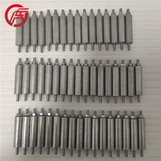
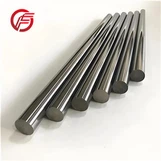
As a moly foil supplier, we also offer other molybdenum products. You can check out our ASTM B387 99.95% Pure Molybdenum Round Bar, which is made of high-purity molybdenum and has excellent mechanical properties. We also have 360 361 363 High Purity 99.95% Molybdenum Nuts that are suitable for high - temperature and high - stress applications. And our Molybdenum Wire is widely used in the electronics and lighting industries.
Conclusion
The surface finish of moly foil is a complex and important characteristic that is influenced by multiple factors. Understanding the surface finish of moly foil is crucial for its proper application in various industries. Whether you need moly foil with a smooth surface for electronics or a more rugged finish for aerospace applications, we, as a professional moly foil supplier, can meet your specific requirements.
If you are interested in our moly foil or other molybdenum products, please feel free to contact us for more information and to start a procurement negotiation. We are committed to providing high - quality products and excellent customer service.
References
- ASM Handbook, Volume 5: Surface Engineering, ASM International
- Molybdenum: Properties, Processing, and Applications, Springer