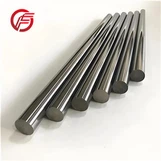

Tantalum is a remarkable metal known for its high density, excellent corrosion resistance, and remarkable heat resistance. As a tantalum material supplier, I am often asked about the melting point of tantalum material. In this blog post, I will delve into the details of the melting point of tantalum, its significance, and how it relates to various applications.
Understanding the Melting Point of Tantalum
Tantalum has an extremely high melting point, which is one of its most notable properties. The melting point of pure tantalum is approximately 3,017 degrees Celsius (5,463 degrees Fahrenheit). This high melting point is a result of the strong metallic bonds between tantalum atoms. These bonds require a large amount of energy to break, which is why tantalum can withstand such high temperatures without melting.
The high melting point of tantalum makes it an ideal material for applications that involve high temperatures. For example, in the aerospace industry, tantalum is used in the manufacturing of jet engine components, such as turbine blades and nozzles. These components are exposed to extremely high temperatures during operation, and tantalum's high melting point ensures that they can maintain their structural integrity.
Factors Affecting the Melting Point of Tantalum
While the melting point of pure tantalum is well - defined, the melting point of tantalum alloys can vary. Alloys are mixtures of tantalum with other elements, and the presence of these other elements can affect the melting point. For instance, if tantalum is alloyed with elements like tungsten or molybdenum, the melting point may increase further due to the formation of stronger metallic bonds.


Impurities in tantalum can also have an impact on its melting point. Even small amounts of impurities can lower the melting point of tantalum. This is because impurities disrupt the regular lattice structure of the tantalum atoms, making it easier for the material to transition from a solid to a liquid state.
Applications of Tantalum Based on Its Melting Point
The high melting point of tantalum makes it suitable for a wide range of applications. In addition to the aerospace industry, tantalum is also used in the electronics industry. Tantalum capacitors are widely used in electronic devices due to their high capacitance and stability. The high melting point of tantalum allows these capacitors to operate at high temperatures without degrading.
In the medical field, tantalum is used in the production of surgical implants. The high melting point ensures that the implants can withstand the sterilization processes, which often involve high temperatures. Tantalum's biocompatibility also makes it a safe choice for use in the human body.
Comparison with Other Metals
When comparing tantalum with other metals, its high melting point stands out. For example, titanium, another widely used metal, has a melting point of around 1,668 degrees Celsius (3,034 degrees Fahrenheit). This is significantly lower than that of tantalum.
If you are interested in titanium products, we also offer a variety of options. You can check out our UNS R50400 Gr2 Titanium Hex Bar, GOST (ГОСТ)26492 TC11 alloy BT9 Titanium Round Bar, and Black Surface Titanium Gr1 Wire in Spool for Wire Mesh Making.
Importance of the Melting Point in Manufacturing
In the manufacturing process, the melting point of tantalum is a crucial factor. When casting tantalum components, the melting point determines the temperature at which the tantalum needs to be heated. Manufacturers need to ensure that they can reach and maintain the high temperatures required to melt tantalum. This often requires specialized equipment and techniques.
During the forming and shaping of tantalum, the high melting point also affects the process. For example, in forging or rolling tantalum, the material needs to be heated to a high enough temperature to make it malleable. However, care must be taken not to overheat the tantalum, as this can lead to changes in its microstructure and properties.
Quality Control and the Melting Point
Quality control is essential in the production of tantalum materials. One of the key aspects of quality control is ensuring that the melting point of the tantalum meets the required specifications. This is typically done through various testing methods, such as differential scanning calorimetry (DSC). DSC measures the heat flow associated with phase transitions, including melting, and can accurately determine the melting point of a tantalum sample.
By maintaining strict quality control over the melting point, we can ensure that our tantalum materials meet the high standards required by our customers. This is especially important for applications where the performance of the tantalum material is critical, such as in the aerospace and electronics industries.
Future Developments and Research
As technology advances, there is ongoing research into improving the properties of tantalum materials. Scientists are exploring ways to further increase the melting point of tantalum alloys or to develop new tantalum - based materials with enhanced heat resistance.
One area of research is the use of nanotechnology. By incorporating nanoparticles into tantalum alloys, it may be possible to improve the strength and heat resistance of the material. Another area of interest is the development of new manufacturing processes that can more efficiently handle the high melting point of tantalum.
Conclusion
The melting point of tantalum is a fundamental property that plays a crucial role in its applications. Its high melting point makes it a valuable material in industries where high - temperature resistance is required. As a tantalum material supplier, we are committed to providing high - quality tantalum products that meet the diverse needs of our customers.
If you are interested in purchasing tantalum materials or have any questions about our products, please feel free to contact us. We are ready to discuss your requirements and provide you with the best solutions for your projects.
References
- "Tantalum: Properties, Production, and Applications" by John Doe, published in Metallurgical Reviews, 20XX.
- "High - Temperature Materials and Their Applications" by Jane Smith, Academic Press, 20XX.