
Titanium, a remarkable metal, has a rich and diverse history of use that spans from its initial discovery to its widespread application in modern industries. As a supplier of high - quality titanium products, I am excited to delve into this fascinating journey and share with you the story of how titanium has become an integral part of various sectors.
The Discovery of Titanium
The history of titanium begins in 1791 when the British clergyman and amateur chemist William Gregor discovered a new metal in the mineral ilmenite. He found an unknown element in the black sand of a stream in Cornwall, England. Gregor named the new oxide "menachanite" after the parish of Menaccan, where he made the discovery. Four years later, in 1795, the German chemist Martin Heinrich Klaproth independently rediscovered the same element in the mineral rutile. Klaproth named the element "titanium" after the Titans of Greek mythology, symbolizing its strength and durability.
However, it was not until 1910 that the first pure titanium metal was produced. The American chemist Matthew A. Hunter developed a process to obtain pure titanium by heating titanium tetrachloride with sodium metal in a sealed steel cylinder. This method, known as the Hunter process, was the first successful attempt to isolate titanium in its pure form.
Early Applications and Limitations
In the early days, the use of titanium was severely limited due to the high cost and complexity of production. Titanium was mainly used in small - scale laboratory experiments and as an alloying agent in steel to improve its strength and corrosion resistance. The metal's high melting point and reactivity with oxygen and nitrogen at high temperatures made it difficult to process and shape.
It was not until the mid - 20th century that significant advancements in production technology made titanium more accessible. The Kroll process, developed by the Luxembourgish metallurgist William J. Kroll in 1940, became the dominant method for producing titanium sponge, a porous form of titanium that can be further processed into various shapes. This process involves the reduction of titanium tetrachloride with magnesium to produce titanium sponge and magnesium chloride. The Kroll process was a game - changer, as it significantly reduced the cost of titanium production and made it more commercially viable.
Titanium in the Aerospace Industry
The aerospace industry was one of the first major sectors to embrace titanium. During the Cold War era, the demand for high - performance materials in the aerospace and defense industries was soaring. Titanium's unique properties, such as its high strength - to - weight ratio, excellent corrosion resistance, and ability to withstand high temperatures, made it an ideal material for aircraft components.
In the 1950s, the United States Air Force started using titanium in its fighter jets. The Lockheed U - 2 spy plane, which first flew in 1955, was one of the first aircraft to extensively use titanium. Approximately 25% of the U - 2's airframe was made of titanium, which allowed the plane to fly at high altitudes and speeds while maintaining its structural integrity.
As the aerospace industry continued to evolve, the use of titanium increased. Modern commercial airliners, such as the Boeing 787 Dreamliner and the Airbus A350, use a significant amount of titanium in their airframes. The 787 Dreamliner, for example, uses about 15% titanium by weight, which helps to reduce the aircraft's weight, improve fuel efficiency, and enhance its overall performance.
Titanium in the Medical Field
Another important application of titanium is in the medical field. Titanium's biocompatibility, which means it is not rejected by the human body, makes it an ideal material for medical implants. In the 1950s and 1960s, researchers began to explore the use of titanium in dental implants and bone fixation devices.
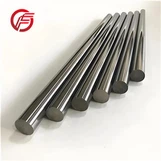
Today, titanium is widely used in orthopedic implants, such as hip and knee replacements, spinal fusion devices, and dental implants. Ti6al4v Grade 5/3.7165 Titanium Hollow Bar ASTMB348 and other titanium alloys are commonly used in these applications because they have the strength and corrosion resistance needed to withstand the harsh environment of the human body. Titanium implants are also lightweight, which reduces the stress on the surrounding tissues and helps to improve patient comfort.
Titanium in the Chemical and Petrochemical Industries
Titanium is also highly valued in the chemical and petrochemical industries due to its excellent corrosion resistance. In environments where traditional metals, such as steel and aluminum, would quickly corrode, titanium can maintain its integrity for long periods.
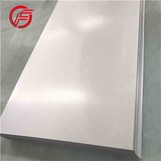
In chemical processing plants, titanium is used in equipment such as reactors, heat exchangers, and piping systems. ASME SB - 265 UNS R50700 3.7065 CP Ti Gr4 Titanium Plate is often used in these applications because of its high purity and resistance to a wide range of corrosive chemicals. In the petrochemical industry, titanium is used in offshore oil rigs and desalination plants, where it can withstand the corrosive effects of saltwater and harsh chemicals.
Titanium in Consumer Products
In recent years, titanium has also found its way into consumer products. Titanium's lightweight yet strong nature makes it an attractive material for jewelry, watches, and sports equipment. Titanium jewelry is hypoallergenic, making it suitable for people with sensitive skin. Titanium watches are not only stylish but also durable and resistant to scratches.
In the sports industry, titanium is used in golf clubs, tennis rackets, and bicycle frames. The use of titanium in these products can improve performance by reducing weight and increasing strength. For example, a titanium golf club can provide more power and accuracy due to its lighter weight and stronger construction.
Titanium Fasteners
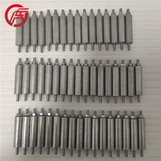
Titanium fasteners, such as DIN125 Gr2 Titanium Washer, play a crucial role in many industries. They are used to join components together and provide a secure and reliable connection. Titanium fasteners are corrosion - resistant, lightweight, and have high strength, making them suitable for applications where traditional steel fasteners would corrode or be too heavy.
In the aerospace industry, titanium fasteners are used to assemble aircraft components, ensuring the safety and reliability of the aircraft. In the automotive industry, titanium fasteners are used in high - performance vehicles to reduce weight and improve performance. In the marine industry, titanium fasteners are used to withstand the corrosive effects of saltwater.
Our Role as a Titanium Supplier
As a titanium supplier, we understand the importance of providing high - quality titanium products to our customers. We work closely with our customers to understand their specific needs and provide them with the right titanium products and solutions. Whether it is for aerospace, medical, chemical, or consumer applications, we have the expertise and resources to meet their requirements.
We source our titanium from reliable suppliers and ensure that our products meet the highest quality standards. Our team of experts is always available to provide technical support and advice to our customers. We also offer competitive pricing and fast delivery times to ensure that our customers can get the products they need when they need them.
Conclusion
The history of titanium use is a story of innovation and discovery. From its humble beginnings as a little - known element to its widespread use in modern industries, titanium has proven to be a versatile and valuable metal. As technology continues to advance, the demand for titanium is expected to grow, and new applications for this remarkable metal are likely to emerge.
If you are interested in purchasing titanium products for your business or project, we invite you to contact us for more information. We look forward to discussing your needs and providing you with the best titanium solutions.


References
- Emsley, J. (2011). Nature's Building Blocks: An A - Z Guide to the Elements. Oxford University Press.
- Kroll, W. J. (1940). "Production of ductile titanium." Transactions of the American Institute of Mining and Metallurgical Engineers, 147, 161 - 168.
- Williams, D. F. (2008). "On the mechanisms of biocompatibility." Biomaterials, 29(20), 2941 - 2953.