
Tantalum is a rare, hard, blue-gray, lustrous transition metal that is highly corrosion-resistant. Tantalum alloys combine tantalum with other elements to enhance specific properties, making them suitable for a wide range of applications in aerospace, electronics, chemical processing, and biomedical fields. As a reputable tantalum supplier, I'm here to share with you how tantalum alloys are made.
Raw Material Preparation
The first step in making tantalum alloys is to obtain high - purity tantalum and other alloying elements. Tantalum is typically extracted from its ores, such as columbite - tantalite (coltan). The extraction process involves several steps, including crushing, grinding, and chemical treatment. After extraction, the tantalum powder is usually purified through processes like electron - beam melting or vacuum arc remelting to achieve a purity level of 99.95% or higher. For the alloying elements, depending on the desired properties of the final alloy, elements such as tungsten, molybdenum, niobium, and hafnium may be selected. These elements are also obtained in high - purity forms and prepared for the alloying process.
Blending of Elements
Once the raw materials are ready, the next step is to blend the tantalum and alloying elements in the correct proportions. This is a critical step as the precise ratio of elements determines the final properties of the tantalum alloy. Computer - controlled weighing systems are often used to ensure accurate measurements. For example, if we want to produce a tantalum - tungsten alloy with improved strength at high temperatures, the appropriate amount of tungsten powder is carefully mixed with tantalum powder. The blending can be done in a mechanical mixer, where the powders are thoroughly mixed to ensure a homogeneous distribution of the alloying elements.
Powder Compaction
After blending, the mixed powders are compacted into a desired shape. There are several methods for powder compaction, such as cold isostatic pressing (CIP) and uniaxial pressing. In cold isostatic pressing, the powder is placed in a flexible mold and then subjected to high - pressure fluid from all directions. This results in a more uniform compaction compared to uniaxial pressing, where pressure is applied in one direction. The compacted powder, known as a green compact, has a certain shape and density, but it is still relatively porous.


Sintering
The green compact then undergoes sintering, a process where the compact is heated in a controlled atmosphere at a high temperature, usually below the melting point of the main component. During sintering, the powder particles bond together, reducing porosity and increasing the density and strength of the material. The sintering process can take several hours to days, depending on the size and composition of the compact. For tantalum alloys, sintering is often carried out in a vacuum or an inert gas atmosphere, such as argon, to prevent oxidation.
Melting and Casting
In some cases, after sintering, the material may be melted and cast into a more precise shape. Vacuum arc melting (VAM) or electron - beam melting (EBM) are commonly used methods for melting tantalum alloys. In vacuum arc melting, an electric arc is struck between an electrode made of the sintered material and a water - cooled copper crucible. The heat from the arc melts the electrode, and the molten metal is collected in the crucible. The process is carried out in a vacuum to prevent contamination. Electron - beam melting uses a high - energy electron beam to heat and melt the material. After melting, the molten alloy can be cast into molds to produce various shapes, such as ingots, bars, or plates.
Forming and Fabrication
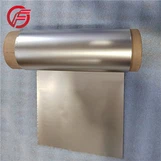
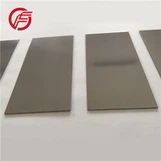
Once the cast alloy is obtained, it can be further processed through various forming and fabrication techniques. For example, rolling can be used to reduce the thickness of the alloy and produce sheets or foils. Our ASTMB708 R05200 Tantalum Foil Sheet is produced through a series of rolling processes. The alloy can also be forged to improve its mechanical properties and shape it into complex geometries. Extrusion is another method used to produce long, uniform shapes, such as rods. Our RO5200 Pure 99.95% Polished Tantalum Rods are carefully extruded and then polished to meet high - quality standards.
Heat Treatment
Heat treatment is an important step in the production of tantalum alloys to optimize their mechanical and physical properties. Different heat - treatment processes, such as annealing, quenching, and tempering, can be used depending on the specific requirements of the alloy. Annealing is often used to relieve internal stresses and improve ductility. Quenching involves rapid cooling of the alloy from a high temperature, which can increase its hardness and strength. Tempering is then carried out to reduce the brittleness introduced by quenching.
Finishing and Quality Control
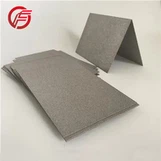
After forming and heat treatment, the tantalum alloy products undergo finishing operations, such as machining, grinding, and polishing, to achieve the desired surface finish and dimensional accuracy. Quality control is an essential part of the entire process. Various tests, including chemical analysis, mechanical testing, non - destructive testing, and microscopy, are carried out to ensure that the products meet the required specifications. For instance, our Tantalum Target is subject to strict quality control to ensure its high purity and uniformity.
Conclusion
In summary, the production of tantalum alloys is a complex process that involves multiple steps, from raw material preparation to final finishing and quality control. Each step is crucial in determining the properties and quality of the final product. As a tantalum supplier, we are committed to providing high - quality tantalum alloy products to meet the diverse needs of our customers in different industries. If you are interested in our tantalum products or have any questions about tantalum alloys, feel free to contact us for procurement and further discussions. We look forward to serving you and meeting your specific requirements.
References
- "Principles of Powder Metallurgy" by R. M. German
- "Materials Science and Engineering: An Introduction" by William D. Callister Jr. and David G. Rethwisch
- Journal of Alloys and Compounds, various issues related to tantalum alloys research.