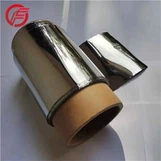

ASTM B363 is a standard that specifies the requirements for nickel - copper alloy, nickel - chromium alloy, and nickel - molybdenum alloy seamless and welded tubes and pipes used in various industrial applications. As a supplier of ASTM B363 products, I have witnessed a variety of common failures that can occur with these products. Understanding these failures is crucial for both suppliers and end - users to ensure the proper use and longevity of the materials.
Corrosion
One of the most prevalent issues with ASTM B363 products is corrosion. These alloys are often used in environments where they are exposed to corrosive substances such as acids, seawater, and chemicals. Depending on the specific alloy composition and the environment, different types of corrosion can occur.
Pitting Corrosion
Pitting corrosion is a localized form of corrosion that appears as small holes or pits on the surface of the material. This type of corrosion can be extremely damaging because it can penetrate deep into the material in a relatively short period. For ASTM B363 products, pitting corrosion can be triggered by factors such as the presence of chloride ions in the environment. Chloride ions can break down the passive oxide film on the surface of the alloy, allowing corrosion to initiate at specific points. Learn more about corrosion resistance products like the PVD Metal Target 99.9% Titanium Plate Targets, which are engineered to offer better protection in harsh environments.
Crevice Corrosion
Crevice corrosion happens in confined spaces, such as between two joined parts or under gaskets. In these areas, the lack of proper oxygen circulation and the build - up of corrosive substances can lead to accelerated corrosion. For example, in a pipeline joint where two ASTM B363 pipes are connected, crevice corrosion can occur if the joint is not properly sealed. This type of corrosion can go undetected for a long time, gradually weakening the structure until it fails.
Fatigue Failure
ASTM B363 products are often subjected to cyclic loading during their service life. This can be due to factors such as vibration, pressure fluctuations, or thermal cycling. Over time, these cyclic loads can cause fatigue failure in the material.
Crack Initiation and Propagation
Fatigue failure starts with the initiation of small cracks on the surface of the material. These cracks can be caused by stress concentrations, which can occur at features such as sharp corners, notches, or weld defects. Once a crack is initiated, the cyclic loading will cause it to propagate through the material. Eventually, the crack can reach a critical size, leading to sudden and catastrophic failure. For example, in a pipeline system that experiences regular pressure fluctuations, fatigue cracks can form and grow in areas of high stress, such as near bends or fittings. The design and manufacturing process of ASTM B363 products need to minimize stress concentrations to reduce the risk of fatigue failure. Similar to how high - quality Titanium Alloy Wheel Bolts for BMW are designed to withstand cyclic stress without failing, ASTM B363 products should be engineered with proper fatigue resistance in mind.
Weld Defects
Welding is a common process used to join ASTM B363 products. However, welds can be a source of failure if not done correctly.
Porosity
Porosity in welds occurs when gas becomes trapped in the molten metal during the welding process. This can result in voids or holes in the weld, reducing its strength and integrity. Porosity can be caused by factors such as improper welding parameters, dirty or contaminated base materials, or the presence of moisture. For example, if the welding wire or the base metal has not been properly cleaned before welding, it can lead to the formation of porosity in the weld.
Lack of Fusion
Lack of fusion is another weld defect where the weld metal does not properly bond to the base metal or to adjacent weld beads. This can be due to insufficient heat input, incorrect welding technique, or improper joint preparation. A weld with lack of fusion has reduced load - carrying capacity and is more susceptible to cracking and corrosion.
Improper Heat Treatment
Heat treatment is an important process for ASTM B363 products to achieve the desired mechanical properties. Improper heat treatment can lead to various problems.
Overheating
Overheating during heat treatment can cause grain growth in the material. Coarse grains can reduce the strength, toughness, and corrosion resistance of the alloy. For example, if the temperature during annealing is too high or the holding time is too long, the grains in the ASTM B363 material can grow significantly, leading to a decrease in its overall performance.
Incomplete Heat Treatment
Incomplete heat treatment can result in non - uniform mechanical properties. For instance, if the material is not heated to the appropriate temperature or cooled at the correct rate, it may not achieve the desired hardness, strength, or ductility. This can make the product more prone to failure under normal operating conditions.
Material Selection Errors
Selecting the wrong ASTM B363 alloy for a particular application can also lead to failure. Different alloys have different properties, such as corrosion resistance, strength, and thermal conductivity.
Mismatch with Environment
If an alloy with low corrosion resistance is selected for an application in a highly corrosive environment, it will quickly deteriorate. For example, using a nickel - copper alloy that is not suitable for seawater applications in a marine environment can lead to rapid corrosion and failure. Similarly, choosing an alloy with insufficient strength for a high - pressure application can result in deformation or rupture of the product. When in doubt, it's essential to consult experts or refer to industry standards to ensure the right selection. If you're considering nickel - based products, you might also look into ASME ANSI B16.9 Nickel Stub End and understand their suitability for different applications.
How to Prevent Failures
To prevent the common failures of ASTM B363 products, several measures can be taken. First, proper material selection is crucial. Understanding the service environment, including factors such as temperature, pressure, and the presence of corrosive substances, is essential to choose the right alloy. Second, strict quality control during the manufacturing process is necessary. This includes proper heat treatment, welding, and finishing operations. Third, regular inspection and maintenance of the products can help detect potential problems early and take corrective actions.
Contact for Procurement
If you are in the market for high - quality ASTM B363 products and want to avoid the common failures described above, we are here to help. We have a wide range of products that are carefully manufactured to meet the strictest standards. Our team of experts can assist you in selecting the right product for your specific application. Get in touch with us to start a procurement discussion and ensure that you get the best - performing ASTM B363 products for your needs.


References
- ASTM International. ASTM B363 - 19 Standard Specification for Nickel - Copper Alloy, Nickel - Chromium Alloy, and Nickel - Molybdenum Alloy Seamless and Welded Condenser and Heat - Exchanger Tubes.
-ASM Handbook Volume 13C: Corrosion: Prevention and Control. ASM International. - Welding Handbook. American Welding Society.