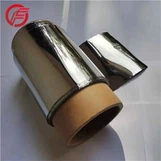

Titanium is a wonder material that has revolutionized various industries, and the aerospace sector stands out as one of its most prominent and impactful application areas. As a dedicated titanium supplier, I've witnessed firsthand how this metal plays an irreplaceable role in aerospace engineering. In this article, I'll delve into the diverse uses of titanium in the aerospace industry, exploring its properties, applications, and why it's a go - to choice for aircraft manufacturers.
Unique Properties of Titanium
Titanium boasts a remarkable combination of properties that make it ideal for aerospace applications. Firstly, its high strength - to - weight ratio is a game - changer. It is as strong as steel but weighs about 45% less. This characteristic allows aircraft to reduce their overall weight while maintaining structural integrity, leading to improved fuel efficiency and higher payload capacity.
Another significant property is its excellent corrosion resistance. In the harsh aerospace environment, where aircraft are exposed to extreme temperatures, high humidity, and corrosive chemicals such as de - icing fluids, titanium can withstand these conditions without significant degradation. This reduces maintenance costs and extends the lifespan of aircraft components.
Titanium also has good heat resistance. It retains its strength at elevated temperatures, making it suitable for parts of the aircraft that experience high thermal loads, like engine components. Additionally, it has low thermal expansion, which means it maintains its shape and dimensions well during temperature changes, ensuring consistent performance.
Applications in Aircraft Structures
One of the primary uses of titanium in the aerospace industry is in the construction of aircraft frames and airframes. Titanium alloys are used to make critical structural components such as spars, bulkheads, and wing ribs. These parts need to be strong to withstand the stresses of flight, including aerodynamic forces, takeoff, and landing. The high strength - to - weight ratio of titanium allows for the design of lighter and more efficient airframes, enabling aircraft to fly faster and farther.
For example, in modern commercial airliners, titanium is used extensively in the fuselage structure. It helps to reduce the weight of the aircraft, which directly translates into fuel savings. Airlines can operate more cost - effectively, and passengers benefit from lower ticket prices in the long run.
In the field of military aviation, titanium is even more crucial. Fighter jets require lightweight yet extremely strong structures to achieve high maneuverability and performance. Titanium alloys are used in the construction of the fuselage, wings, and control surfaces of these aircraft. Due to its high strength, it can withstand the extreme G - forces experienced during high - speed maneuvers.
Engine Applications
Aircraft engines are perhaps the most demanding application for titanium in the aerospace industry. Jet engines operate under extremely high temperatures, pressures, and rotational speeds. Titanium is used in several engine components, including compressor blades, disks, and casings.
Compressor blades are subject to high centrifugal forces and aerodynamic stresses. Titanium's high strength and low density make it the ideal material for these components. It allows the compressor to operate more efficiently, compressing air with less energy loss. The heat resistance of titanium also ensures that the blades can withstand the elevated temperatures generated during the compression process.
Titanium disks are used to hold the compressor blades and other components in place. They need to be strong and able to resist fatigue under the cyclic loading conditions of engine operation. Titanium's excellent fatigue resistance and high strength make it a reliable choice for these critical components.
Engine casings, which enclose the engine and protect it from the external environment, also make use of titanium. The corrosion resistance of titanium ensures that the casing remains intact, preventing any leaks or damage that could affect the engine's performance.
Fasteners and Connectors
Titanium is also widely used in aerospace fasteners and connectors. These small but crucial components are used to hold various parts of the aircraft together. Slotted Flat Head Titanium Screws are an excellent example. Their high strength, corrosion resistance, and low weight make them superior to traditional steel fasteners.
In an aircraft, thousands of fasteners are used, and even a small reduction in the weight of each fastener can lead to a significant overall weight savings. Titanium fasteners are also less likely to corrode, which reduces the risk of structural failure due to fastener degradation. They are used in critical areas such as the wing - fuselage connection, engine mounts, and control surface attachments.
Interior Applications
While titanium is well - known for its use in structural and engine components, it also has applications in the aircraft interior. Titanium sheets can be used for decorative purposes, adding a modern and high - end look to the cabin. Additionally, some interior components, such as seat frames and luggage compartments, can be made from titanium alloys.
The corrosion resistance of titanium ensures that these interior components remain in good condition over time, even with regular use and exposure to various substances. The high strength - to - weight ratio of titanium also allows for the design of lighter interior components, which contributes to the overall weight reduction of the aircraft.
Titanium Blocks and Sheets for Specialized Applications
In the aerospace industry, 6AL - 4V ASTMB381 Gr5 Titanium Block is a popular choice. This alloy is widely used for manufacturing complex aerospace components through machining and forging processes. Its excellent combination of strength, corrosion resistance, and formability makes it suitable for a wide range of applications, from engine parts to structural components.


ASTMF67 ASTMF136 Titanium Sheet For Medical, although primarily used in the medical industry, also has potential aerospace applications. The high biocompatibility and corrosion resistance of these sheets could be beneficial for certain aerospace components where these properties are required, such as in areas exposed to unique chemical environments or for components that need to be in contact with specific substances.
The Future of Titanium in Aerospace
As the aerospace industry continues to evolve, the demand for titanium is expected to grow. With the push towards more fuel - efficient and environmentally friendly aircraft, the need for lightweight and high - performance materials like titanium will only increase.
New titanium alloys are being developed to further enhance the properties of the metal. These alloys may have even higher strength - to - weight ratios, better heat resistance, or improved corrosion resistance. Additive manufacturing, also known as 3D printing, is another area where titanium is likely to play a significant role. 3D printing allows for the creation of complex geometries that were previously difficult or impossible to manufacture, opening up new design possibilities for aerospace components.
Conclusion
Titanium is an essential material in the aerospace industry, offering a unique combination of properties that make it indispensable for modern aircraft. From structural components to engine parts, fasteners, and interior applications, titanium's presence is felt throughout the aircraft. As an experienced titanium supplier, I'm proud to be part of an industry that relies on this amazing metal to push the boundaries of flight.
If you're involved in the aerospace industry and are looking for high - quality titanium products for your projects, I invite you to reach out to me for a procurement discussion. We can explore how our titanium offerings can meet your specific requirements and contribute to the success of your aerospace endeavors.
References
- Boyer, R. R., Welsch, G., & Collings, E. W. (2015). Materials Properties Handbook: Titanium Alloys. ASM International.
- Wohlgemuth, J. (2018). Titanium Alloys in Aerospace Applications. Springer.
- ASM Handbook, Volume 2: Properties and Selection: Nonferrous Alloys and Special - Purpose Materials.