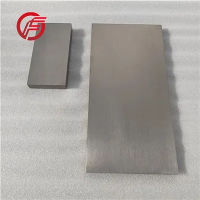

Is it possible to automate the creation of a TZM sheet? This question has been lingering in the minds of industry players for quite some time, especially for TZM sheet suppliers like myself. Let's delve into this topic and explore the potential, challenges, and implications of automating the creation of TZM sheets.


Understanding TZM Sheets
TZM (titanium - zirconium - molybdenum) sheets are high - performance materials widely used in various industries. Their excellent properties, such as high strength at elevated temperatures, good creep resistance, and desirable thermal conductivity, make them a preferred choice for applications in aerospace, electronics, and nuclear energy. As a TZM sheet supplier, I have seen first - hand the growing demand for these sheets in different sectors. For example, in aerospace, TZM sheets are used in parts of rocket engines where they can withstand extremely high temperatures and mechanical stresses.
The Current State of TZM Sheet Production
Currently, the production of TZM sheets involves multiple complex steps. It starts with the melting and alloying of the raw materials: molybdenum, titanium, and zirconium. This requires precise control of temperature and composition to ensure the desired properties of the final product. After melting, the ingot is then processed through a series of forming operations, such as hot forging, hot rolling, and cold rolling. These processes are labor - intensive and require experienced operators to monitor and adjust the parameters continuously.
In the cold rolling stage, if you are interested in Cold - Rolled 360 361 363 Molybdenum Sheet, you can see that it is a critical step to achieve the required thickness and surface quality. Each step in the production process demands high - level skills and careful attention to detail, which makes the production process relatively slow and costly.
The Potential of Automation
Automating the creation of TZM sheets offers several enticing benefits. Firstly, it can significantly improve production efficiency. Automated machines can work continuously without breaks, reducing the production cycle time. For example, using automated melting furnaces, we can precisely control the melting temperature and alloying process, which is more accurate and faster than manual operations.
Secondly, automation can enhance product quality. Automated systems are less prone to human errors. In the forming processes, such as rolling, automated rollers can maintain a more consistent pressure and speed, resulting in TZM sheets with more uniform thickness and better surface finish. This is crucial for applications where high - precision components are required.
In addition, automation can also improve workplace safety. The production of TZM sheets involves high - temperature operations and the use of heavy machinery. By automating these processes, workers can be removed from potentially dangerous environments, reducing the risk of accidents.
Challenges in Automating TZM Sheet Production
However, several challenges need to be addressed before full - scale automation of TZM sheet production can be realized. One of the main challenges is the complexity of the materials. TZM is a refractory alloy with unique physical and chemical properties. The melting and processing of these materials require special conditions. Automated systems need to be designed to handle these complex requirements accurately.
Another challenge is the cost of implementing automation. The initial investment in automated equipment, such as robotic arms, automated furnaces, and advanced control systems, is substantial. Small and medium - sized suppliers may find it difficult to afford such investments. Moreover, the maintenance and upgrade of these automated systems also require a certain amount of capital.
The lack of standardization in the TZM sheet production process is also a hindrance. Different customers may have different requirements for the size, properties, and surface quality of TZM sheets. Developing a flexible automated system that can adapt to various production requirements is a significant technical challenge.
Technological Solutions and Developments
Despite the challenges, there have been some technological advancements that show promise for automating TZM sheet production. For example, the development of artificial intelligence and machine learning algorithms can be used to optimize the production process. These algorithms can analyze a large amount of production data, such as temperature, pressure, and composition, and make real - time adjustments to the production parameters.
In the field of robotics, advanced robotic arms can be used for handling and transferring the materials during the production process. These robotic arms can work with high precision and can be programmed to perform different tasks according to the production requirements.
Moreover, the development of sensors and monitoring systems has improved the ability to control the production process. Sensors can detect various parameters in real - time, such as the temperature inside the furnace and the thickness of the sheet during rolling. This information can be fed back to the control system, allowing for immediate adjustments to ensure the quality of the product.
The Role of the Supplier in the Automation Process
As a TZM sheet supplier, I play a crucial role in promoting the automation of TZM sheet production. I need to keep myself updated with the latest technological developments and explore opportunities to implement automation in my production facilities.
I also need to work closely with customers to understand their requirements and develop customized automated solutions. For example, if a customer has a specific order for TZM sheets with a unique size and property, I can use automation technology to meet these requirements more efficiently.
In addition, I can collaborate with equipment manufacturers and technology providers to develop and test new automated production systems. By sharing my practical experience in TZM sheet production, I can contribute to the improvement of the automation technology and make it more suitable for real - world production.
Conclusion
In conclusion, while there are challenges in automating the creation of TZM sheets, it is definitely possible. The potential benefits of automation, such as improved efficiency, enhanced product quality, and better workplace safety, outweigh the difficulties. With the continuous development of technology and the cooperation between suppliers, manufacturers, and technology providers, we can expect to see more and more automated production lines for TZM sheets in the future.
If you are interested in our TZM sheets or other molybdenum products like High - temperature melting Molybdenum Boat for evaporation and Molybdenum Wire, we welcome you to contact us for procurement and negotiation. We are committed to providing high - quality products and excellent services to meet your needs.
References
- "Handbook of Refractory Metals" by Robert W. Cahn.
- "Materials Science and Engineering: An Introduction" by William D. Callister.
- Industry reports on advanced materials and automation in manufacturing.