
Hey there! I'm a supplier of titanium, and today I wanna chat about how titanium conducts heat. It's a pretty cool topic, especially when you think about all the awesome things we can do with this metal thanks to its heat - conducting properties.
First off, let's talk a bit about what titanium is. Titanium is a chemical element with the symbol Ti and atomic number 22. It's a lustrous transition metal with a silver color, low density, and high strength. You'll find it in a whole bunch of places, from aerospace components to medical implants. And one of the key features that make it so useful is its ability to conduct heat.

So, how exactly does titanium conduct heat? Well, heat conduction in metals, including titanium, is mainly due to two mechanisms: the movement of free electrons and lattice vibrations.
Let's start with the free - electron model. In a metal like titanium, the outermost electrons of the atoms are loosely bound. These electrons can move freely throughout the metal lattice. When one part of the titanium is heated, the free electrons in that area gain kinetic energy. They start moving around more vigorously and collide with other electrons and atoms in the lattice. Through these collisions, the energy is transferred from the hot part of the titanium to the cooler parts. This is similar to a game of billiards, where the energy from one ball is transferred to another when they collide.
The other mechanism is lattice vibrations. The atoms in a titanium crystal lattice are constantly vibrating. When heat is applied, these vibrations increase in amplitude and frequency. The vibrating atoms pass on their energy to neighboring atoms through the inter - atomic forces. This transfer of vibrational energy is another way heat travels through titanium.
Now, compared to some other metals, titanium's heat - conducting ability is kind of in the middle. For example, copper is an excellent heat conductor. It has a very high thermal conductivity because it has a large number of free electrons that can move easily and transfer heat quickly. On the other hand, stainless steel has relatively low thermal conductivity. Titanium falls somewhere between these two. Its thermal conductivity at room temperature is about 21.9 W/(m·K). This value is lower than that of many common metals like copper (around 401 W/(m·K)) but higher than some alloys.
The heat - conducting properties of titanium have a huge impact on its applications. In the aerospace industry, titanium is used in engine components. The ability to conduct heat helps in dissipating the high temperatures generated during engine operation. This prevents overheating and ensures the long - term performance and safety of the engine.
In the medical field, titanium's heat conduction is also important. When it's used in implants, it needs to be able to adapt to the body's temperature. The moderate heat - conducting ability of titanium allows it to do this without causing discomfort to the patient. It can also help in preventing the build - up of excessive heat in the implant area, which could lead to tissue damage.
If you're into sports equipment, you might notice titanium in high - end bicycles or golf clubs. The heat - conducting properties of titanium play a role here too. They can help in maintaining the structural integrity of the equipment under different temperature conditions. For example, when a cyclist is riding in hot weather, the heat - conducting ability of titanium in the bike frame helps in dissipating the heat generated from friction and exposure to the sun.
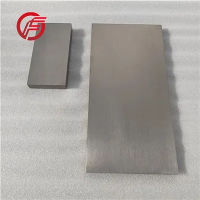
Now, at our company, we offer high - quality titanium products. One of our popular items is the Gr2 Titanové Desky. Grade 2 titanium is known for its excellent corrosion resistance, good formability, and of course, its decent heat - conducting properties. Whether you're in the aerospace, medical, or sports equipment industry, these titanium sheets can be a great choice for your projects.
If you're interested in learning more about our titanium products or have specific requirements for heat - conducting applications, don't hesitate to reach out. We're here to help you find the right titanium solution for your needs. Whether it's for a small - scale project or a large - scale industrial application, we've got the expertise and the products to meet your demands.
So, if you think titanium could be the right fit for your next project, just contact us. We'll be more than happy to have a chat and discuss how we can work together. Let's make the most of titanium's amazing heat - conducting properties!
References:
- "Introduction to Materials Science for Engineers" by James F. Shackelford
- "Materials Science and Engineering: An Introduction" by William D. Callister, Jr. and David G. Rethwisch
- Various research papers on thermal conductivity of metals from scientific journals.