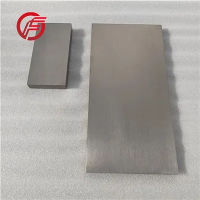

Hey there! I'm a supplier of titanium products, and today I wanna chat about how titanium ages over time. Titanium is an amazing metal, known for its strength, low density, and excellent corrosion resistance. But like everything else, it does change as time goes by.
First off, let's talk about what makes titanium so special in the first place. Titanium has a unique atomic structure that gives it some super - cool properties. It forms a thin, protective oxide layer on its surface almost instantly when exposed to air. This oxide layer is what makes titanium so resistant to corrosion. It's like a shield that stops other chemicals from reacting with the metal underneath.
Now, when it comes to aging, the most common thing that happens to titanium is related to this oxide layer. Over time, the oxide layer can thicken. This usually occurs in an environment where there's oxygen present, which is just about everywhere on Earth. The rate at which the oxide layer thickens depends on a few factors, like temperature, humidity, and the presence of other chemicals in the air.
In a normal, ambient environment, the thickening of the oxide layer is a very slow process. You won't notice any visible changes for a long time. But in high - temperature environments, say above 400°C (752°F), the oxidation process speeds up significantly. The oxide layer can become thicker and may even start to flake off in some cases. This is called scale formation. When the scale flakes off, it exposes fresh titanium metal to the environment, which can then start to oxidize again.
Another aspect of titanium aging is related to mechanical properties. Titanium is a strong metal, but over time, repeated stress can cause it to fatigue. Fatigue is when a material weakens and eventually fails due to repeated loading and unloading. For example, if you have a titanium part in a machine that's constantly moving, the stress from the movement can cause small cracks to form in the metal. These cracks can grow over time and eventually lead to the failure of the part.
The corrosion resistance of titanium can also be affected over time, although it's still much better than most other metals. In some aggressive environments, like those with high concentrations of chloride ions (such as seawater), titanium can experience a type of corrosion called crevice corrosion. Crevice corrosion occurs in small gaps or crevices where the flow of oxygen is restricted. The lack of oxygen in these areas can cause a change in the chemistry of the metal - surface interface, leading to corrosion.
So, how does all this aging stuff matter for us as titanium suppliers? Well, it's crucial to understand how titanium ages so that we can provide the best advice to our customers. For example, if a customer is looking for a titanium product for a high - temperature application, we need to make sure they're aware of the potential for scale formation and how to manage it.
Let's take a look at some of the titanium products we offer and how aging might affect them.
One of our popular products is the MMO Ruthenium - Iridium Coated Titanium Anode Rod. These anode rods are used in various electrochemical processes. Over time, the coating on the anode rod can degrade. The aging of the coating can be influenced by factors like the type of electrolyte it's in, the current density, and the temperature. If the coating degrades, it can affect the performance of the anode rod, reducing its efficiency and lifespan.
Another product is the Titanium Screen Mesh. The screen mesh is often used in filtration and separation applications. As it ages, the mechanical properties of the mesh can change. The repeated stress from the flow of fluids through the mesh can cause fatigue, leading to the formation of holes or tears. Also, if the mesh is used in a corrosive environment, the oxide layer on the titanium wires can be damaged, which may lead to corrosion and further weakening of the mesh.
We also offer ASTMB265 Waterjet Cutting Gr2 Gr12 Titanium Circles. These circles are used in a variety of industries, from aerospace to medical. Aging can affect their dimensional stability. If the circles are exposed to high temperatures or repeated stress, they may warp or change shape slightly. This can be a problem, especially in applications where precise dimensions are required.
To mitigate the effects of aging, there are several things that can be done. One option is to apply a protective coating to the titanium products. There are various types of coatings available that can enhance the corrosion resistance and reduce the rate of oxidation. Another approach is to design the products in a way that minimizes stress. For example, using proper fillets and smooth transitions in the design can reduce stress concentrations and prevent fatigue.
If you're in the market for titanium products and want to learn more about how they'll age in your specific application, don't hesitate to reach out. We're here to help you make the best choice for your needs. Whether it's understanding the long - term performance of a product or finding the right solution to combat aging, we've got the expertise. So, feel free to contact us for more information and to start a procurement discussion.
References


- "Titanium: A Technical Guide" by J. R. Davis
- "Corrosion of Metals" by P. R. Roberge
- "Mechanical Behavior of Materials" by N. E. Dowling