
Can Ni Foil Be Used in High - Temperature Environments?
Hey there! I'm a supplier of Ni foil, and I often get asked whether Ni foil can handle high - temperature environments. Well, let's dig into this topic and find out.
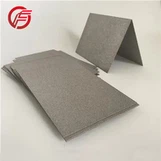
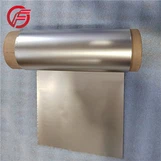
First off, let's talk a bit about what Ni foil is. Ni stands for nickel, and nickel foil is a thin sheet of nickel metal. Nickel has some pretty cool properties that make it a popular choice in a lot of different industries. It's corrosion - resistant, has good electrical conductivity, and it's relatively strong.
When it comes to high - temperature environments, nickel has some advantages. One of the key things is its high melting point. Nickel melts at around 1455 °C (2651 °F). This means that in many high - temperature applications, nickel can maintain its solid form and structure without melting easily.
For example, in some industrial furnaces where temperatures can reach several hundred degrees Celsius, Ni foil can be used as a lining or a component. It can help protect other parts of the furnace from the extreme heat and also prevent corrosion from hot gases or chemicals present in the furnace environment.
Another area where Ni foil can be useful in high - temperature situations is in electronics. In some high - power electronic devices, heat is generated during operation. Ni foil can be used as a heat sink or a conductor to help dissipate the heat. Its good thermal conductivity allows it to transfer heat away from the sensitive components, keeping them at a safe operating temperature.
However, it's not all smooth sailing. Even though nickel has a high melting point, there are still some limitations when it comes to using Ni foil in high - temperature environments. At very high temperatures, nickel can start to oxidize. Oxidation is a chemical reaction where the nickel reacts with oxygen in the air to form nickel oxide. This can cause the Ni foil to lose some of its properties, like its electrical conductivity and its mechanical strength.
The rate of oxidation depends on a few factors, such as the temperature, the duration of exposure to the high temperature, and the presence of other chemicals in the environment. In general, the higher the temperature and the longer the exposure, the more significant the oxidation will be.
To combat oxidation, some Ni foils are coated with special materials. These coatings can act as a barrier between the nickel and the oxygen in the air, reducing the rate of oxidation. Some common coatings include ceramic coatings or other metal coatings.
Now, let's talk about some of the applications where Ni foil is used in high - temperature environments. In the aerospace industry, Ni foil is used in jet engines. Jet engines operate at extremely high temperatures, and Ni foil can be used in components like turbine blades or combustion chambers. The high - temperature resistance of nickel helps these components withstand the intense heat generated during engine operation.
In the energy sector, Ni foil is also used in some high - temperature energy storage systems. For example, in some types of batteries or fuel cells, Ni foil can be used as an electrode or a current collector. These systems often operate at elevated temperatures, and the Ni foil needs to be able to maintain its performance under these conditions.
If you're in the market for high - quality Ni foil for high - temperature applications, you might also be interested in some of our other products. We also offer UNS R52400 3.7235 ASTM B338 Gr7 Titanium Tube, which is great for applications that require high strength and corrosion resistance at high temperatures. Another option is our Zirconium Seamless Tubes, which are known for their excellent high - temperature properties. And if you're looking for something for tank applications, our Elliptical Tank Heads are a great choice.
In conclusion, Ni foil can definitely be used in high - temperature environments, but it has its limitations. With proper coating and design, it can perform well in a variety of high - temperature applications. If you're interested in using Ni foil for your high - temperature needs or any of our other products, feel free to reach out for a quote and start a procurement discussion. We're here to help you find the best solutions for your specific requirements.


References
- Smith, J. (2020). Nickel Alloys in High - Temperature Applications. Journal of Materials Science.
- Johnson, A. (2019). Oxidation of Nickel at High Temperatures. Metallurgical Transactions.