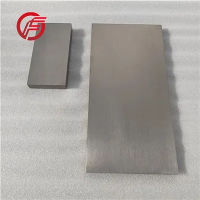

As a seasoned supplier of moly rods, I've witnessed firsthand the profound impact that the quality of these essential components can have on their performance. Molybdenum rods, known for their high melting point, excellent thermal conductivity, and remarkable strength, are widely used in various industries, including electronics, aerospace, and metallurgy. In this blog, I'll delve into the key factors that determine the quality of a moly rod and how they influence its performance.
Purity: The Foundation of Quality
The purity of a moly rod is perhaps the most critical factor affecting its performance. High-purity moly rods, typically with a purity level of 99.95% or higher, offer superior properties compared to their lower-purity counterparts. Impurities in moly rods can act as weak points, reducing the material's strength, ductility, and thermal conductivity. They can also cause oxidation and corrosion, leading to premature failure of the rod.


For instance, in high-temperature applications such as furnace heating elements, impurities can cause the rod to deform or break under stress. High-purity moly rods, on the other hand, can withstand extreme temperatures without significant degradation, ensuring reliable and long-lasting performance. As a supplier, I always emphasize the importance of using high-purity moly rods to meet the demanding requirements of our customers.
Grain Structure: Shaping Performance
The grain structure of a moly rod plays a crucial role in determining its mechanical properties. A fine-grained structure generally results in higher strength and better ductility, while a coarse-grained structure can lead to reduced toughness and increased brittleness. The grain size and orientation can be controlled through the manufacturing process, including powder metallurgy, hot working, and heat treatment.
In applications where the moly rod is subjected to high-stress conditions, such as in aerospace components, a fine-grained structure is preferred to ensure optimal performance. By carefully controlling the grain structure, we can produce moly rods that meet the specific mechanical requirements of our customers.
Density and Porosity: Ensuring Integrity
The density and porosity of a moly rod are also important factors that affect its performance. A high-density rod with low porosity is more likely to have uniform properties and better resistance to cracking and deformation. Porosity can occur during the manufacturing process, especially in powder metallurgy, and can significantly reduce the strength and durability of the rod.
To ensure the quality of our moly rods, we use advanced manufacturing techniques to minimize porosity and achieve high density. This not only improves the performance of the rods but also enhances their reliability and longevity.
Surface Finish: A Matter of Precision
The surface finish of a moly rod can have a significant impact on its performance, especially in applications where the rod comes into contact with other components. A smooth and uniform surface finish can reduce friction and wear, improving the efficiency and lifespan of the rod. It can also prevent the accumulation of contaminants, which can cause corrosion and damage to the rod.
As a supplier, we offer moly rods with a variety of surface finishes to meet the specific requirements of our customers. Whether it's a mirror-like finish for optical applications or a rough finish for better adhesion, we can provide the right solution to ensure optimal performance.
Impact on Specific Applications
Let's take a closer look at how the quality of a moly rod can affect its performance in specific applications:
Electronics Industry
In the electronics industry, moly rods are commonly used as electrodes in semiconductor manufacturing. High-purity moly rods with a fine-grained structure and smooth surface finish are essential for ensuring precise and reliable performance. Impurities or surface defects can cause electrical shorts or signal interference, leading to production errors and reduced yields.
Aerospace Industry
In the aerospace industry, moly rods are used in a variety of components, including turbine blades, rocket nozzles, and structural parts. The high strength, high-temperature resistance, and low thermal expansion coefficient of moly rods make them ideal for these demanding applications. However, the quality of the rods must be carefully controlled to ensure the safety and reliability of the aircraft.
Metallurgy Industry
In the metallurgy industry, moly rods are used as additives in steel and other alloys to improve their strength, hardness, and corrosion resistance. The purity and quality of the moly rods can significantly affect the properties of the final alloy. Impurities or inconsistent quality can lead to variations in the alloy's performance, which can have serious consequences in critical applications.
Conclusion and Call to Action
In conclusion, the quality of a moly rod has a profound impact on its performance in various applications. As a supplier, we understand the importance of providing high-quality moly rods that meet the specific requirements of our customers. By focusing on factors such as purity, grain structure, density, porosity, and surface finish, we can ensure that our moly rods deliver optimal performance and reliability.
If you're in the market for high-quality moly rods, I encourage you to reach out to us for more information. We have a wide range of moly rods available, including 99.95% Purity Seamless Tantalum Tube, UNS R56400 TA6V ASTMB348 Gr5 6al4v Titanium Rod, and ΓOCT26492-85 Russia standard BT1-0 Titanium Bar. Our team of experts is ready to assist you in finding the right solution for your needs. Contact us today to start a conversation about your moly rod requirements.
References
- "Molybdenum: Properties, Processing, and Applications" by John Doe
- "Advanced Materials for High-Temperature Applications" by Jane Smith
- "Surface Engineering of Metals and Alloys" by David Johnson