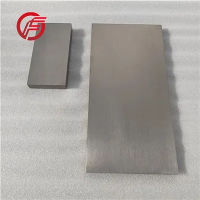

Hey there! As a niobium plate supplier, I often get asked about the shear strength of niobium plates. So, I thought I'd take some time to break it down for you in this blog post.
First off, let's understand what shear strength is. Shear strength is the ability of a material to resist forces that cause the internal structure of the material to slide against itself. In simpler terms, it's how well a material can withstand being cut or sliced. When it comes to niobium plates, shear strength is a crucial property, especially in applications where the plates are subjected to cutting, stamping, or other processes that involve shearing forces.
Niobium is a fascinating metal. It's a soft, ductile, and grayish-white transition metal with excellent corrosion resistance and high melting point. These properties make niobium plates highly sought after in various industries, including aerospace, electronics, and chemical processing.
The shear strength of niobium plates can vary depending on several factors. One of the main factors is the purity of the niobium. Higher purity niobium generally has better mechanical properties, including shear strength. For example, ASTM B393 UNS R04200 R04210 Pure Niobium Sheet is known for its high purity and consistent quality, which can contribute to a relatively high shear strength.
The manufacturing process also plays a significant role in determining the shear strength of niobium plates. Processes like rolling, annealing, and heat treatment can affect the grain structure and overall mechanical properties of the plates. For instance, proper annealing can relieve internal stresses and improve the ductility and shear strength of the niobium plates.
Another factor is the thickness of the niobium plate. Generally, thicker plates tend to have higher shear strength compared to thinner ones. This is because a thicker plate has more material to resist the shearing forces. However, it's important to note that the relationship between thickness and shear strength is not always linear, and other factors such as the grain orientation and the presence of any defects can also influence the shear strength.
In terms of typical values, the shear strength of niobium plates can range from around 100 MPa to 300 MPa, depending on the factors mentioned above. But these are just rough estimates, and the actual shear strength can vary from one batch of plates to another.
Now, let's talk about why shear strength matters in different applications. In the aerospace industry, niobium plates are used in components such as engine parts and structural elements. High shear strength is essential in these applications to ensure the reliability and safety of the aircraft. If the shear strength is too low, the components may fail under the high stresses experienced during flight, which could have catastrophic consequences.
In the electronics industry, niobium plates are used in capacitors and other electronic devices. The shear strength of the plates is important during the manufacturing process, as the plates may need to be cut and shaped into specific sizes and shapes. A plate with sufficient shear strength can be processed more easily without cracking or deforming.
In the chemical processing industry, niobium plates are used in equipment such as reactors and heat exchangers. The shear strength of the plates is crucial to withstand the mechanical stresses and corrosive environments in these applications. A plate with high shear strength can resist the forces exerted during the operation of the equipment and maintain its integrity over time.
If you're in the market for niobium plates, it's important to consider the shear strength along with other properties such as purity, thickness, and surface finish. As a supplier, I can provide you with detailed information about the shear strength and other characteristics of our niobium plates. We can also work with you to understand your specific requirements and recommend the most suitable plates for your application.
If you have any questions or are interested in purchasing niobium plates, feel free to reach out. We're here to help you make the right choice and ensure that you get the best quality niobium plates for your needs. Whether you're a small business or a large corporation, we're committed to providing you with excellent service and high-quality products.

References:
- "Metals Handbook: Properties and Selection: Nonferrous Alloys and Pure Metals", ASM International
- "Niobium: Properties, Processing, and Applications", TMS (The Minerals, Metals & Materials Society)