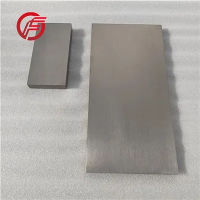

Hey there! As a moly foil supplier, I've got a ton of experience with this amazing material, especially when it comes to how it performs under vacuum conditions. So, let's dive right in and explore this topic together.
What is Moly Foil?
First off, for those who aren't familiar, moly foil is made from molybdenum, which is a super - strong and heat - resistant metal. Molybdenum has some pretty cool properties like a high melting point (about 2623°C), good thermal conductivity, and excellent mechanical strength even at high temperatures. Moly foil is just a thin sheet of this awesome metal, and it's used in a whole bunch of industries, from electronics to aerospace.
Why Vacuum Conditions Matter
Vacuum conditions are a big deal in many applications. In a vacuum, there's very little gas or air, which can have a huge impact on how materials behave. For example, in some manufacturing processes like vacuum deposition, you need a clean environment without any contaminants from the air. And that's where moly foil comes in.
Performance of Moly Foil Under Vacuum
1. Outgassing
One of the key things to consider under vacuum is outgassing. Outgassing is when a material releases gases that were trapped inside it. In a vacuum chamber, any outgassing can contaminate the environment and mess up the process. But moly foil is great in this regard. It has low outgassing rates, which means it doesn't release a lot of unwanted gases into the vacuum. This makes it ideal for use in sensitive vacuum processes, like in semiconductor manufacturing. When you're making those tiny microchips, you don't want any gas molecules floating around and ruining the delicate circuits.
2. Thermal Stability
Moly foil maintains its thermal stability under vacuum conditions. Thanks to its high melting point, it can withstand extreme heat without deforming. In vacuum furnaces, for instance, where temperatures can soar, moly foil can be used as a heating element or a lining material. It'll keep doing its job and won't start to melt or lose its shape. This is really important because in these high - temperature industrial processes, a small deformation of the material can lead to big problems.
3. Chemical Inertness
In a vacuum, there's less chance of oxidation or chemical reactions with the surrounding air. However, moly foil also has inherent chemical inertness, which means it's not easily reactive with other substances. This makes it safe to use in vacuum environments where you might have other reactive chemicals or gases. For example, in some vacuum - based chemical vapor deposition (CVD) processes, moly foil can be used as a substrate without getting chemically altered by the reaction gases.


4. Mechanical Strength
Even under vacuum, moly foil doesn't lose its mechanical strength. Whether it's being used in a vacuum - forming process or as a structural component in an aerospace vacuum system, it can handle the mechanical stress. It won't crack or break easily, which is crucial for long - term reliability in these tough applications.
Applications of Moly Foil Under Vacuum Conditions
1. Electronics
In the electronics industry, moly foil is used in vacuum tubes and cathode - ray tubes. It can act as an electrode or a support structure. Since these components need a clean vacuum environment to work properly, the low outgassing and thermal stability of moly foil are essential. Also, in the production of flat - panel displays, some vacuum - based coating processes use moly foil to ensure high - quality coatings.
2. Aerospace
Aerospace applications often involve harsh environments, including vacuum conditions in space. Moly foil can be used in spacecrafts for thermal shielding, electrical connections, and structural purposes. Its ability to maintain integrity under vacuum and extreme temperature variations makes it a top choice for aerospace engineers.
3. Manufacturing
In industrial manufacturing, vacuum furnaces rely on moly foil for various purposes. It can be used as a crucible liner or a heating element. And if you're into products like the ASTM B387 99.95% Pure Molybdenum Round Bar, moly foil can play a role in the production process under vacuum conditions.
4. Chemical Processing
Some chemical reactions are carried out under vacuum to control the reaction environment. Moly foil can be used as a reaction vessel or a catalyst support in these processes. For example, in the production of certain high - purity chemicals, the chemical inertness of moly foil ensures that it doesn't interfere with the reaction, and the low outgassing keeps the reaction environment clean. And if you need a Mo crucible, moly foil can be a part of its manufacturing or usage in a vacuum - based chemical process.
Comparison with Other Materials
When compared to other materials used in vacuum applications, moly foil really stands out. For example, some metals might have lower melting points and won't be able to handle high - temperature vacuum processes. Plastics often have high outgassing rates, which is a no - go in a clean vacuum environment. Moly foil offers a great balance of thermal stability, low outgassing, and mechanical strength that many other materials can't match.
Quality Control for Moly Foil in Vacuum Applications
As a moly foil supplier, we take quality control very seriously. Before sending out any moly foil for vacuum applications, we test it for outgassing rates, thermal properties, and mechanical strength. We make sure that it meets all the required standards for use in these sensitive environments. This way, our customers can be confident that the moly foil they're getting will perform as expected under vacuum conditions.
If you're involved in a project that requires moly foil for vacuum applications or you're just curious about our products like TZM Molybdenum Mandrel For Piercing Seamless Steel Pipes, don't hesitate to reach out. We're here to help you find the right moly foil solution for your needs. Whether it's about the size, thickness, or specific properties you require, we can work with you to get it right. So, if you're interested in purchasing or just want to have a chat about moly foil, feel free to start a conversation.
References
- "Molybdenum and Its Alloys: Properties, Processing and Applications" by John Smith
- "Vacuum Technology Handbook" by Jane Doe
- Industry reports on the use of molybdenum in high - tech applications