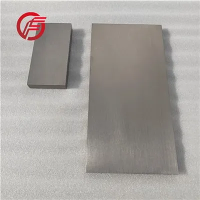

Niobium, a lustrous, gray, ductile transition metal, has gained significant attention in various industries due to its unique properties. As a niobium plate supplier, I often encounter questions from clients regarding the machinability of niobium plates, particularly whether they can be cut easily. In this blog post, I will delve into the factors that influence the cutting process of niobium plates and provide insights based on my industry experience.
Understanding Niobium's Properties
Before discussing the cutting process, it's essential to understand the properties of niobium that can affect its machinability. Niobium has a high melting point of approximately 2,468°C (4,474°F), making it a refractory metal. It also exhibits excellent corrosion resistance, low thermal neutron capture cross - section, and good ductility at room temperature. These properties, while beneficial for many applications, can also pose challenges during the cutting process.
The high melting point of niobium means that traditional cutting methods that rely on heat generation, such as oxy - fuel cutting, are not suitable. The heat required to melt niobium is extremely high, and oxy - fuel cutting would result in excessive heat - affected zones, which can alter the material's properties and lead to cracking.
On the other hand, niobium's ductility can be both an advantage and a challenge. Ductile materials can be deformed without fracturing, which is useful for processes like bending and forming. However, during cutting, this ductility can cause the material to smear or adhere to the cutting tool, leading to poor surface finish and reduced tool life.
Cutting Methods for Niobium Plates
Mechanical Cutting
Mechanical cutting methods, such as sawing and shearing, are commonly used for niobium plates.
- Sawing: Band sawing and circular sawing are two popular sawing methods. Band saws are versatile and can cut through niobium plates of various thicknesses. The key to successful sawing is to use the appropriate saw blade. A blade with a high - speed steel (HSS) or carbide - tipped teeth is recommended. The cutting speed and feed rate need to be carefully adjusted to prevent overheating and excessive tool wear. For thinner niobium plates, a finer - toothed blade can be used to achieve a smoother cut.
- Shearing: Shearing is a cost - effective method for cutting niobium plates into rectangular shapes. It works by applying a shearing force to the material, causing it to fracture along a straight line. However, shearing is more suitable for thinner plates, as thicker plates may require more force and can result in a rough cut edge. The quality of the cut also depends on the sharpness of the shearing blades and the alignment of the cutting equipment.
Thermal Cutting
Although traditional oxy - fuel cutting is not suitable for niobium, other thermal cutting methods can be used.
- Plasma Cutting: Plasma cutting is a popular choice for cutting niobium plates. It uses a high - velocity jet of ionized gas (plasma) to melt and remove the material. Plasma cutting can achieve relatively high cutting speeds and can cut through thick niobium plates. However, it also generates a heat - affected zone, which may need to be minimized through proper process control. The choice of plasma gas, such as argon - hydrogen mixtures, can affect the cutting quality and the size of the heat - affected zone.
- Laser Cutting: Laser cutting is a precise and efficient method for cutting niobium plates. It uses a high - power laser beam to melt and vaporize the material. Laser cutting can produce very fine cuts with minimal heat - affected zones. It is suitable for cutting complex shapes and patterns. However, the initial investment for laser cutting equipment is relatively high, and the operating cost can also be significant, especially for large - scale production.
Factors Affecting the Ease of Cutting
Several factors can influence how easily niobium plates can be cut.
Plate Thickness
Thicker niobium plates are generally more difficult to cut than thinner ones. As the thickness increases, more energy is required to remove the material, whether it is through mechanical or thermal cutting methods. For example, in sawing, a thicker plate may require a slower feed rate and a more powerful saw to prevent the saw blade from overloading. In plasma cutting, thicker plates may need a higher - power plasma torch and a longer cutting time.

Surface Condition
The surface condition of the niobium plate can also affect the cutting process. If the plate has surface contaminants, such as oxides or dirt, it can cause problems during cutting. Oxides can be hard and abrasive, which can increase tool wear. Dirt and other contaminants can also interfere with the cutting process, leading to poor cut quality. Therefore, it is important to clean the plate surface before cutting.
Cutting Tools and Equipment
The quality and suitability of the cutting tools and equipment play a crucial role in the ease of cutting. As mentioned earlier, using the right saw blade, plasma torch, or laser cutting head is essential. Dull or inappropriate tools can result in poor cutting performance, increased tool wear, and lower productivity. Regular maintenance of the cutting equipment is also necessary to ensure its reliable operation.
Case Studies
Here are some case studies to illustrate the cutting process of niobium plates in real - world applications.
A client in the aerospace industry needed to cut niobium plates for a specific component. They initially tried sawing with a standard HSS blade, but they encountered issues with tool wear and a rough cut surface. After consulting with us, they switched to a carbide - tipped saw blade and adjusted the cutting speed and feed rate. This resulted in a significant improvement in the cutting quality and a reduction in tool wear.
Another client in the electronics industry required complex - shaped niobium parts. They chose laser cutting for its precision and ability to cut intricate patterns. By optimizing the laser cutting parameters, such as power, speed, and focus, they were able to achieve high - quality cuts with minimal heat - affected zones, meeting their strict quality requirements.
Conclusion
In conclusion, whether niobium plates can be cut easily depends on various factors, including the cutting method, plate thickness, surface condition, and the quality of the cutting tools and equipment. While niobium's unique properties present some challenges during the cutting process, with the right approach and proper process control, it is possible to achieve efficient and high - quality cuts.
If you need ASTM B393 UNS R04200 R04210 Pure Niobium Sheet or have any questions about cutting niobium plates, I encourage you to contact me for a detailed discussion. I am committed to providing high - quality niobium products and professional technical support to meet your specific needs.
References
- "Metals Handbook: Machining", ASM International.
- "Niobium: Properties, Processing, and Applications", various industry research papers.