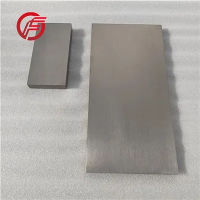

Hey there! As a moly foil supplier, I've been getting a lot of questions lately about whether moly foil can be used in fuel cells. So, I thought I'd dive into this topic and share what I know.
First off, let's talk a bit about fuel cells. Fuel cells are pretty awesome. They're devices that convert the chemical energy from a fuel into electricity through a chemical reaction with oxygen or another oxidizing agent. There are different types of fuel cells, like proton - exchange membrane fuel cells (PEMFCs), solid oxide fuel cells (SOFCs), and alkaline fuel cells. Each type has its own set of requirements and operating conditions.
Now, onto moly foil. Molybdenum is a super - useful metal. It has a high melting point, good thermal conductivity, and excellent corrosion resistance. These properties make it a strong candidate for various high - tech applications.


Can Moly Foil Be Used in Fuel Cells?
1. In Proton - Exchange Membrane Fuel Cells (PEMFCs)
PEMFCs operate at relatively low temperatures, usually around 80 - 100 °C. They use a proton - conducting polymer membrane as the electrolyte. In these fuel cells, moly foil could potentially have a few roles.
One area where moly foil might come in handy is in the bipolar plates. Bipolar plates are an important component of PEMFCs. They separate individual cells in a fuel cell stack, distribute reactant gases (hydrogen and oxygen), and collect electrical current. The high corrosion resistance of moly foil makes it a good option for protecting the bipolar plates from the acidic environment within the PEMFC. Also, its good thermal conductivity can help in heat dissipation, which is crucial for maintaining the optimal operating temperature of the fuel cell.
But there are some challenges too. Molybdenum can undergo oxidation in certain conditions, and in the presence of oxygen in the fuel cell, this oxidation could affect its performance over time. So, proper surface treatments might be needed to prevent oxidation and ensure the long - term stability of the moly foil in PEMFCs.
2. In Solid Oxide Fuel Cells (SOFCs)
SOFCs operate at much higher temperatures, typically between 600 - 1000 °C. At these high temperatures, the material requirements are quite different. Moly foil could potentially be used in the interconnect components of SOFCs.
Interconnects in SOFCs need to have good electrical conductivity, thermal stability, and resistance to oxidation and corrosion in both the fuel (usually hydrogen) and oxidant (air) environments. Molybdenum's high melting point and relatively good electrical conductivity make it a candidate for this application. However, at the high operating temperatures of SOFCs, moly can react with oxygen and form volatile oxides. This could lead to material loss and degradation of the interconnect. To overcome this, coatings or alloying with other metals might be necessary.
3. In Alkaline Fuel Cells
Alkaline fuel cells use an alkaline electrolyte, usually potassium hydroxide. The operating conditions in these fuel cells are different from PEMFCs and SOFCs. The alkaline environment is less corrosive to some metals compared to the acidic environment in PEMFCs.
Moly foil could potentially be used in the electrodes or current collectors in alkaline fuel cells. Its corrosion resistance in alkaline solutions could be an advantage. However, the performance would also depend on how well it interacts with the reactant gases and the electrolyte.
Advantages of Using Moly Foil in Fuel Cells
- High Temperature Resistance: As mentioned earlier, moly has a high melting point. This means it can withstand the high - temperature environments in some types of fuel cells, like SOFCs, without melting or deforming easily.
- Corrosion Resistance: Molybdenum is resistant to corrosion in many chemical environments. This property is crucial in fuel cells, where the components are exposed to various reactant gases and electrolytes that could cause corrosion over time.
- Good Thermal and Electrical Conductivity: The thermal conductivity of moly foil helps in heat management within the fuel cell, while its electrical conductivity is important for efficient current collection and transfer.
Challenges of Using Moly Foil in Fuel Cells
- Oxidation: As I've touched on before, moly can oxidize in the presence of oxygen, especially at high temperatures. This oxidation can lead to material degradation and affect the performance of the fuel cell.
- Cost: Molybdenum is not the cheapest metal out there. The cost of moly foil could potentially increase the overall cost of manufacturing fuel cells, which might make it less competitive in the market.
Other Related Products
If you're in the market for other high - quality materials for your fuel cell applications, we also offer some great products. Check out our ASTMB265 Gr1 Titanium Foil. Titanium foil has its own set of unique properties, like high strength - to - weight ratio and good corrosion resistance, which could be useful in fuel cell components.
We also have ERTi - 2 Erti - 7 Erti - 12 Titanium Mig Wire. This wire can be used for welding titanium components in fuel cells, ensuring strong and reliable joints.
And for the fasteners in your fuel cell assemblies, our DIN934 HexTitanium Nuts are a great option. They provide the necessary clamping force and are corrosion - resistant.
Let's Connect
I hope this blog post has given you a better understanding of whether moly foil can be used in fuel cells. The potential is definitely there, but there are also some challenges that need to be addressed. If you're interested in using moly foil in your fuel cell projects or want to know more about our other products, feel free to reach out to us. We can have a detailed discussion about your specific requirements and see how we can help.
Let's work together to find the best solutions for your fuel cell applications. Whether it's moly foil, titanium products, or other materials, we're here to support you.
References
- "Fundamentals of Fuel Cells" by Wolf Vielstich, Arndt Lamm, and Hubert Gasteiger.
- "Handbook of Fuel Cells: Fundamentals, Technology, and Applications" edited by Wolf Vielstich, Hubert A. Gasteiger, and Arnold Lamm.