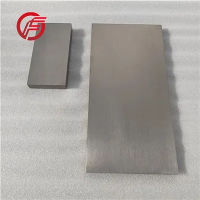

As a leading supplier of TZM alloy, I often encounter inquiries regarding the electrical conductivity of this remarkable material. TZM alloy, primarily composed of molybdenum (Mo) with small additions of titanium (Ti), zirconium (Zr), and carbon (C), is a high - performance alloy known for its excellent mechanical properties at elevated temperatures. In this blog, I'll delve into the aspects of its electrical conductivity and how it fits into various applications.
Basic Understanding of Electrical Conductivity
Before discussing the electrical conductivity of TZM alloy, it is essential to understand what electrical conductivity is. Electrical conductivity (σ) is a measure of a material's ability to conduct an electric current. It is the reciprocal of electrical resistivity (ρ), which is the intrinsic property of a material to resist the flow of an electric current. The SI unit for electrical conductivity is siemens per meter (S/m).
The conductivity of a material depends on several factors, including the number of free electrons, the mobility of these electrons, and the temperature of the material. In metals, electrons are loosely bound to their atoms, allowing them to move freely and carry an electric charge. As a result, metals generally have high electrical conductivity.
Electrical Conductivity of TZM Alloy
TZM alloy, being based on molybdenum, inherits some of the electrical conductivity characteristics of pure molybdenum. Pure molybdenum has an electrical conductivity of approximately 1.87×10⁷ S/m at room temperature (20°C). However, the addition of titanium, zirconium, and carbon in TZM alloy affects its electrical conductivity.
The small percentage of titanium and zirconium in TZM alloy forms intermetallic compounds with molybdenum. These intermetallic compounds can scatter the free electrons, reducing their mobility. Consequently, the electrical conductivity of TZM alloy is slightly lower than that of pure molybdenum. At room temperature, the electrical conductivity of TZM alloy is typically around 1.5 - 1.7×10⁷ S/m.
The carbon addition in TZM alloy also has an impact on its electrical properties. Carbon can form carbide particles, which can act as obstacles to the movement of electrons. This further contributes to the reduction in electrical conductivity compared to pure molybdenum.
Temperature Dependence of Electrical Conductivity
The electrical conductivity of TZM alloy, like other metals, is highly dependent on temperature. As the temperature increases, the atoms in the material vibrate more vigorously. These increased atomic vibrations cause more scattering of the free electrons, which in turn reduces the electron mobility and the electrical conductivity of the material.


At high temperatures, the decrease in electrical conductivity of TZM alloy is less significant compared to some other metals. This is due to its excellent high - temperature stability. TZM alloy can maintain a relatively high electrical conductivity even at elevated temperatures, making it suitable for applications in high - temperature environments. For instance, at temperatures up to 1000°C, TZM alloy still retains a reasonable level of electrical conductivity, which is crucial for applications such as electrical contacts and heating elements in high - temperature furnaces.
Applications Related to Electrical Conductivity
- Electrical Contacts: TZM alloy's combination of good electrical conductivity and high - temperature resistance makes it an ideal choice for electrical contacts in high - power switches and relays. In these applications, the contacts need to conduct electricity efficiently while withstanding the heat generated during the switching process. The high - temperature stability of TZM alloy ensures that the contacts do not deform or lose their conductivity under high - power and high - temperature conditions.
- Heating Elements: In high - temperature furnaces, TZM alloy can be used as heating elements. Its ability to conduct electricity and maintain its shape and properties at high temperatures allows it to generate heat efficiently. For example, in vacuum furnaces used for heat treatment of metals, TZM alloy heating elements can provide a stable and uniform heat source.
- Electron Beam Welding Components: TZM alloy is also used in electron beam welding equipment. The electrical conductivity of TZM alloy is important for the proper functioning of the electron - emitting components. The high - temperature resistance of TZM alloy ensures that these components can withstand the high - energy electron beams and the associated heat without degrading.
Our TZM Alloy Offerings
As a TZM alloy supplier, we offer a wide range of TZM alloy products to meet different customer needs. Our products include High temperature resistance R03600 Molybdenum Fastener. These fasteners are made from high - quality TZM alloy, ensuring excellent electrical conductivity when used in electrical applications, as well as high - temperature resistance.
In addition, we provide Molybdenum Bar. The TZM alloy bars are available in various sizes and can be used in electrical and high - temperature applications. They are carefully manufactured to ensure consistent electrical conductivity and mechanical properties.
Furthermore, our Molybdenum High Temperature Alloy Tzm Foil is another popular product. The thin foil shape makes it suitable for applications where high electrical conductivity and large surface area are required, such as in some electronic devices.
Contact Us for Procurement
If you are interested in our TZM alloy products, we encourage you to contact us for procurement. Our team of experts can provide you with detailed information about the electrical conductivity and other properties of our TZM alloy products, and help you select the most suitable products for your specific applications. We are committed to providing high - quality products and excellent customer service.
References
- Powell, R. W., & Oxford, S. J. (1989). The TZM alloy for molybdenum components. International Journal of Refractory Metals and Hard Materials, 8(1), 1 - 8.
- King, H. E., & Gabb, T. P. (2003). The influence of alloy composition on the high - temperature properties of molybdenum - based alloys. Journal of Materials Engineering and Performance, 12(2), 167 - 173.
- ASM Handbook Committee. (1998). ASM Handbook Volume 2: Properties and Selection: Nonferrous Alloys and Special - Purpose Materials. ASM International.