
Hey there! As a titanium supplier, I've been in the business long enough to know that corrosion resistance is a big deal when it comes to titanium. It's one of the reasons why this metal is so popular in various industries, from aerospace to marine. So, let's dive into what factors affect the corrosion resistance of titanium.
The Basics of Titanium's Corrosion Resistance
First off, titanium is known for its excellent corrosion resistance. This is mainly due to the thin, adherent, and protective oxide film that forms on its surface when exposed to oxygen. This oxide layer acts as a barrier, preventing further oxidation and corrosion. It's self - healing too. If the oxide layer gets damaged, it can reform quickly in the presence of oxygen, which is pretty cool.
1. Alloying Elements
One of the key factors that can influence titanium's corrosion resistance is the addition of alloying elements. Different alloys have different properties, and some are better at resisting corrosion than others.
For example, adding small amounts of palladium (Pd) to titanium can significantly improve its corrosion resistance in reducing acids. Palladium acts as a catalyst, promoting the formation of a more stable and protective oxide film. Similarly, ruthenium (Ru) is another element that can enhance corrosion resistance, especially in environments with high chloride concentrations.
On the other hand, some alloying elements might have a negative impact. For instance, iron (Fe) in large amounts can form intermetallic compounds that are more susceptible to corrosion. So, it's all about finding the right balance when alloying titanium.
2. Environmental Conditions
The environment in which titanium is used plays a huge role in its corrosion resistance.
Temperature
Temperature can have a significant effect. Generally, as the temperature increases, the rate of corrosion also goes up. At higher temperatures, the protective oxide layer may become less stable, and chemical reactions that cause corrosion can occur more rapidly. For example, in hot and acidic environments, titanium may start to corrode at a faster pace.
pH Level
The pH of the surrounding environment is crucial. Titanium is highly resistant to corrosion in neutral and slightly alkaline solutions. However, in highly acidic or highly alkaline conditions, the protective oxide layer can be attacked. In acidic solutions, hydrogen ions can react with the oxide layer, causing it to break down. In alkaline solutions, hydroxyl ions can also have a similar effect.
Presence of Aggressive Ions
Chloride ions are one of the most common aggressive ions that can affect titanium's corrosion resistance. In environments with high chloride concentrations, such as seawater, chloride ions can penetrate the oxide layer and cause pitting corrosion. Pitting is a form of localized corrosion where small holes or pits form on the surface of the metal. Other aggressive ions like bromide and fluoride can also have a similar effect.
3. Surface Condition
The surface condition of titanium can greatly impact its corrosion resistance.
Surface Finish
A smooth surface finish generally provides better corrosion resistance than a rough one. A rough surface has more crevices and irregularities where corrosive agents can accumulate. During manufacturing processes, it's important to achieve a smooth surface finish to enhance the metal's ability to resist corrosion.
Surface Contamination
Contamination on the surface of titanium can also lead to corrosion. For example, if the surface is contaminated with iron particles, these particles can act as sites for corrosion initiation. It's essential to keep the surface clean during handling and storage to prevent such contamination.
4. Stress and Strain
Stress and strain can have a negative impact on titanium's corrosion resistance. When titanium is under stress, the protective oxide layer can crack, exposing the underlying metal to the corrosive environment. This can lead to stress - corrosion cracking (SCC). SCC is a form of corrosion that occurs when a combination of tensile stress and a corrosive environment is present.
For example, in applications where titanium components are subject to mechanical loads, such as in aerospace structures, the risk of SCC needs to be carefully considered. Proper design and stress management are crucial to prevent this type of corrosion.
5. Manufacturing Processes
The way titanium is manufactured can also affect its corrosion resistance.
Heat Treatment
Heat treatment can change the microstructure of titanium, which in turn can influence its corrosion properties. For example, improper heat treatment can lead to the formation of phases that are more susceptible to corrosion. On the other hand, well - controlled heat treatment can improve the uniformity of the microstructure and enhance the metal's corrosion resistance.
Welding
Welding is a common manufacturing process for titanium components. However, welding can introduce changes in the surface and microstructure of the metal. The heat affected zone (HAZ) near the weld can have different corrosion properties compared to the base metal. If the welding process is not properly controlled, the HAZ may be more prone to corrosion.

Our Offerings: Gr2 Titanové Desky
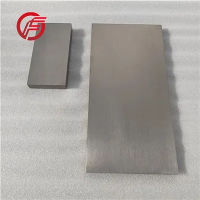
At our company, we understand the importance of corrosion resistance when it comes to titanium. That's why we offer high - quality Gr2 Titanové Desky. Grade 2 titanium is known for its excellent corrosion resistance in a wide range of environments. It has a good balance of strength and ductility, making it suitable for many applications. Whether you need it for chemical processing, marine equipment, or other industries, our Gr2 Titanové Desky can meet your requirements.
Conclusion
In conclusion, the corrosion resistance of titanium is affected by a variety of factors, including alloying elements, environmental conditions, surface condition, stress and strain, and manufacturing processes. As a titanium supplier, we take all these factors into account to provide our customers with the best - quality titanium products.
If you're in the market for titanium and want to discuss your specific needs, whether it's about corrosion resistance or other properties, don't hesitate to reach out. We're here to help you find the right titanium solution for your application. Let's start a conversation and see how we can work together!
References
- Jones, D. A. (1992). Principles and Prevention of Corrosion. Prentice Hall.
- Fontana, M. G. (1986). Corrosion Engineering. McGraw - Hill.
- ASM Handbook Committee. (2003). ASM Handbook, Volume 13A: Corrosion: Fundamentals, Testing, and Protection. ASM International.