
In recent years, titanium has emerged as a material of choice in a wide range of industries due to its exceptional properties, including high strength-to-weight ratio, excellent corrosion resistance, and biocompatibility. As a leading titanium supplier, we are constantly monitoring the market to identify emerging trends in titanium applications. This blog post will explore some of the most significant trends that are shaping the future of titanium use.
Aerospace and Aviation Industry
The aerospace and aviation industry has long been a major consumer of titanium. Titanium's high strength and low weight make it ideal for aircraft components, where reducing weight is crucial for fuel efficiency and performance. In recent years, there has been a growing trend towards the use of titanium in additive manufacturing (3D printing) for aerospace applications.
Additive manufacturing allows for the creation of complex geometries that are difficult or impossible to achieve with traditional manufacturing methods. This technology enables the production of lightweight, high-strength parts that can be customized to meet specific design requirements. For example, titanium 3D-printed components are being used in engine parts, structural components, and even in the production of unmanned aerial vehicles (UAVs).
Another trend in the aerospace industry is the increasing use of titanium in next-generation aircraft. With the development of supersonic and hypersonic aircraft, the demand for materials that can withstand high temperatures and extreme conditions is growing. Titanium alloys, such as Ti-6Al-4V, have excellent high-temperature properties, making them suitable for use in these advanced aircraft designs.
Medical and Dental Applications
Titanium's biocompatibility makes it an ideal material for medical and dental applications. It is widely used in the production of implants, such as hip and knee replacements, dental implants, and spinal fusion devices. In recent years, there has been a significant increase in the use of titanium in minimally invasive surgical procedures.

Minimally invasive surgeries offer several advantages over traditional open surgeries, including less pain, shorter recovery times, and reduced scarring. Titanium instruments, such as endoscopes and catheters, are being used to perform these procedures with greater precision and efficiency. Additionally, the development of new titanium alloys with improved mechanical properties and corrosion resistance is expanding the range of medical applications.
In the dental field, titanium dental implants have become the standard of care due to their high success rate and long-term durability. The use of titanium in dental prosthetics, such as crowns and bridges, is also increasing. These applications benefit from titanium's ability to integrate with the surrounding bone tissue, providing a stable and reliable foundation for dental restorations.
Energy Sector
The energy sector is another area where titanium is finding increasing applications. In the oil and gas industry, titanium is used in offshore platforms, pipelines, and downhole equipment due to its excellent corrosion resistance in harsh environments. With the expansion of deepwater oil and gas exploration, the demand for titanium is expected to grow.
In the renewable energy sector, titanium is being used in wind turbines and solar panels. Titanium alloys are used in the construction of wind turbine blades, where their high strength and fatigue resistance are essential for long-term performance. In solar panels, titanium is used in the production of electrodes and other components, contributing to the efficiency and durability of the panels.
Automotive Industry
The automotive industry is gradually adopting titanium for various applications. One of the main drivers for this trend is the need to reduce vehicle weight to improve fuel efficiency and reduce emissions. Titanium can be used in engine components, exhaust systems, and suspension parts to achieve weight savings without sacrificing strength.
Another area of interest in the automotive industry is the use of titanium in high-performance vehicles. Titanium alloys offer superior mechanical properties compared to traditional steel and aluminum, making them suitable for use in high-stress applications. For example, titanium connecting rods are being used in high-performance engines to improve power output and reduce reciprocating mass.
Marine Industry
The marine industry has always been a significant user of titanium due to its excellent corrosion resistance in seawater. Titanium is used in shipbuilding, offshore structures, and marine equipment. In recent years, there has been a trend towards the use of titanium in luxury yachts and high-speed boats.
Titanium's high strength and low weight make it an ideal material for these applications, allowing for faster speeds and better fuel efficiency. Additionally, titanium's resistance to corrosion and biofouling reduces maintenance costs and extends the lifespan of the vessels.
Consumer Goods
Titanium is also making its way into the consumer goods market. It is used in the production of high-end watches, jewelry, and sports equipment. Titanium watches are known for their durability, lightweight, and modern appearance. In jewelry, titanium's unique color and texture make it a popular choice for designers.
In sports equipment, titanium is used in golf clubs, tennis rackets, and bicycles. Its high strength and low weight provide athletes with improved performance and a competitive edge.
Conclusion
As a titanium supplier, we are excited to see the diverse and growing applications of titanium across various industries. The emerging trends in aerospace, medical, energy, automotive, marine, and consumer goods sectors present significant opportunities for the future growth of the titanium market.
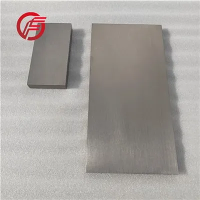
If you are interested in exploring the potential of titanium for your specific applications, we invite you to [contact us for more information and to discuss your procurement needs]. We have a wide range of titanium products, including Gr2 Titanové Desky, which are suitable for a variety of industrial and commercial applications. Our team of experts is ready to assist you in finding the right titanium solutions for your projects.
References
- ASM Handbook Committee. (2000). ASM Handbook Volume 2: Properties and Selection: Nonferrous Alloys and Special-Purpose Materials. ASM International.
- Boyer, R. R., Welsch, G., & Collings, E. W. (1994). Materials Properties Handbook: Titanium Alloys. ASM International.
- Schuetze, M. (2000). Corrosion of Stainless Steels. Wiley-VCH.