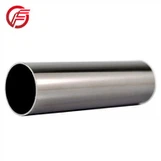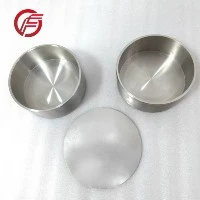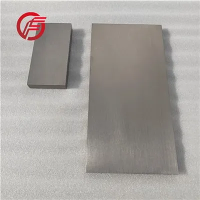

Hey everyone, it's Jake here from the niobium plate team-first off, let's cut to the chase because this question comes up all the time: Is niobium plate resistant to intergranular corrosion? If you're working with metals, especially for industrial gear that's exposed to harsh environments, this is not a "maybe I'll think about it later" question-it's make-or-break for whether your parts will hold up for years or turn into trash in months. I've been sourcing, supplying, and troubleshooting niobium stuff for over a decade now, so I've got a ton of real-world takes, not just textbook jargon, to share here.
First, let's get one term straight-because if you mix this up, you'll get bad intel: intergranular corrosion (IGC, for short) is that sneaky, hidden corrosion that attacks the grain boundaries of a metal, not the bulk surface. Think of a metal like a stack of LEGO bricks; the flat surfaces are the bricks, and the thin lines between them are the grain boundaries. For most metals, those grain boundaries are more reactive than the rest of the material-so if the environment's right, corrosion starts there, eats along the lines, and makes the whole part weak even if the surface looks totally fine. That's the scary part: you can't see it coming until the part cracks or fails.
Now, niobium itself-let's talk pure niobium first, because that's the base, and a lot of our stock falls into the ASTM B393 specs, specifically UNS R04200 and R04210. If you need the deets on those exact grades, you can check out our page right here: ASTM B393 UNS R04200 R04210 Pure Niobium Sheet. Those grades aren't random-they're standardized for purity and consistency, which is exactly what you need if you're counting on corrosion resistance.
So, does pure niobium plate avoid intergranular corrosion? From every test we've run, every client part we've supplied that's still working after 10+ years, and every independent lab report we've seen-yes, it's highly resistant. Wait, why? Let's break it down simply. Pure niobium has a super uniform crystal structure; there aren't a ton of impurities hanging out at those grain boundaries, which is what usually makes grain boundaries reactive. For example, stainless steel (a common alternative) has issues with chromium carbide precipitation at grain boundaries when it's welded or heated-those precipitates strip the area of chromium, so corrosion jumps in. Niobium? It doesn't do that same reactive precipitation trick. Its grain boundaries don't have that weak, reactive zone that IGC latches onto.
But hold up-before you go ordering a ton for your next project, let's talk the "ifs" because no metal is invincible. IGC resistance for niobium plate only holds if you're working with the right grade and don't mess up processing. Let's dive into those caveats, because this is where a lot of suppliers cut corners and their clients end up with problems.
First, grade purity matters. If you buy cheap, off-spec niobium that has random impurities like iron, carbon, or nitrogen, those can accumulate at grain boundaries and make them reactive. We only supply material that meets ASTM B393, so you don't have to worry about that-our UNS R04200 and R04210 niobium is melted, refined, and rolled to exact purity levels, with no hidden junk that would mess up IGC resistance.

Next, heat exposure-this is a big one that even some experienced engineers miss. If you heat niobium plate above like 1000°C (1832°F) in an uncontrolled atmosphere (like regular air, not an argon or vacuum furnace), it starts picking up oxygen, nitrogen, or carbon. That's called contamination, and it can make the grain boundaries more reactive over time. But wait-if you're processing niobium properly, say welding it (which we do a lot of for clients making reactors or heat exchangers), you just need to use a proper shielding gas. We tell all our clients that: weld with argon backpurging, keep the heat-affected zone covered, and you won't get that grain boundary weakening. We've had clients who messed up this step with another supplier's niobium, had IGC issues, switched to our material, and fixed it immediately. That's the kind of real feedback I live for.
Then, the environment it's in. Even niobium plate will have a bad day if you put it in super specific, harsh conditions. Wait-what conditions? Things like hot, concentrated hydrofluoric acid (HF) or some molten salts at very high temps. Most industrial uses? No problem. Let's be real: if you're making chemical processing equipment, semiconductor parts, aerospace components, or even medical implants (niobium's actually used for hip replacements because it's corrosion-resistant), you're not dealing with pure HF. Those edge cases where niobium might get IGC? They're super niche, and most of the time, even those can be fixed with a minor alloy tweak-but that's a different conversation.
Let me throw in a concrete example because numbers help. Last year, we had a client in the pharmaceutical industry making reaction vessels that run at 80°C (176°F) with 30% sulfuric acid. They were using 316L stainless steel before, and within 18 months, they started seeing IGC cracks at the welds-costing them thousands in downtime and repairs. They switched to our ASTM B393 niobium plate, which is UNS R04210, and 2 years later, we checked in-zero signs of intergranular corrosion. Not a single one. That's the kind of result that makes all the spec-checking worth it.
Another example: aerospace parts, specifically heat shields that go through repeated high-temp cycles. An aerospace engineer reached out to us because their old titanium parts were developing intergranular corrosion after 5 years in jet engine exhaust. They switched to our pure niobium plate, and after 3 years of testing, no IGC, no cracking-just holding up like it's supposed to. And that's because niobium's grain boundaries stay stable even under those thermal cycles, unlike titanium, which can have issues with grain boundary embrittlement and corrosion over time.
Wait, but what about alloys? Sometimes clients ask: "What if I need niobium with a bit of extra strength-does niobium alloyed with other metals have IGC resistance?" That's a fair question. Most niobium alloys (like niobium-titanium for superconductors, or niobium-zirconium for nuclear parts) actually have better IGC resistance than pure niobium, because those alloy elements help stabilize grain boundaries. The caveat here is that you have to make sure the alloy is processed correctly-no cheap, unrefined alloy stock. We do offer niobium alloys too, but our go-to for IGC resistance is still the pure grades listed in ASTM B393, specifically R04200 and R04210. If you need alloy, just reach out, and we'll hook you up with the right grade for your use case.
Let's also clear up a common myth: some people think because niobium is a "refractory metal," it's only good for high temps, so it's not worth using for mild environments. But no-its IGC resistance works even at room temp. A client making semiconductor wafers uses niobium plate for process chambers that sit at room temp most of the time, with small chemical exposures. They've been using our material for 5 years, no corrosion, no issues. That's the versatility of niobium.
Now, why does this matter to you as a buyer? If you've ever dealt with a metal that fails from IGC, you know it's a nightmare. You're losing money on replacements, downtime, maybe even product recalls. When you buy niobium plate from us, you're not just getting metal-you're getting material that's been tested for grain boundary stability, meets strict ASTM specs, and has a track record of resisting that sneaky intergranular corrosion that takes down other metals. We don't sell off-spec stuff, and we don't cut corners on processing-every plate we ship has a batch test cert that confirms purity, grain size, and corrosion resistance.
Wait, I should mention how we test for IGC, just so you know we're not making this up. We send every batch of niobium plate for standard intergranular corrosion tests: ASTM G67 and ASTM A262 Practice E. Those tests expose the metal to controlled corrosive environments and check for grain boundary attack. Every single one of our ASTM B393 R04200 and R04210 plates passes with flying colors-no measurable IGC. If you need a copy of a batch cert, just ask; we'll shoot it over right away.
Let's circle back to the original question one more time, to make sure there's no confusion. Is niobium plate resistant to intergranular corrosion? For the vast majority of industrial, commercial, and medical applications-absolutely. The only times you might see IGC are if you're using contaminated, off-spec niobium, heating it in an uncontrolled atmosphere, or exposing it to super niche, extreme conditions that almost no one works with day-to-day.
If you're reading this and you're working on a project where corrosion (especially hidden intergranular corrosion) is a concern, niobium plate is probably the best option out there right now. We've worked with everyone from small startup engineers to big aerospace and pharmaceutical companies, and we've helped them avoid the headaches that come with metal corrosion. We'd love to chat about your specific project, what environment your niobium plate will be exposed to, and make sure you get the right material for the job. No pressure, just honest advice from someone who's been in this game long enough to know what works and what doesn't.
So, if you're ready to get started with niobium plate that's proven to resist intergranular corrosion, or you just have more questions about specs, processing, or pricing, reach out to our team. We'll break it down simply, send you all the test data you need, and make sure you get exactly what you're looking for.
References
- ASTM International. (2022). Standard Specification for Niobium and Niobium Alloy Sheet, Plate, and Foil (ASTM B393-22). West Conshohocken, PA: ASTM International.
- Cramer, S. D., & Covino, B. S. Jr. (2001). Corrosion: Processes and Prevention. ASM International.
- Davis, J. R. (Ed.). (2000). Nickel, Cobalt, and Their Alloys. ASM International.
- International Nickel Company. (1989). Metals Handbook: Corrosion. ASM International.