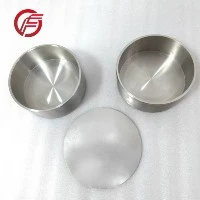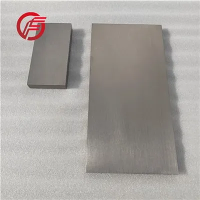

If you're in the world of high-temperature processing-whether you're growing single crystals, melting reactive metals, or sintering advanced ceramics-chances are you've crossed paths with tantalum crucibles. These bad boys are total workhorses, thanks to their insane melting point (around 2,996°C) and solid resistance to most corrosive stuff, making them way better than glass, ceramic, or even other metal crucibles for heavy-duty jobs. But here's the thing: even the best tantalum crucible can get ruined by contamination, and that's a headache no one needs. Over my 10+ years as a tantalum products supplier, I've seen way too many clients toss perfectly good crucibles because they didn't know how to keep contamination at bay. Today, I'm breaking down all the real, actionable tricks I share with my customers to keep your crucibles clean and running strong.
First, let's get one thing straight: what even counts as "contamination" for a tantalum crucible? It's not just random dirt. Contamination can be anything from leftover residue from previous runs, oxygen or nitrogen in the air during heating, tiny bits of other metals or ceramics that touch your crucible, or even impurities hiding in the material you're processing. The worst part? Once contamination seeps into the tantalum, it's often irreversible-your material gets ruined, your crucible's performance drops, and you're out hundreds or even thousands of bucks for a new one. That's why prevention is way cheaper than fixing the mess after the fact.
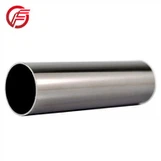
Let's start with the basics that most people skip: choosing the right crucible in the first place. Not all tantalum crucibles are created equal. I've had clients come to me with cheap, off-brand crucibles that had tiny seams, surface impurities, or even leftover machining debris from manufacturing. Those are ticking time bombs for contamination. When I supply crucibles, I always push my customers to go for high-purity, seamless options. We make our own, and I swear by our line of High Corrosion Resistance High Purity Tantalum Crucibles (/tantalum/tantalum-pipe/high-corrosion-resistance-high-purity.html) that're 99.95% pure, seamless, and go through three rounds of testing to make sure there's no hidden gunk on the surface. Seamless crucibles are a big deal-welded seams can have impurities from the welding process, plus they're more likely to crack under extreme temperature changes, letting contaminants sneak in. If you're using a crucible with even a tiny weld seam, you're playing with fire. That's why for critical runs-like growing sapphire crystals or melting titanium-seamless is non-negotiable.
Next up: pre-use cleaning. This is the step so many people rush through, and it's where contamination starts. I tell every new customer to treat their crucible like a fine instrument, not just a metal cup. What's the right way to clean a new crucible before you even put your material in? First, do a mechanical wipe-down with a lint-free cloth-microfiber, no paper towels, because paper leaves little fibers. Then, move on to chemical cleaning. I use a mix of hydrofluoric acid and nitric acid, but I'll warn you: that stuff needs to be handled carefully. Wait, no-wait, if you're not comfortable with wet chemistry, there's a gentler way. Some people use ultrasonic cleaning with distilled water and a small amount of mild detergent, followed by a rinse with high-purity ethanol, then dry it immediately with nitrogen gas (compressed air works if nitrogen's not available, but nitrogen is less likely to leave moisture spots). Oh, and here's a pro tip: never touch the inside of the crucible with your bare hands. Even the oils on your skin are enough to cause contamination at high temps. Use tweezers or clean gloves-nitrile, not latex, since latex has fillers.
Then there's the big one: atmosphere control when heating. Tantalum is super resistant to most things, but it reacts like crazy with oxygen and nitrogen at high temps. At temperatures above 1,500°C, tantalum will combine with oxygen to form tantalum oxide, which is brittle and can flake off, contaminating your load. It also reacts with nitrogen to make tantalum nitride, which messes with the crucible's structure. So if you're heating your crucible in air, you're asking for trouble. What's the alternative? Vacuum or an inert gas atmosphere. A high vacuum (10^-5 torr or better) is best for most high-temp runs, but if your furnace can't do vacuum, argon or helium works as a backup. Just make sure the inert gas is high-purity too-grade 5.0 or higher, meaning 99.999% pure, so it doesn't have its own oxygen or moisture contaminants. I once had a client who used cheap argon for a sintering run, and the result was a crucible that had a black oxide layer all over it-ruining the $10k batch of ceramic powder they were processing. Don't be that guy.
Another thing: what you put in the crucible, and how you handle it. The raw materials you're processing have to be clean too. If you're melting metal, make sure the metal powder or chunks are free of oxides, moisture, or other impurities. Don't load more material than the crucible can handle-overloading leads to spillage, which gets residue on the outside of the crucible, and that residue can vaporize at high temps and get into your next run. Also, never use a tool that's not made for tantalum to stir or move your molten material. If you use a graphite rod, for example, graphite can shed carbon at high temps, which will contaminate your melt. If you need tools, go for ones made from high-purity tantalum, or even better, check out our line of Tantalum Capillary Tube Micro Tube (/tantalum/tantalum-pipe/tantalum-capillary-tube-micro-tube.html) if you need small, precise tools for handling tiny loads-those are perfect for lab-scale runs where contamination is extra critical. For larger operations, our Tantalum Thermocouple Protection Tube (/tantalum/tantalum-thermocouple-protection-tube.html) can even help you monitor temperature without adding extra contaminants to your crucible space.

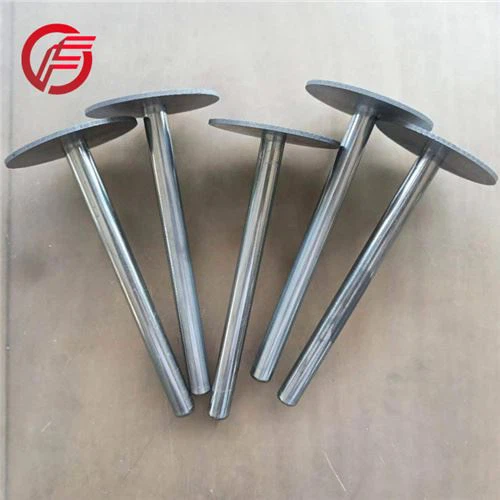
Wait, what about between runs? A lot of people just leave the crucible in the furnace after they're done processing, but that's another way contamination creeps in. When the crucible cools down, it's sitting there open to the air, picking up moisture, dust, and even volatile compounds from previous runs. After every use, I tell my customers to let the crucible cool to room temperature in an inert gas atmosphere, then do a quick check. If there's leftover residue on the inside or outside, clean it the same way you did pre-use-gentle mechanical wipe, ultrasonic clean, rinse, dry. Store it in a sealed, clean container, not just on a shelf where it can collect dust. Some of my long-term clients even have dedicated storage boxes for their crucibles, lined with lint-free fabric, and they label each crucible with what it was used for last, so they don't mix runs that can cross-contaminate.
Oh, and something I don't see many people talk about: avoiding contact with other materials during heating. Tantalum doesn't react with most metals, but there are exceptions-like niobium, molybdenum, and tungsten, if they get into direct contact at high temps. They can form alloys that ruin the purity of your load and weaken the crucible. Also, ceramic parts in your furnace-like insulation or thermocouples-can shed aluminum or silicon at high temps, which will stick to your tantalum crucible. So make sure your furnace's internal parts are made from materials that don't off-gas or shed. If you're using a furnace with graphite insulation, line the inside of the furnace chamber with a thin layer of tantalum foil as a barrier. That's a cheap fix that prevents graphite from getting on your crucible.
Let me hit you with a real example to make this stick. A client of mine a couple of years back had a run where they were melting high-purity niobium in a cheap welded tantalum crucible. They skipped the ultrasonic cleaning step, just wiped it down with a paper towel, and used regular argon instead of high-purity. When they pulled the crucible, the niobium had little black spots all over it-turns out the welding seam had hidden impurities that reacted with leftover paper towel fibers and the low-purity argon. The whole batch was worthless, and they had to buy a new crucible (and the niobium cost them $8k). If they'd used our High Corrosion Resistance High Purity Tantalum Crucibles (/tantalum/tantalum-pipe/high-corrosion-resistance-high-purity.html), done the proper cleaning, and used high-purity argon, that batch would've been fine. I see that mistake all the time-cutting corners on crucible quality and prepping, which always comes back to bite you.
Another common mistake: thermal shock. If you heat or cool your crucible too fast, it can develop tiny cracks, and those cracks are perfect hiding spots for contaminants. Tantalum can handle temperature changes, but it's not invincible. The recommended heating rate is 500°C per hour for the first 1,000°C, then you can go a bit faster, like 1,000°C per hour, but no more than that. For cooling, slow cool down to 500°C, then you can let it air cool from there. If you blast it with cold air right after a run, you're asking for cracks, which lead to contamination. I once had a client who cooled their crucible in a stream of compressed air, and it had two small cracks on the bottom. They didn't notice, used it again, and when they melted a batch of titanium, the titanium seeped into the cracks, ruining both the batch and the crucible. Slow and steady wins the race here.
Wait, what about lab-scale vs. industrial-scale runs? The rules are mostly the same, but lab folks tend to handle smaller loads, so even tiny bits of contamination are a huge problem. For lab users, our Tantalum Capillary Tube Micro Tube (/tantalum/tantalum-pipe/tantalum-capillary-tube-micro-tube.html) is great for small sample handling, since it's precise and doesn't add extra material. For industrial operations, our 99.95% Purity Seamless Tantalum Tube (/tantalum/tantalum/tantalum-tube.html) can even be custom-formed into large crucibles for big batches-perfect for high-volume processing where contamination can shut down an entire production line.
Let me wrap this up with the most important takeaways, so you don't have to sift through all my ranting. First, never skimp on crucible quality-go for high-purity, seamless options, not cheap welded ones. Second, clean every crucible thoroughly before and after use, no shortcuts. Third, control your atmosphere: vacuum or high-purity inert gas is non-negotiable for high temps. Fourth, handle your materials and tools carefully, no cross-contamination with other metals or debris. Fifth, heat and cool slowly to avoid cracks.
If you're tired of dealing with contaminated crucibles ruining your work, I'm here to help. Whether you need a custom-sized high-purity tantalum crucible for your next run, or more tips tailored to your specific process, hit us up. We've been supplying tantalum products to labs and industrial facilities for years, and we know exactly what works to keep contamination away. Don't let preventable mistakes cost you time, money, or ruined batches-reach out today to get set up with the right crucible and support for your process.
References
- Kim, J. H., et al. (2018). Corrosion behavior of high-purity tantalum crucibles for high-temperature metal melting applications. Journal of Alloys and Compounds, 735, 1127-1134.
- Smith, A. L., & Garcia, M. R. (2020). Contamination mechanisms in tantalum crucibles during single crystal growth. Journal of Crystal Growth, 535, 125587.
- ISO 12116:2017. Tantalum and tantalum alloys-Chemical composition and form of semi-finished products. International Organization for Standardization.
- Brown, T. L., et al. (2019). Atmosphere control for high-temperature tantalum processing: A review. Industrial & Engineering Chemistry Research, 58(22), 9245-9256.