
Hey everyone, it's Alex, your go-to guy for all things tantalum-especially when it comes to the crucibles you guys rely on day in and day out. If you're reading this, chances are you've stared at a used tantalum crucible after a run, wondering how the heck to get rid of that stubborn residue without ruining the crucible itself. I've been in this game for over a decade, running the tantalum supply side, and let me tell you-cleaning a tantalum crucible isn't as simple as tossing it in a sink with soap. Mess it up, and you're looking at a $100+ paperweight (and that's not fun when you've got a batch of samples due).
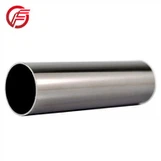
First off, let's cut to the chase: why does tantalum care so much about how you clean it? Tantalum's that shiny, corrosion-resistant metal that we make all kinds of stuff with-not just crucibles, but 99.95% Purity Seamless Tantalum Tube for high-temperature reactors, Tantalum Thermocouple Protection Tube to keep temp sensors safe, even tiny Tantalum Capillary Tube Micro Tube for lab analytics. The crucibles? We sell high-corrosion-resistance, high-purity tantalum crucibles that can handle acids, molten metals, even super-high temps-so long as you don't scratch or etch the surface. Tantalum's passivated, right? It forms a thin oxide layer on its own that keeps it from corroding, but if you mess up cleaning, you strip that layer, and suddenly it's vulnerable to reactions the next time you use it. Not cool.
Let's start with the basics: what kind of residue are we dealing with? Because that changes everything. Most crucible users run things like molten salts, glass, small metal melts, or even ceramics. The residue can be anything from powdery oxides to hard, baked-on chunks of stuff that's stuck like glue. If you try to scrub that with a steel brush, you're gonna leave tiny steel particles in there, which will contaminate your next batch and scratch the tantalum surface, breaking that passivation layer. Steel is a hard metal, and tantalum's soft enough (wait, no, actually it's hard, but it's ductile) so steel will scratch it. Bad move. I've seen guys do that and have to toss a crucible that was otherwise good as new. Step one: figure out your residue.
Let's break this down by method, from the gentlest (for light residue) to the most aggressive (for baked-on gunk). Don't skip the gentlest ones first-you'll save yourself hassle and crucible life.
First up: warm acid bath. This is the go-to for most of the residue I see, especially if it's oxides or salts. Wait, but not just any acid-tantalum is resistant to most acids, except hydrofluoric acid (HF) and concentrated sulfuric acid at high temps. Wait, no-let me get that right. Tantalum doesn't react with aqua regia, hydrochloric acid, nitric acid, or most organic acids, but it will dissolve in HF, so we want to avoid that. The best mix for a warm bath is 1 part nitric acid to 4 parts hydrochloric acid (that's aqua regia, for the chem folks reading), heated to like 60-80°C (140-175°F). Don't boil it-boiling increases the reaction and can etch the crucible. Pop the crucible in a beaker with the mix, let it sit for 15-30 minutes, then take it out and gently swish it. The residue should lift right off. If it's still there, let it sit a bit longer-don't poke or scrub yet. Pro tip: use a plastic or PTFE (Teflon) beaker, not glass, because the acid mix can etch glass over time, and you don't want broken beakers with hot acid. Also, use PTFE tweezers to handle the crucible when it's in the bath-metal tweezers might scratch it. That's a big one.
Wait, what if you have baked-on metal, like molten copper or steel? The acid bath might not touch that. Then we move to the next method: mechanical polishing, but with the right tools. No steel wool, no steel brushes. Use 0000-grade aluminum oxide powder (super fine) mixed with distilled water to make a paste, and a PTFE or wooden spatula (not metal) to gently rub the residue. Go in circular motions, light pressure-think like polishing a car, not scrubbing a pan. Once the residue is gone, rinse with distilled water, then do a quick acid dip to get any aluminum oxide residue off. I've seen guys use diamond paste too, but that's overkill for most folks. 0000 aluminum oxide is cheap and works great. Just make sure you don't apply too much pressure-tantalum is ductile, so you can deform the crucible if you push too hard, especially the thin-walled ones we sell. Those thin-walled crucibles are perfect for your high-temp runs, but they're easy to bend if you're rough with them.
Now, the heavy stuff: if you've got something really stubborn, like baked-on ceramic or glass that's been in the crucible at 1500°C for hours. That's where the aggressive method comes in, but you have to be extra careful here. First, let's get the hard residue off the outside first-don't let it get crammed into the inside crevices. You can use a thermal shock method, but only if the crucible is intact and you didn't use it with anything that would make it brittle. Wait, thermal shock: heat the crucible to like 200-300°C (392-572°F) in a muffle furnace for 10 minutes, then plunge it into a bucket of cold distilled water. The rapid contraction will crack and flake off the baked-on residue. Don't do this if the crucible has any cracks already-you'll shatter it. Also, make sure you're in a fume hood if you do this, because if there's any leftover reaction chemicals in the residue, they might release fumes when heated. Once you do the thermal shock, most of the big chunks will fall off. Then you can use a soft PTFE brush to scrub the remaining bits, followed by that aqua regia bath I talked about.
Wait, what about the passivation layer? After any cleaning, you want to make sure that layer is intact. So after rinsing the crucible with distilled water (and maybe a final rinse with deionized water for lab use), you should dry it properly. Don't just leave it on the counter with a paper towel-paper towels have lint and might leave residue. Use a lint-free cloth, like a microfiber cloth, or blow it dry with nitrogen gas (if you've got it). Then, if you want to be extra safe, you can leave it in a muffle furnace at 100°C for 30 minutes to make sure all moisture is gone. Moisture sitting in a crucible can lead to pitting over time, which is bad.
Now, the mistakes I see people make all the time-let's get these out there so you don't do them. First, using steel tools. I can't stress that enough. A tiny steel particle left in the crucible will react with your next molten sample, ruining it and scratching the tantalum surface. Second, using too strong an acid or heating too hot. Concentrated sulfuric acid at 200°C will etch tantalum, making it rough and less corrosion-resistant. Third, not drying the crucible properly. Leaving it wet can cause surface oxidation that's not the good passivation layer-wait, no, actually, water isn't that bad, but if you let water sit for days, it might cause minor corrosion. Fourth, over-cleaning. You don't need to scrub the crucible till it's super shiny every time. A light polish after a few uses is enough-if you scrub it too much, you're thinning the walls, and we know those thin walls are why you buy our crucibles in the first place.
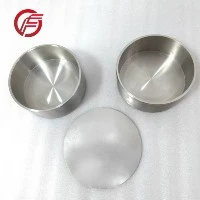
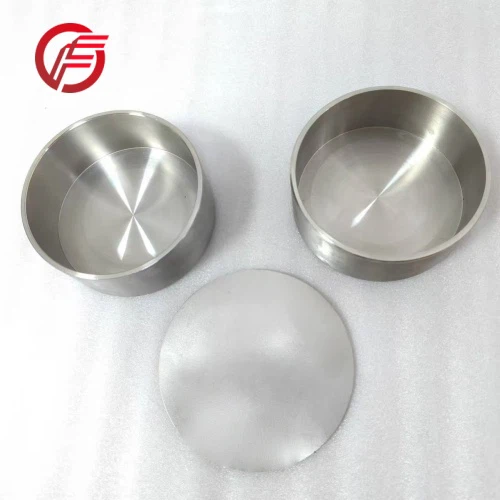
Wait, speaking of our crucibles-we get a lot of questions about how long they last, and cleaning is a big part of that. We sell high-corrosion-resistance, high-purity tantalum crucibles with 99.95% purity, which is the best balance of corrosion resistance and durability. The 99.95% pure material means there are almost no impurities that will react with your samples, and it's way more resistant to acids than lower-purity tantalum. The seamless construction (like the 99.95% Purity Seamless Tantalum Tube we supply, just formed into a crucible) means no welds to crack or corrode. That's why our crucibles hold up through multiple runs, as long as you clean them right.
Another thing: if you're using the crucible for molten metals that have high melting points, like gold or platinum, you might get some metal adhesion. In that case, the acid bath might not work. A trick I learned a while back is to use a fused silica crucible as a liner. No, wait, that might contaminate. Wait, no-you can use electrolytic stripping. If you've got an electrolytic setup, use the tantalum crucible as the cathode, and a piece of platinum as the anode, in a solution of sulfuric acid. The current will strip the molten metal off the tantalum without damaging it. This is more for industrial users, but if you're running big batches, it's worth investing in. I've had regular customers tell me this method lets them reuse a crucible 10+ times for the same metal, saving them a ton of money.
Let's wrap this up with a quick step-by-step guide, so you can bookmark this if you ever need it:
- Identify your residue: Is it powdery (oxides/salts) or baked-on (metal/ceramic)?
- For light residue: Warm aqua regia bath (1:4 HNO3:HCl, 60-80°C) for 15-30 mins, rinse with DI water, dry with a lint-free cloth.
- For medium residue: Aqua regia bath + gentle polishing with 0000 aluminum oxide paste (PTFE spatula only), rinse, dry.
- For heavy baked-on residue: Thermal shock (heat to 200-300°C, plunge into cold DI water) first, then polish, then acid bath, rinse, dry.
- Never use steel tools, overheat acids, or skip drying.
If you're in the market for new tantalum crucibles (or tubes, thermocouple protection tubes, capillaries) because you've worn yours out, or need replacements that hold up to harsh conditions, hit us up for a quote. We work with labs, industrial manufacturers, and research teams, so we can help you pick the right size and purity for your specific use. We're all about quality and reliability-after all, we've been supplying the tantalum industry for years, so we know what works.
Don't forget: proper cleaning extends the life of your crucible, saves you money, and keeps your samples uncontaminated. Skip the shortcuts, stick to these methods, and you'll get way more use out of your tantalum crucibles. If you have any questions about specific residue or cleaning methods, drop a comment below, or reach out to our team. We're here to help.
References
- Tantalum and Niobium: Properties, Processing, and Applications. Elsevier, 2015.
- "Guidelines for Cleaning Tantalum Lab Equipment." Journal of Laboratory Automation, vol. 22, no. 4, 2017, pp. 312-318.
- High-Purity Tantalum Crucible Performance Data. Metal Powder Industries Federation, 2019.
- "Corrosion Behavior of Tantalum in Acidic Solutions." Corrosion Science, vol. 128, 2017, pp. 104-112.