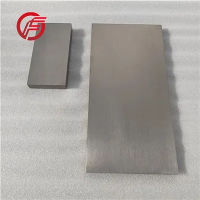

When it comes to materials for various industrial applications, fatigue life is a critical factor. Fatigue life refers to the number of loading cycles a material can endure before failure occurs under cyclic loading. As a supplier of Gr1 Titanium Bars, I am often asked how the fatigue life of Gr1 Titanium Bars compares to other materials. In this blog post, I will delve into this topic, exploring the unique properties of Gr1 Titanium Bars and contrasting them with several commonly used materials.
Understanding Gr1 Titanium Bar
Gr1 Titanium is an unalloyed, commercially - pure titanium. It is known for its excellent corrosion resistance, high strength - to - weight ratio, and good formability. Among its key properties, biocompatibility also makes it a popular choice in medical applications.
When considering fatigue life, Gr1 Titanium Bar benefits from its inherent toughness and the ability to resist crack propagation. The microstructure of Gr1 Titanium contributes to its fatigue behavior. The close - packed hexagonal (HCP) crystal structure provides a certain degree of slip resistance, which means that under cyclic loading, dislocations within the material move less readily compared to some other metals, thus reducing the likelihood of crack initiation and growth.
Comparison with Steel
Steel is one of the most widely used materials in the industrial world. Different types of steel, such as carbon steel and stainless steel, have different fatigue properties. Generally, carbon steel has a fatigue strength that can vary widely depending on its carbon content and heat treatment.
In contrast to Gr1 Titanium Bar, carbon steel is denser. The higher density means that structures made of carbon steel will be heavier, which can lead to increased dynamic loading in certain applications. In terms of corrosion resistance, carbon steel is much more vulnerable than Gr1 Titanium Bar. In a corrosive environment, corrosion pits on the steel surface can act as stress concentrators, accelerating crack initiation and reducing the fatigue life significantly.
Stainless steel, on the other hand, offers better corrosion resistance. However, even stainless steel may suffer from pitting corrosion in some aggressive environments. Gr1 Titanium Bar shows superior corrosion resistance under a wider range of chemical conditions. Considering the fatigue life in corrosive conditions, Gr1 Titanium Bar often outperforms stainless steel due to its ability to maintain its surface integrity and resist crack - inducing corrosion effects.
Comparison with Aluminum
Aluminum is another lightweight metal that is commonly used, especially in applications where weight reduction is a priority, such as in the aerospace and automotive industries. Aluminum alloys usually have good fatigue properties, especially when properly heat - treated.


However, compared to Gr1 Titanium Bar, aluminum has a lower melting point and a lower strength - to - weight ratio in some high - performance applications. The fatigue strength of aluminum can be affected by factors such as alloy composition and surface finish. In high - temperature or high - stress applications, Gr1 Titanium Bar can maintain its mechanical properties better than aluminum. The ability of Gr1 Titanium Bar to withstand high - temperature fatigue is a significant advantage, as it can remain stable under conditions where aluminum may experience softening or deformation.
Comparison with Molybdenum
Molybdenum is a metal known for its high melting point and excellent high - temperature strength. Products such as 360 361 363 Molybdenum Bolt and 360 361 363 High Purity 99.95% Molybdenum Nuts are used in high - temperature and high - stress environments.
While molybdenum has impressive high - temperature performance, it is relatively brittle compared to Gr1 Titanium Bar. The brittleness can make it more prone to crack initiation under cyclic loading, especially in applications where there are shock loads or sudden changes in stress. Additionally, molybdenum is more expensive than Gr1 Titanium Bar, which can be a limiting factor in some applications. Gr1 Titanium Bar offers a more balanced combination of fatigue resistance, cost, and other properties such as corrosion resistance and formability.
Factors Affecting Fatigue Life
In addition to the material itself, several factors can affect the fatigue life of Gr1 Titanium Bar and other materials. Surface finish plays a crucial role. A smooth surface finish reduces stress concentrations, which can prevent crack initiation. For Gr1 Titanium Bar, proper machining and polishing can enhance its fatigue life.
Loading conditions also matter. The type of cyclic loading, whether it is axial, bending, or torsional, affects how the material responds. For example, torsional loading can cause shear stress within the material, and different materials may have different sensitivities to this type of stress.
Environmental factors cannot be ignored. In addition to the corrosion mentioned earlier, temperature, humidity, and the presence of certain chemicals can all influence fatigue life. Some materials may experience embrittlement at low temperatures or accelerated corrosion in high - humidity environments.
Applications of Gr1 Titanium Bar based on Fatigue Life
Due to its good fatigue life and other excellent properties, Gr1 Titanium Bar has a wide range of applications. In the aerospace industry, it can be used for aircraft components such as fasteners and structural parts. The high strength - to - weight ratio and fatigue resistance make it suitable for withstanding the cyclic stresses experienced during flight.
In the chemical industry, the corrosion resistance and fatigue life of Gr1 Titanium Bar make it an ideal choice for pipelines, valves, and heat exchangers. These components are often exposed to corrosive chemicals and cyclic pressure changes, and Gr1 Titanium Bar can maintain its integrity over a long period.
In the medical field, the biocompatibility and fatigue resistance are essential. Gr1 Titanium Bar can be used to manufacture implants such as bone plates and screws. These implants need to withstand the cyclic loading from the body's movement over many years without failure.
PVD Metal Target Application
For those interested in the surface treatment of materials, PVD Metal Target 99.9% Titanium Plate Targets have their own merits. PVD (Physical Vapor Deposition) is a process used to deposit thin films on surfaces to improve their properties, such as wear resistance and corrosion resistance. Using high - purity titanium plate targets in PVD can enhance the surface quality of Gr1 Titanium Bar or other materials, which may further improve their fatigue life. The thin film deposited can act as a barrier against environmental factors and reduce the surface roughness, thus reducing stress concentrations.
Conclusion
In summary, the fatigue life of Gr1 Titanium Bar compares favorably to many other materials in various aspects. Its combination of corrosion resistance, high strength - to - weight ratio, and good toughness gives it an edge in applications where cyclic loading is involved. While other materials like steel, aluminum, and molybdenum have their own advantages in specific scenarios, Gr1 Titanium Bar offers a more well - rounded solution for a wide range of industrial and medical applications.
If you are in the market for high - quality Gr1 Titanium Bar and are interested in learning more about its fatigue life and how it can meet your specific needs, I invite you to contact me for a detailed discussion. Whether it's for a small - scale project or a large - scale industrial application, we can work together to find the best material solution for your requirements.
References
- ASM Handbook: Fatigue and Fracture
- Titanium: A Technical Guide, Third Edition
- Research papers on fatigue behavior of different metals and alloys from relevant scientific journals.