
As a titanium wire supplier, I get this question all the time from clients-manufacturers, fabricators, even small-scale shops that need to make sure they're getting exactly what they pay for. Titanium isn't just a metal; it's a balance of strength, light weight, corrosion resistance, and biocompatibility, depending on the grade. Test its quality wrong, and you might end up with wire that snaps mid-process, corrodes in a harsh environment, or fails a critical application. I've seen it happen: a client once ordered a bulk batch of what they thought was Grade 2 titanium wire for a marine component, cut corners on testing, and ended up with a product that rusted through in six months. That's why testing quality isn't a checkbox-it's non-negotiable, and it's something you can do yourself (or have a third party validate) to avoid costly mistakes.
First, let's start with the basics: not all titanium wire is the same, so your tests have to match its intended use. If you're sourcing wire for orthopedic surgical robots, for example, the requirements are way stricter than for general industrial fasteners. We've worked with clients on those orthopedic applications, and for that, you'd need wire that's not only high strength but also biocompatible-something you can learn more about here: Titanium Wire Rope For Orthopedic Surgical Robots. That link leads to a page where you can see how we test for those exact requirements, from purity levels to surface consistency, which is a good example of how testing aligns with end use.
Let's break down the tests you can do, starting with the most accessible ones you can run in your own shop, then moving to more specialized third-party testing that's worth the investment for critical projects.
Visual and Dimensional Inspection: The First Line of Defense
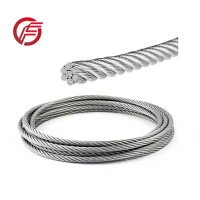
You'd be surprised how many quality issues show up on the surface. Defects like cracks, pits, inclusions, or uneven diameter are easy to spot with a quick eye and basic tools, and they're red flags for bigger problems. Titanium wire should have a smooth, uniform finish-no visible scratches that could act as stress raisers later. For dimensional accuracy, a micrometer or caliper is non-negotiable. Even a 0.001-inch variation in diameter might not seem like much, but it can throw off welding or drawing processes, leading to inconsistent performance. For example, if you're using welding wire for AWS A5.16 standards, which we carry for Gr2 and Grade 17, a consistent diameter is critical for proper weld penetration. You can check out our AWS A5.16 ERTi-2 Gr2 Titanium Welding Wires here to see the tight tolerances we maintain, which means less time reworking and more reliable final products.
When doing visual inspection, also note the packaging. Good titanium wire should be spooled neatly, with no tangling, and clearly marked with the grade, batch number, and certification. Unmarked wire is a warning sign-you don't know what you're getting, and mixing up grades (like Gr1 vs. Gr2) is a common mistake that leads to failure. Gr1 titanium wire is softer and more ductile, while Gr2 is stronger with slightly lower ductility, so using the wrong one for your application will cause issues. You can learn more about Gr1's properties and our inventory here: Gr1 Titanium Wires.
Chemical Composition Testing: Ensure Purity and Grade Accuracy
Titanium's alloys and purity levels define its performance, so this is one of the most important tests. The specifications for titanium wire are strictly regulated-for example, pure titanium grades (Gr1, Gr2) have specific limits for trace elements like iron, carbon, nitrogen, and oxygen, which affect strength and corrosion resistance. If a batch is cut with too much iron, it might lose its corrosion resistance, a big problem for marine or chemical processing applications.
There are two main ways to test chemical composition: a handheld X-ray Fluorescence (XRF) analyzer, which is portable and great for on-site checks, or a lab-based test like Optical Emission Spectroscopy (OES) for more precise results. XRF can quickly tell you if the titanium is the correct grade-for example, confirming it's Gr2 instead of a lower-grade titanium with extra impurities. For welding applications, chemical composition is even more critical because the wire's composition has to match the base metal to avoid contamination. Our AWS A5.16 ERTi17 Grade17 Titanium Welding Wires are formulated for specific welding needs, and their composition is certified to meet those standards, so you don't have to worry about weld defects from mismatched materials.
One thing to note: never skip this test. I once had a client who sourced cheap "titanium wire" from an uncertified supplier, and XRF testing later revealed it was only 85% titanium with high levels of iron and aluminum. It worked for a low-stakes project, but when they tried using it for a heat exchanger component, it corroded within a month. Chemical composition is non-negotiable for any application where performance matters.
Mechanical Testing: Strength and Ductility Checks
Titanium wire needs to have the right balance of strength and ductility for its use. If it's too brittle, it'll snap when you bend or draw it; if it's too soft, it won't hold up to stress. The two main mechanical tests are tensile testing and bend testing.
Tensile testing measures how much force the wire can handle before breaking and its elongation (how much it stretches before breaking). For example, Gr1 titanium wire has a lower tensile strength (around 240 MPa) but higher elongation (30%), making it easy to form into shapes, while Gr2 has a higher tensile strength (around 480 MPa) and elongation (20%), better for structural applications. If a batch of Gr2 wire tests at lower strength than standard, it's likely been improperly processed, which can lead to failure under load.


Bend testing is simpler: take a length of wire and bend it back and forth around a mandrel of a specific diameter (for example, 3x the wire's diameter). If it cracks or breaks after a set number of bends, it's too brittle, possibly from too much oxygen in the material or improper annealing. Annealing is a heat treatment that makes titanium more ductile-if a wire isn't properly annealed, it'll be hard and prone to cracking.
For the orthopedic surgical robot application I mentioned earlier, mechanical testing is especially critical. The wire has to withstand repeated bending and stress without failing, which is why those products require strict mechanical testing to ensure they meet medical device standards.
Corrosion Resistance Testing: For Harsh Environments
One of titanium's biggest selling points is its corrosion resistance, but that's only true for the right grade and proper processing. Even small impurities can reduce this property, so testing is key if your wire will be used in marine, chemical, or biomedical environments.
The most common simple test is the salt spray test (ASTM B117), which exposes the wire to a salt mist for a set period (like 500 hours) and checks for corrosion. If the wire rusts or shows pitting after this test, it's not the right grade or has too many impurities. For biomedical applications, like the orthopedic surgical robot wire, you might also do a biocompatibility test, checking for leachable elements that could cause reactions in the body.
We often work with clients on corrosion resistance validation, and we supply high-purity pure titanium wire (Gr1 and Gr2) that's processed to maximize corrosion resistance. You can see our pure titanium wire inventory and its certified properties here: Gr1, Gr2 High Purity Pure Titanium Wire.
Specialized Tests: For Critical Applications
If you're working on a high-stakes project, like aerospace, medical devices, or offshore equipment, you might need more specialized tests. Ultrasonic testing (UT) checks for internal defects, like voids or inclusions inside the wire that you can't see on the surface. Eddy current testing (ECT) is great for surface and subsurface defects, especially for thin wire used in electronics or medical devices. For welding wires, like our AWS A5.16-certified options, you might also do a weldability test, checking how the wire performs when joined to base metals, to ensure no porosity or cracking in the weld.
Common Mistakes to Avoid
As a supplier, I've seen clients cut corners on testing that lead to big problems. The biggest one is assuming all titanium wire is the same-Gr1 and Gr2 have different properties, and even within those grades, processing can affect performance. Another mistake is skipping third-party certification. If a supplier doesn't provide test reports for chemical composition, mechanical properties, and dimensional accuracy, you can't be sure you're getting what you paid for.
Some clients also rely solely on visual inspection, which misses internal defects or impurities. A wire might look smooth on the outside but have a tiny inclusion that causes it to snap during production. That's why combining multiple tests is the best approach-start with visual and dimensional checks, then move to chemical and mechanical testing, and add specialized tests if needed.
How to Implement Testing for Your Business
You don't need a full lab to test titanium wire. For basic checks, a handheld XRF analyzer costs a few thousand dollars and pays for itself by avoiding bad batches. Many suppliers also offer third-party testing services, so you can send a sample to a lab for formal testing if you're unsure. When you order from a supplier, always ask for a Certificate of Conformance (CoC) that includes all the test results for the batch. If they can't provide one, that's a red flag-walk away.
If you're sourcing for a specific application, make sure your tests align with industry standards. For example, welding wire needs to meet AWS A5.16 standards, while aerospace wire has its own ASTM or AMS specifications. Checking that the supplier's products are certified to these standards ensures your testing is targeting the right performance metrics.
At the end of the day, testing titanium wire quality is about protecting your project, your product, and your reputation. It's not a hassle-it's an investment that saves you from downtime, rework, and costly failures. Whether you're working on orthopedic surgical robots, welding components, or marine equipment, taking the time to test your wire will pay off in the long run.
If you're ready to source quality titanium wire for your project and want to discuss your specific testing requirements or product needs, feel free to reach out for a consultation. We can provide certified test reports, tailored recommendations for your application, and access to our full range of titanium wire products, from Gr1 to Gr2 and specialized welding wires.
References
- ASTM B348, Standard Specification for Titanium and Titanium Alloy Bars and Bars for Forging
- AWS A5.16/A5.16M: Specification for Titanium and Titanium Alloy Welding Electrodes and Rods
- ASM International. (2007). Titanium: A Technical Guide (2nd ed.)
- ISO 5832-2: Implants for Surgery – Metallic Materials – Part 2: Unalloyed Titanium for Surgical Implants
- ASTM B117, Standard Practice for Operating Salt Spray (Fog) Apparatus