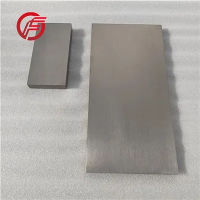

Can molybdenum foil be bent? This is a question that often comes up among our customers, especially those in industries where precision and flexibility are key. As a trusted molybdenum foil supplier, I'm here to provide you with a comprehensive answer based on scientific knowledge and our practical experience.
Understanding Molybdenum Foil
Molybdenum is a refractory metal known for its high melting point, excellent thermal conductivity, and good corrosion resistance. Molybdenum foil, which is a thin sheet of molybdenum, inherits these properties. It is widely used in various applications, such as electronics, aerospace, and high - temperature furnaces.
The physical properties of molybdenum play a crucial role in determining its bendability. Molybdenum has a body - centered cubic (BCC) crystal structure. This structure gives molybdenum certain mechanical characteristics. At room temperature, molybdenum is relatively brittle compared to some other metals. However, its ductility improves significantly at elevated temperatures.
Factors Affecting the Bendability of Molybdenum Foil
- Thickness of the Foil: One of the most important factors is the thickness of the molybdenum foil. Thinner foils are generally more flexible and easier to bend. For example, a very thin molybdenum foil with a thickness of a few micrometers can be bent with relative ease, even at room temperature. In contrast, thicker foils may require more force and may be more prone to cracking or breaking during the bending process.
- Temperature: As mentioned earlier, temperature has a significant impact on the bendability of molybdenum foil. At room temperature, the BCC structure of molybdenum makes it less ductile. But when heated to higher temperatures, usually above 400 - 500°C, the atoms in the molybdenum lattice become more mobile. This increased atomic mobility allows the foil to deform more easily without cracking. For industrial applications where bending is required, heating the molybdenum foil is often a common practice.
- Purity of Molybdenum: The purity of the molybdenum used in the foil also affects its bendability. Higher - purity molybdenum foils tend to have better mechanical properties and are more likely to be bent without defects. Impurities can act as stress concentrators, increasing the likelihood of cracking during bending.
Bending Techniques for Molybdenum Foil
When it comes to bending molybdenum foil, there are several techniques that can be employed depending on the specific requirements of the application.


- Cold Bending: Cold bending is possible for very thin molybdenum foils. This method involves bending the foil at room temperature using simple tools such as pliers or a bending jig. However, cold bending should be done with caution as there is a higher risk of cracking, especially for foils with a thickness greater than a few tens of micrometers.
- Hot Bending: Hot bending is the preferred method for thicker molybdenum foils. The foil is heated to an appropriate temperature (usually in a furnace) and then bent using specialized tools. This technique allows for more precise bending and reduces the risk of cracking. The heating process must be carefully controlled to ensure uniform temperature distribution across the foil.
Applications of Bent Molybdenum Foil
Bent molybdenum foil has a wide range of applications in different industries.
- Electronics: In the electronics industry, bent molybdenum foil can be used as heat sinks, electrical contacts, or shielding materials. The ability to bend the foil allows for custom - designed components that fit specific electronic devices.
- Aerospace: Aerospace applications often require materials that can withstand high temperatures and mechanical stress. Bent molybdenum foil can be used in engine components, thermal protection systems, and other critical parts.
- High - Temperature Furnaces: Molybdenum foil is used in high - temperature furnaces due to its excellent heat resistance. Bent foils can be used to create complex shapes for furnace linings, heating elements, and insulation.
Our Product Offerings
As a molybdenum foil supplier, we offer a wide range of molybdenum products in addition to foil. You can check out our High temperature resistance R03600 Molybdenum Fastener, which is designed to withstand extreme temperatures and provide reliable fastening solutions. Our High - temperature melting Molybdenum Boat for evaporation is ideal for evaporation processes in various industries. We also have 360 361 363 Moly Rod Pure Molybdenum Rod, TZM Molybdenum Alloy Bar, and ASTM B387 99.95% Pure Molybdenum Round Bar for different industrial needs.
Contact Us for Purchase and Consultation
If you are interested in our molybdenum products, including molybdenum foil, and have questions about bendability, application, or any other aspects, we encourage you to contact us. Our team of experts is ready to provide you with detailed information and assist you in making the right choice for your specific requirements. Whether you need a small quantity for research or a large - scale supply for industrial production, we can meet your needs.
References
- "Refractory Metals and Alloys" by R. Kieffer and F. Benesovsky.
- "Physical Metallurgy" by Robert W. Cahn and Peter Haasen.
- Industry research reports on molybdenum applications and properties.