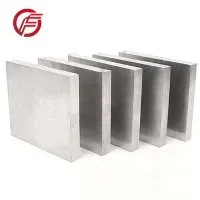


Industrial pure titanium is divided into four grades according to the number of impurities contained, namely TA1, TA2, TA3, and TA4. They basically correspond to Grade 1-4 titanium in the United States, namely, Gr.1, Gr.2, Gr.3, and Gr.4.
With the decrease in purity, the strength and hardness of industrial pure titanium increase, while the plasticity, impact toughness, and fatigue resistance decrease. Gr3 and Gr4 can be selected when the requirements for strength, hardness and wear resistance are high, and Gr1 and Gr2 can be used when the requirements for good formability are high.
Gr4 titanium alloy is a kind of α Type I titanium alloy, which is characterized by α Type A single-phase state, which cannot be strengthened by heat treatment (annealing is the only form of heat treatment), mainly depends on solution strengthening.
Gr4 room temperature strength is generally lower than β'> Type and α+β Type I titanium alloy (but higher than industrial pure titanium), but the strength and creep strength at high temperatures (500-600 ℃) are the highest among the three types of titanium alloys; It has stable structure, good oxidation resistance, and weldability, good corrosion resistance and machinability, but low plasticity (still good thermoplasticity) and poor room temperature stamping performance. Among them, the most popular of these is Gr6. It has medium strength and sufficient plasticity in the annealed state. It has good weldability and can be used below 500 ℃; When the content of interstitial impurities (oxygen, hydrogen, nitrogen, etc.) is very low, It is one of the best ultra-low temperature alloys and has high toughness and comprehensive mechanical properties at extremely low temperatures.
Because Gr4 has a slightly higher tensile strength than industrial pure titanium, it can be employed as a structural material with medium strength requirements. It is mainly used as welding wire domestically, while it is widely used in the high-end electroplating hanger industry abroad.