
What makes Titanium suitable for medical implants?
Hey there! I'm a supplier of titanium products, and I've been in this business for quite a while. One of the most interesting applications of titanium that I've come across is in the medical field, specifically for medical implants. In this blog post, I'm going to talk about what makes titanium so suitable for medical implants.
First off, let's talk about biocompatibility. Biocompatibility is a big deal when it comes to medical implants. You don't want your body to reject the implant, right? Well, titanium is super biocompatible. When titanium is placed in the human body, it forms a thin layer of titanium oxide on its surface. This layer is very stable and non - reactive. It doesn't trigger an immune response from the body, which means the body is less likely to reject the implant. It's like titanium and the human body can just get along well together.
Another great thing about titanium is its strength - to - weight ratio. Titanium is incredibly strong, yet it's relatively lightweight. In the medical field, this is a huge advantage. For example, in orthopedic implants like hip and knee replacements, you need an implant that can withstand the stresses and strains of daily activities. Titanium can handle these loads without being too heavy for the patient. If you had a heavy implant, it could put extra strain on the surrounding tissues and joints, which is definitely not what you want.
Titanium also has excellent corrosion resistance. The human body is a harsh environment, filled with various chemicals and fluids. These can cause corrosion in many metals. But titanium is able to resist corrosion very well. The titanium oxide layer I mentioned earlier acts as a protective barrier, preventing the metal from reacting with the body's fluids. This means that the implant can last a long time without deteriorating. For patients, this means fewer replacement surgeries, which is a win - win situation.
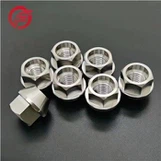
Now, let's talk about some of the titanium products we offer that are relevant to the medical field. We have DIN 912 Grade2 Titanium Allen Button Head Bolts. These bolts are made from Grade 2 titanium, which is known for its good formability and corrosion resistance. They can be used in various medical devices where a reliable fastening solution is needed.
We also have MMO Ruthenium - Iridium Coated Titanium Anode Rod. Although not a direct implant, these anode rods are used in some medical equipment. The coating on the titanium anode rod provides enhanced electrochemical performance, which is important in certain medical applications.
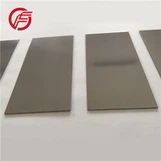
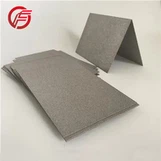
And then there's Laser Cutting Titanium Sheet. Laser - cut titanium sheets can be used to fabricate custom - made medical implants. The precision of laser cutting allows for the creation of implants with very accurate dimensions, which is crucial for a proper fit in the body.
In addition to these physical properties, titanium is also easy to work with. It can be machined, forged, and welded relatively easily compared to some other metals. This means that medical device manufacturers can create complex shapes and designs for implants. For example, they can make implants that closely match the natural shape of the bone or joint they are replacing, which can improve the overall functionality and comfort of the implant.
Titanium also has good fatigue resistance. In the human body, implants are constantly subjected to cyclic loading. For instance, every time you take a step, your hip or knee implant experiences a certain amount of stress. Titanium can withstand these repeated loads without cracking or failing easily. This is important for the long - term durability of the implant.
When it comes to the cost - effectiveness of titanium, it's a bit of a double - edged sword. On one hand, titanium is more expensive than some other metals. But on the other hand, considering its long - term performance and the fact that it reduces the need for frequent replacement surgeries, it can actually save money in the long run. For patients, this means less time in the hospital and less money spent on medical procedures over their lifetime.
So, to sum it up, titanium is an ideal material for medical implants because of its biocompatibility, high strength - to - weight ratio, corrosion resistance, ease of fabrication, fatigue resistance, and long - term cost - effectiveness. If you're in the medical device manufacturing business or involved in the medical field and are looking for high - quality titanium products for your implants, we're here to help.
If you're interested in our titanium products for medical applications, don't hesitate to reach out for a procurement discussion. We can provide you with more detailed information about our products and work with you to meet your specific needs.


References
- "Biomaterials Science: An Introduction to Materials in Medicine" by Buddy D. Ratner, Allan S. Hoffman, Frederick J. Schoen, and Jack E. Lemons
- "Titanium in Medicine: Material Science, Surface Science, Engineering, Biological Responses, and Medical Applications" edited by Jörg Breme, Friedrich F. Kohn, and Andreas Morawietz