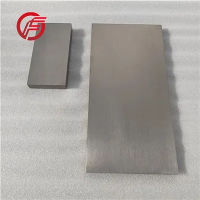

Tantalum is a rare, hard, blue-gray, lustrous transition metal that is highly corrosion-resistant. In the realm of tantalum products, understanding their hardness is crucial as it directly impacts their performance, durability, and suitability for various applications. As a reputable supplier of tantalum products, I am well - versed in the intricacies of tantalum's hardness and its implications.
What Determines the Hardness of Tantalum Products
The hardness of tantalum products is influenced by several factors. Firstly, the purity of tantalum plays a significant role. High - purity tantalum typically has a relatively lower hardness compared to tantalum with certain impurities or alloying elements. For example, when tantalum is in its pure form (99.9% or higher), it has a Mohs hardness of around 6.5. However, when it is alloyed with other metals such as tungsten or niobium, the hardness can increase.
The manufacturing process also affects the hardness of tantalum products. Processes like cold working can significantly enhance the hardness of tantalum. Cold working involves deforming the metal at room temperature, which introduces dislocations in the crystal structure. These dislocations impede the movement of atoms, making the material harder. For instance, tantalum sheets that have undergone extensive cold rolling will have a higher hardness than those in an annealed state.
Heat treatment is another factor. Annealing, which is the process of heating the tantalum to a specific temperature and then slowly cooling it, can relieve internal stresses and reduce hardness. On the other hand, quenching, a rapid cooling process after heating, can sometimes increase the hardness, although it may also make the material more brittle.
Measuring the Hardness of Tantalum Products
There are several methods to measure the hardness of tantalum products. One of the most common methods is the Vickers hardness test. In this test, a diamond indenter in the shape of a square - based pyramid is pressed into the surface of the tantalum sample under a specific load. The size of the indentation left on the surface is then measured, and the Vickers hardness number (HV) is calculated based on the load and the surface area of the indentation.
The Rockwell hardness test is also used. In this test, a hard indenter (either a steel ball or a diamond cone) is pressed into the tantalum sample, and the depth of penetration is measured. The Rockwell hardness number indicates the hardness of the material. This method is relatively quick and is suitable for a wide range of tantalum products, from thin sheets to thick bars.
Importance of Hardness in Different Tantalum Applications
Chemical Processing Industry
In the chemical processing industry, tantalum products are highly valued for their corrosion resistance. However, hardness also plays a vital role. Tantalum heat exchangers, for example, need to withstand the mechanical stresses associated with fluid flow and pressure. A harder tantalum material can better resist abrasion and erosion caused by the flowing chemicals, ensuring a longer service life. If the tantalum is too soft, it may wear out quickly, leading to leaks and costly replacements.
Electronics Industry
In the electronics industry, tantalum capacitors are widely used due to their high capacitance and reliability. The hardness of the tantalum used in these capacitors is important for maintaining the structural integrity during the manufacturing process and in the final product. When the tantalum powder is pressed into pellets and sintered to form the capacitor anode, a certain level of hardness is required to prevent the pellets from crumbling. Additionally, in the assembly process, the tantalum parts need to withstand the mechanical forces involved in soldering and mounting on printed circuit boards.
Aerospace and Defense Applications
In aerospace and defense, tantalum products are used in various components such as turbine blades, missile parts, and armor. The hardness of tantalum is crucial in these applications as it provides the necessary strength and wear resistance. Tantalum - alloyed parts can withstand high - temperature environments and high - speed impacts. For example, in turbine blades, a hard tantalum alloy can resist the high - velocity gas flow and the mechanical stresses generated during operation, ensuring the safety and efficiency of the aircraft engines.
Comparison with Other Similar Metals
When comparing tantalum with other metals commonly used in similar applications, such as nickel and titanium, the differences in hardness are notable. Nickel, for example, has a Mohs hardness of around 4, which is significantly lower than that of pure tantalum. This means that in applications where wear resistance is crucial, tantalum is often a better choice.
Titanium, on the other hand, has a Mohs hardness of around 6, which is close to that of pure tantalum. However, the hardness of titanium can vary widely depending on its grade. For instance, Gr2 Gr12 Titanium Ball Valve and DIN933 Gr2 Gr5 Titanium Hex Bolts have different hardness characteristics based on their grades. Tantalum, with its unique combination of hardness and corrosion resistance, offers a distinct advantage in many applications where both properties are required.
Our Tantalum Products and Their Hardness
As a supplier of tantalum products, we offer a wide range of tantalum items, including tantalum rods, sheets, tubes, and custom - made parts. We carefully control the manufacturing process to ensure that our products meet the required hardness specifications. For example, our tantalum rods are cold - worked to achieve a hardness that is suitable for machining and for use in high - stress applications.
Our tantalum sheets are available in different hardness levels, depending on the customer's requirements. Whether the customer needs a soft sheet for easy forming or a hard sheet for increased durability, we can provide the appropriate product. We also offer heat - treated tantalum products, where the hardness can be precisely adjusted through controlled annealing or quenching processes.
How Our Tantalum Products Stack Up Against Industry Standards
Our tantalum products are manufactured in strict accordance with international standards. We ensure that the hardness of our products meets or exceeds the relevant ASME and ASTM standards. For example, for ASME ANSI B16.9 Nickel Stub End, we can provide tantalum equivalents with the appropriate hardness to ensure compatibility and performance in piping systems.


Conclusion
In conclusion, the hardness of tantalum products is a complex yet crucial characteristic that is influenced by factors such as purity, manufacturing processes, and heat treatment. Understanding the hardness of tantalum is essential for selecting the right material for different applications, whether it's in the chemical processing, electronics, or aerospace industries.
As a reliable supplier of tantalum products, we are committed to providing high - quality products with the appropriate hardness for your specific needs. If you are in the market for tantalum products, we invite you to contact us for a detailed discussion about your requirements. Our team of experts is ready to assist you in selecting the best tantalum products and ensuring that they meet your performance expectations.
References
- ASM Handbook Volume 1: Properties and Selection: Irons, Steels, and High - Performance Alloys
- "Tantalum: Properties, Processing, and Applications" by various authors in the Journal of Materials Science
- ASTM International Standards for Tantalum and Tantalum Alloys