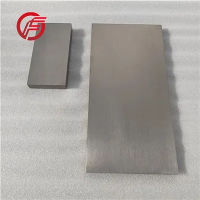

Hey there! As a niobium rod supplier, I often get asked about the differences between niobium rods and tantalum rods. It's a pretty interesting topic, so I thought I'd share some insights with you all.
Physical Properties
Let's start with the physical properties. Niobium is a shiny, grayish metal. It's relatively light - its density is around 8.57 g/cm³. On the other hand, tantalum is a heavyweight in the metal world, with a density of about 16.65 g/cm³. That means a tantalum rod of the same size as a niobium rod will be almost twice as heavy.
In terms of melting point, niobium has a melting point of about 2468°C. Tantalum takes it a step further with an even higher melting point of around 3017°C. This makes tantalum better suited for applications that require extremely high - temperature resistance.
Chemical Properties
When it comes to chemical properties, both niobium and tantalum are quite resistant to corrosion. They form a thin oxide layer on their surface, which protects them from various chemical attacks. However, tantalum is even more corrosion - resistant than niobium. It can withstand the attack of most acids, including hydrochloric acid and sulfuric acid, even at high concentrations. Niobium is also resistant to many acids, but it may react under certain conditions, especially with hydrofluoric acid.
Cost
Cost is always a big factor in any purchasing decision. Niobium is generally more affordable than tantalum. The production process of niobium is less complex and the raw materials are more abundant, which drives down the cost. If you're on a budget and don't need the extreme properties that tantalum offers, niobium rods can be a great alternative.
Applications
The differences in their properties lead to different applications. Niobium rods are widely used in the aerospace industry. They're used to make components like turbine blades and rocket nozzles because of their good strength - to - weight ratio and high - temperature resistance. Niobium is also used in the electronics industry, for example, in the production of capacitors. You can find more details about our ASTM B392 UNS R04200 R04210 Pure Niobium Bar at ASTM B392 UNS R04200 R04210 Pure Niobium Bar.
Tantalum rods, due to their high density and excellent corrosion resistance, are often used in the chemical industry. They're used to make equipment like heat exchangers and reaction vessels. Tantalum is also a key material in the medical field. It's used to make implants because it's biocompatible, meaning the human body doesn't reject it easily.
Machinability
Machinability is another aspect to consider. Niobium is relatively easy to machine compared to tantalum. Its lower density and softer nature make it more workable. You can cut, drill, and shape niobium rods with less effort and cost. Tantalum, being a much harder and denser metal, requires more advanced machining techniques and tools, which can increase the production cost.

Availability
In terms of availability, niobium is more readily available than tantalum. There are more niobium mines around the world, and the extraction and refining processes are more established. This means that you can usually get niobium rods in a shorter lead time compared to tantalum rods.
Weldability
Both niobium and tantalum can be welded, but they require special techniques. Niobium is a bit easier to weld. It can be welded using common welding methods like TIG (Tungsten Inert Gas) welding. However, welding tantalum is more challenging because of its high melting point and the need to prevent oxidation during the welding process. Specialized equipment and skilled welders are often required.
Electrical Conductivity
Niobium has good electrical conductivity, which makes it suitable for electrical applications. Tantalum also has decent electrical conductivity, but it's often used more for its other properties rather than just conductivity. In some cases, niobium can be a more cost - effective choice for electrical components where high conductivity is needed.
Magnetic Properties
Neither niobium nor tantalum is ferromagnetic. Niobium is a superconductor at low temperatures, which means it can conduct electricity with zero resistance. This property makes it useful in applications like MRI machines. Tantalum doesn't have this superconducting property, but its other properties make it valuable in different fields.
Conclusion
So, in summary, niobium rods and tantalum rods have their own unique characteristics. Niobium is lighter, more affordable, easier to machine, and more readily available. It's a great choice for applications where high - temperature resistance, good strength - to - weight ratio, and electrical conductivity are important. Tantalum, on the other hand, is heavier, more corrosion - resistant, and has a higher melting point. It's ideal for applications in harsh chemical environments and the medical field.
If you're interested in purchasing niobium rods for your project, feel free to get in touch with us. We can provide you with high - quality niobium rods at competitive prices. Whether you're in the aerospace, electronics, or any other industry, we're here to meet your needs.
References
- "Metals Handbook", ASM International
- "Corrosion Resistance of Metals and Alloys", NACE International