
As a titanium supplier, I often get asked about the chemical composition requirements for titanium. Titanium is a remarkable metal known for its high strength-to-weight ratio, corrosion resistance, and biocompatibility, making it a popular choice in various industries, from aerospace and automotive to medical and jewelry. Understanding the chemical composition of titanium is crucial as it directly influences the metal's properties and performance.
Basic Chemical Composition of Titanium
Titanium (Ti) is a chemical element with the atomic number 22. In its pure form, titanium is a lustrous, silver - gray metal. However, pure titanium is rarely used in industrial applications due to its relatively low strength compared to its alloyed counterparts.
The chemical composition of pure titanium typically contains at least 99% titanium. The remaining percentage consists of trace elements such as iron (Fe), carbon (C), nitrogen (N), hydrogen (H), and oxygen (O). These trace elements can significantly affect the properties of titanium. For example, oxygen and nitrogen can increase the strength of titanium but also make it more brittle.
Titanium Alloys and Their Composition Requirements
Titanium alloys are created by adding other elements to titanium to enhance specific properties. There are numerous titanium alloys, each with its own unique chemical composition and set of properties. Here are some of the most common titanium alloys and their composition requirements:
Ti - 6Al - 4V (Grade 5)
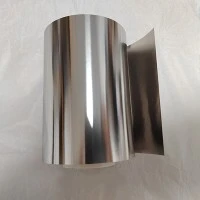
This is one of the most widely used titanium alloys, accounting for about 50% of all titanium alloy production. The chemical composition of Ti - 6Al - 4V consists of approximately 6% aluminum (Al) and 4% vanadium (V), with the remainder being titanium. Aluminum is added to increase the strength and corrosion resistance of the alloy, while vanadium improves its ductility. This alloy is known for its excellent combination of strength, toughness, and corrosion resistance, making it suitable for a wide range of applications, including aerospace components, medical implants, and Gr5 Titanium Foil.
Ti - 5Al - 2.5Sn (Grade 6)
This alloy contains about 5% aluminum and 2.5% tin (Sn). Aluminum provides solid - solution strengthening, while tin helps to improve the creep resistance of the alloy. Ti - 5Al - 2.5Sn is often used in applications where high - temperature performance is required, such as in jet engine components.
Ti - 3Al - 2.5V (Grade 9)
With 3% aluminum and 2.5% vanadium, this alloy offers a good balance of strength and formability. It is commonly used in applications where both strength and the ability to be formed into complex shapes are required, such as in tubing for aerospace and automotive applications.
Importance of Controlling Chemical Composition
Controlling the chemical composition of titanium is of utmost importance for several reasons. Firstly, the mechanical properties of titanium, such as strength, ductility, and toughness, are directly related to its chemical composition. For example, an increase in the oxygen content can lead to an increase in strength but a decrease in ductility. Therefore, precise control of the chemical composition is necessary to achieve the desired mechanical properties for a specific application.
Secondly, the corrosion resistance of titanium is also influenced by its chemical composition. Some alloying elements can enhance the corrosion resistance of titanium in specific environments. For instance, the addition of molybdenum (Mo) can improve the resistance of titanium to corrosion in reducing acids.
Quality Control in Chemical Composition
As a titanium supplier, we implement strict quality control measures to ensure that the chemical composition of our titanium products meets the required standards. We use advanced analytical techniques, such as spectroscopy and chemical analysis, to accurately determine the chemical composition of our titanium materials.
Before the production process, we carefully select the raw materials to ensure their purity and quality. During the manufacturing process, we closely monitor the chemical composition at each stage to make sure that any deviations from the specified composition are corrected in a timely manner.
Applications and Chemical Composition
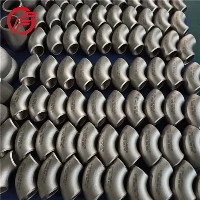
The chemical composition of titanium also dictates its suitability for different applications. For example, in the aerospace industry, where high strength - to - weight ratio and excellent fatigue resistance are crucial, alloys like Ti - 6Al - 4V are commonly used. In the automotive industry, titanium components such as Titanium Exhaust Pipe Elbows are made from alloys that can withstand high temperatures and corrosive exhaust gases.


In the medical field, titanium's biocompatibility is of great importance. Pure titanium and some specific alloys are used for medical implants because they can integrate well with the human body without causing adverse reactions. The chemical composition of these medical - grade titanium materials is carefully controlled to ensure their safety and effectiveness.
Custom - Made Titanium Alloys
In addition to the standard titanium alloys, we also offer custom - made titanium alloys to meet the specific requirements of our customers. By adjusting the chemical composition, we can develop titanium alloys with unique properties for specialized applications. For example, if a customer needs a titanium alloy with extremely high strength and good corrosion resistance in a specific chemical environment, we can work with them to develop an alloy with the appropriate chemical composition.
Conclusion
In conclusion, the chemical composition of titanium and its alloys is a critical factor that determines their properties and performance. As a titanium supplier, we are committed to providing high - quality titanium products with precise chemical compositions. Whether you need standard titanium alloys or custom - made solutions, we have the expertise and resources to meet your needs.
If you are interested in purchasing titanium products or have any questions about the chemical composition requirements for titanium, please feel free to contact us for a detailed discussion. We look forward to working with you to find the best titanium solutions for your applications.
References
- "Titanium: A Technical Guide" by John C. Williams.
- "The Physical Metallurgy of Titanium Alloys" by David Eylon.
- Various industry standards and specifications for titanium materials.