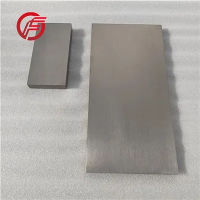

Titanium, a remarkable metal known for its exceptional strength, low density, and excellent corrosion resistance, is a highly sought-after material in various industries. As a trusted titanium supplier, we are well-versed in the unique properties of titanium and its interactions with other elements. In this blog post, we will explore how titanium reacts with different elements and the implications of these reactions in real-world applications.
Reactivity of Titanium
Titanium is a reactive metal, but it forms a passive oxide layer on its surface when exposed to oxygen. This oxide layer, typically composed of titanium dioxide (TiO₂), is extremely thin, stable, and adherent. It acts as a protective barrier, preventing further oxidation and corrosion of the underlying titanium metal. This passivation process is one of the key reasons why titanium is so resistant to corrosion in many environments.
Reaction with Oxygen
The reaction between titanium and oxygen is of great importance. At room temperature, titanium reacts slowly with oxygen in the air to form a thin, protective oxide layer. However, at elevated temperatures, the reaction becomes more vigorous. When titanium is heated in air or oxygen, it can burn to form titanium dioxide (TiO₂). The chemical equation for this reaction is:


Ti + O₂ → TiO₂
This reaction is exothermic, and it can be quite violent under certain conditions. The high temperature generated during the combustion of titanium can cause the metal to melt and react with other substances in its vicinity. In industrial applications, the formation of the titanium dioxide layer is often controlled to enhance the metal's corrosion resistance.
Reaction with Halogens
Titanium reacts readily with halogens such as fluorine (F₂), chlorine (Cl₂), bromine (Br₂), and iodine (I₂). The reactions typically result in the formation of titanium halides. For example, with chlorine, titanium reacts to form titanium tetrachloride (TiCl₄):
Ti + 2Cl₂ → TiCl₄
Titanium tetrachloride is a colorless liquid that is used in the production of titanium metal through the Kroll process. In this process, TiCl₄ is reduced with magnesium to obtain pure titanium. The reactions with other halogens follow a similar pattern, producing corresponding titanium halides.
Reaction with Nitrogen
Titanium can react with nitrogen at high temperatures to form titanium nitride (TiN). This reaction occurs when titanium is heated in a nitrogen atmosphere. The chemical equation for the reaction is:
Ti + N₂ → 2TiN
Titanium nitride is a hard, wear-resistant material with a golden color. It is widely used as a coating material in various industries, such as cutting tools and decorative applications. The coating provides enhanced hardness and wear resistance to the underlying substrate.
Reaction with Carbon
When titanium is heated in the presence of carbon, it can react to form titanium carbide (TiC). The reaction is as follows:
Ti + C → TiC
Titanium carbide is an extremely hard material with high melting point and excellent chemical stability. It is used in the production of cutting tools, wear-resistant parts, and high-temperature applications. The addition of carbon to titanium can significantly improve its hardness and wear resistance.
Reaction with Hydrogen
Titanium can absorb hydrogen under certain conditions, leading to the formation of titanium hydrides. The absorption of hydrogen can have a significant impact on the mechanical properties of titanium, making it more brittle. This phenomenon, known as hydrogen embrittlement, is a concern in some applications where titanium is exposed to hydrogen-containing environments. However, proper heat treatment and material selection can help mitigate the effects of hydrogen embrittlement.
Applications Based on Titanium's Reactions
The reactions of titanium with other elements have numerous practical applications. For example, the formation of titanium dioxide is utilized in the production of pigments, photocatalysts, and sunscreen. The reaction with halogens is crucial in the extraction of titanium from its ores. Titanium nitride and titanium carbide coatings are used to improve the performance of cutting tools and wear-resistant components.
As a titanium supplier, we offer a wide range of titanium products that take advantage of these reactions and properties. Our Iridium Coated Titanium Anode Mesh is designed for use in electroplating and electrochemical applications, leveraging the unique properties of titanium and its coatings. Our ASME SB-265 UNS R50700 3.7065 CP Ti Gr4 Titanium Plate is known for its high strength and corrosion resistance, making it suitable for various industrial applications. And our DIN7981 Gr2 Titanium Cross Recessed Pan Head Self-tapping Screws provide reliable fastening solutions in industries where lightweight and corrosion-resistant materials are required.
Conclusion
In conclusion, the reactivity of titanium with other elements plays a crucial role in its properties and applications. The formation of protective oxide layers, the production of various compounds, and the impact on mechanical properties are all important aspects to consider. As a titanium supplier, we are committed to providing high-quality titanium products that meet the diverse needs of our customers. Whether you are in the aerospace, automotive, medical, or any other industry, our products can offer the performance and reliability you need.
If you are interested in learning more about our titanium products or have specific requirements for your projects, we encourage you to contact us for procurement and further discussions. Our team of experts is ready to assist you in finding the best titanium solutions for your applications.
References
- "Titanium: A Technical Guide" by John R. Davis
- "The Chemistry of Titanium" by G. Wilkinson, F. G. A. Stone, and E. W. Abel
- Various scientific journals and research papers on titanium and its reactions