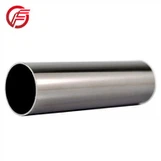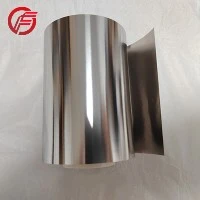

As a tantalum wire supplier, I've witnessed firsthand the critical role that the coefficient of thermal expansion (CTE) plays in the performance and application of tantalum wire. Tantalum wire is a remarkable material known for its high melting point, excellent corrosion resistance, and good ductility. However, its CTE can significantly influence its use in various industries. In this blog, I'll delve into how the CTE of tantalum wire affects its applications and why it's essential for customers to understand this property.

Understanding the Coefficient of Thermal Expansion
The coefficient of thermal expansion is a measure of how much a material expands or contracts when its temperature changes. It is defined as the fractional change in length or volume per unit change in temperature. For tantalum wire, the CTE is relatively low compared to many other metals. This means that tantalum wire experiences less dimensional change when exposed to temperature variations.
The low CTE of tantalum wire is due to its atomic structure. Tantalum has a body-centered cubic (BCC) crystal structure, which provides a high degree of stability. The atoms in a BCC structure are arranged in a way that allows them to move relatively freely, but they also have strong bonds that resist expansion. As a result, tantalum wire maintains its shape and dimensions over a wide range of temperatures.
Impact on Electrical Applications
One of the most significant applications of tantalum wire is in electrical components. Tantalum wire is commonly used in resistors, capacitors, and other electronic devices. In these applications, the low CTE of tantalum wire is crucial for maintaining the accuracy and stability of the electrical properties.
For example, in a resistor, the resistance value is directly related to the length and cross-sectional area of the wire. If the wire expands or contracts due to temperature changes, the resistance value will also change. This can lead to inaccurate readings and performance issues in electronic circuits. However, because tantalum wire has a low CTE, it experiences minimal dimensional change, ensuring that the resistance value remains stable over a wide temperature range.
Similarly, in a capacitor, the capacitance value is determined by the distance between the plates and the dielectric constant of the material. Tantalum wire is often used as the electrode in capacitors because of its excellent corrosion resistance and low CTE. The low CTE helps to maintain the distance between the plates, ensuring that the capacitance value remains constant.
Influence on High-Temperature Applications
Tantalum wire is also widely used in high-temperature applications, such as heating elements and furnace components. In these applications, the low CTE of tantalum wire is essential for preventing thermal stress and cracking.
When a material is heated, it expands. If the material is constrained, such as in a heating element or furnace component, the expansion can cause thermal stress. This stress can lead to cracking and failure of the material. However, because tantalum wire has a low CTE, it experiences less expansion when heated, reducing the risk of thermal stress and cracking.
In addition, the low CTE of tantalum wire allows it to maintain its shape and dimensions at high temperatures. This is important for ensuring the accuracy and reliability of heating elements and furnace components. For example, in a heating element, the shape and dimensions of the wire determine the heat distribution and efficiency. If the wire expands or contracts due to temperature changes, the heat distribution and efficiency will also change. However, because tantalum wire has a low CTE, it maintains its shape and dimensions, ensuring consistent heat distribution and efficiency.
Considerations for Joining and Assembly
Another important aspect of using tantalum wire is joining and assembly. When tantalum wire is joined to other materials, such as metals or ceramics, the difference in CTE between the materials can cause problems.
If the CTE of the two materials is significantly different, the joint may experience thermal stress when heated or cooled. This stress can lead to cracking and failure of the joint. To avoid this problem, it's important to choose materials with similar CTEs when joining tantalum wire.
In addition, the joining process itself can affect the CTE of the tantalum wire. For example, if the wire is welded or brazed, the heat generated during the process can cause the wire to expand or contract. This can change the CTE of the wire and affect its performance. To minimize the impact of the joining process on the CTE of the tantalum wire, it's important to use appropriate joining techniques and control the heat input.
Importance of Quality Control
As a tantalum wire supplier, I understand the importance of quality control in ensuring the performance and reliability of the wire. The CTE of tantalum wire can vary depending on the manufacturing process and the purity of the material. Therefore, it's essential to have strict quality control measures in place to ensure that the CTE of the wire meets the required specifications.
At our company, we use advanced testing equipment and techniques to measure the CTE of our tantalum wire. We also have a team of experienced quality control professionals who monitor the manufacturing process to ensure that the wire is produced to the highest standards. By providing high-quality tantalum wire with consistent CTE values, we can help our customers achieve optimal performance and reliability in their applications.
Conclusion
In conclusion, the coefficient of thermal expansion of tantalum wire plays a crucial role in its use in various industries. The low CTE of tantalum wire makes it an ideal material for electrical applications, high-temperature applications, and joining and assembly. However, it's important to understand the impact of the CTE on the performance and reliability of the wire and to take appropriate measures to ensure that the wire is used correctly.
If you're interested in learning more about our tantalum wire products or have any questions about the CTE of tantalum wire, please don't hesitate to [contact us for procurement and discussion]. We're committed to providing our customers with high-quality tantalum wire and excellent customer service.
References
- ASM Handbook Volume 2: Properties and Selection: Nonferrous Alloys and Special-Purpose Materials
- Tantalum and Niobium: Properties, Processing, and Applications by R. E. Smallman and R. J. Bishop