
Can Tantalum Foil Be Used in Microelectronics?
In the ever - advancing field of microelectronics, the search for high - performance materials is a constant pursuit. Tantalum foil, a product that my company supplies, has shown great potential in this area. This blog will explore the properties of tantalum foil and analyze its viability for use in microelectronics.
Properties of Tantalum Foil
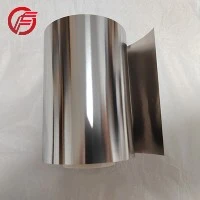
Tantalum is a rare, hard, blue - gray, lustrous transition metal. When processed into foil, it retains several key properties that make it an attractive option for various applications, especially in microelectronics.
High Melting Point
Tantalum has a very high melting point of approximately 3017°C. This high melting point allows tantalum foil to withstand high - temperature processes that are common in microelectronics manufacturing, such as soldering and annealing. For example, during the soldering process, components need to be heated to a certain temperature to form reliable electrical connections. Tantalum foil can maintain its structural integrity under these high - temperature conditions, which is crucial for the long - term stability of microelectronic devices.
Excellent Corrosion Resistance
Tantalum is highly resistant to corrosion, even in harsh chemical environments. It forms a thin, stable oxide layer on its surface when exposed to air, which acts as a protective barrier against further corrosion. In microelectronics, where components may be exposed to various chemicals during the manufacturing process or in their operating environment, the corrosion resistance of tantalum foil ensures the reliability and longevity of the devices. For instance, in some microfluidic devices used in biochemical analysis, tantalum foil can be used as an electrode material because it can resist the corrosive effects of biological samples and chemical reagents.
Good Electrical Conductivity
Tantalum is a good conductor of electricity. Its electrical conductivity allows it to efficiently transfer electrical signals in microelectronic circuits. In high - frequency applications, where signal transmission speed and integrity are critical, the electrical properties of tantalum foil can contribute to the overall performance of the device. For example, in radio - frequency (RF) microelectronics, tantalum foil can be used as an interconnect material to minimize signal loss and interference.
High Capacitance
Tantalum has the ability to form a very thin and stable oxide layer with high dielectric constant. This property makes tantalum capacitors, often using tantalum foil as the anode material, have high capacitance values in a relatively small physical size. In microelectronics, where miniaturization is a key trend, high - capacitance tantalum capacitors can store a large amount of electrical energy in a limited space, supporting the operation of various circuits such as power supply circuits and filtering circuits.
Applications of Tantalum Foil in Microelectronics
Capacitors
As mentioned earlier, tantalum foil is widely used in the production of tantalum capacitors. Tantalum capacitors are known for their high capacitance, low equivalent series resistance (ESR), and long - term stability. They are commonly used in mobile phones, laptops, digital cameras, and other portable electronic devices to provide stable power supplies and filter out unwanted electrical noise. Our company offers ASTMB708 R05200 Ta Foil, which is suitable for high - performance tantalum capacitor manufacturing, with precise thickness control and high purity to ensure excellent electrical properties.
Interconnects
In microelectronic circuits, interconnects are used to connect different components such as transistors, resistors, and capacitors. Tantalum foil can be used as an interconnect material due to its good electrical conductivity and corrosion resistance. It can replace traditional materials like copper and aluminum in some high - reliability and high - performance applications. For example, in aerospace and military microelectronics, where devices need to operate in extreme environments, tantalum foil interconnects can provide more stable electrical connections. Our R05200 99.95% High Purity Tantalum Foil can meet the high - purity requirements for such critical applications.
Heat Dissipation
In high - power microelectronic devices, heat dissipation is a major concern. Tantalum foil, with its relatively high thermal conductivity, can be used as a heat - spreading material. It can help transfer heat away from the heat - generating components, such as integrated circuits (ICs), to prevent overheating and ensure the normal operation of the devices. By using ASTMB708 R05200 Tantalum Foil Sheet, which can be customized in size and shape, microelectronic manufacturers can design effective heat - dissipation solutions for their products.


Challenges and Considerations
While tantalum foil has many advantages for use in microelectronics, there are also some challenges and considerations.
Cost
Tantalum is a rare metal, and the production of high - quality tantalum foil involves complex processes. As a result, tantalum foil is relatively expensive compared to some other materials used in microelectronics, such as copper or aluminum. However, the performance and reliability benefits it offers in certain applications may justify the higher cost. For high - end products where performance is critical, the use of tantalum foil can be a cost - effective solution in the long run due to reduced failure rates and longer product lifetimes.
Processing Difficulty
Tantalum foil is relatively hard and difficult to process compared to some softer metals. Precision machining, such as patterning and etching, requires specialized equipment and techniques. Our company has rich experience in tantalum foil processing and can provide machined tantalum foil products according to customers' specific requirements, ensuring high - quality and high - precision processing results.
Quality Assurance and Supply Capacity
As a tantalum foil supplier, we are committed to providing high - quality products. Our tantalum foil products, including ASTMB708 R05200 Ta Foil, R05200 99.95% High Purity Tantalum Foil, and ASTMB708 R05200 Tantalum Foil Sheet, are subject to strict quality control procedures. We source raw materials from trusted suppliers and use advanced production technology to ensure the consistency of product quality.
In addition, we have a large - scale production capacity to meet the needs of different customers. Whether you are a small - scale laboratory or a large - scale microelectronic manufacturing enterprise, we can provide you with the right amount of tantalum foil products in a timely manner.
Conclusion
Tantalum foil can indeed be effectively used in microelectronics. Its unique properties, such as high melting point, excellent corrosion resistance, good electrical conductivity, and high capacitance, make it suitable for a variety of applications including capacitors, interconnects, and heat dissipation. Although there are challenges such as cost and processing difficulty, these can be mitigated through proper design and high - quality processing.
If you are interested in using tantalum foil for your microelectronics applications, we invite you to contact us for further discussion and procurement negotiation. Our team of experts is ready to provide you with detailed technical support and customized solutions to meet your specific requirements.
References
- "Tantalum: Properties, Applications, and Markets." US Geological Survey.
- "Microelectronics: An Introduction to Device Physics and Fabrication" by Richard S. Muller and Theodore I. Kamins.
- "Capacitor Technology Handbook" by James Wong.