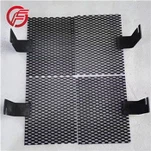


Baoji Fairy Titanium Industry Co., Ltd. is one of the leading manufacturers and suppliers of ruthenium iridium titanium anode plate in China. Welcome to wholesale bulk high quality customized products made in China here from our factory. Good service and low price are available.
Products Description Tel:0917-3664600
Ruthenium iridium titanium anode plate is a type of electrode used in electrochemical cells, particularly in lithium-ion batteries. It is composed of a mixture of ruthenium, iridium, and titanium, which provides a stable and efficient electrochemical interface.
The anode plate is designed to maximize the battery's energy density and cycle life, making it a crucial component in many modern.
Product features:
- Corrosion Resistance: The Ru-Ir-Ti anode plate is highly corrosion-resistant, making it suitable for use in various aggressive environments.
- High Current Efficiency: It exhibits excellent current efficiency, allowing for efficient and effective electrochemical processes.
- Dimensional Stability: The anode plate maintains its structural integrity and shape over time, ensuring consistent performance.
- Long Lifespan: With superior durability and resistance to degradation, the Ru-Ir-Ti anode plate offers a long lifespan, reducing the need for frequent replacements.

Specification Tel:0917-3664600
| Grade | Gr1 Gr2 titanium |
| Size | according to customer's size |
| Coating | Ruthenium iridium coating 8~10um |
| Standards | ASTM B265 |
Product Pictures Tel:0917-3664600


What are the titanium anode used for sewage treatment? Tel:0917-3664600
- Titanium tantalum (Ti Ta) anode: Titanium tantalum anodes have excellent corrosion resistance and are suitable for various wastewater treatment environments, such as electrolytic removal of heavy metal ions and electro-oxidation degradation of organic compounds.
- Ti Ta Ir anode: An alloy anode composed of titanium, tantalum, and iridium, which has higher corrosion resistance and wear resistance. It is suitable for wastewater treatment that can withstand harsh pollution and high salinity environments.
- Titanium hafnium (Ti Hf) anode: Titanium hafnium anode has excellent corrosion resistance and conductivity, and is widely used in the oxidation decomposition and electrolysis of metal ions in wastewater electrolysis treatment processes.
- Platinum titanium (Pt Ti) anode: Platinum titanium anode is coated with platinum catalyst on its surface, providing high electrical activity and electrochemical catalytic effect, suitable for efficient oxidation and decomposition of organic matter, disinfection, and sterilization.
- Ruthenium iridium titanium anode: Titanium has good corrosion resistance and conductivity, suitable for general wastewater treatment needs, such as electrolytic removal of organic matter, electrodialysis of metal ions, etc.
These titanium anodes have good corrosion resistance, conductivity, and stability, and are suitable for different sewage treatment processes, including sewage oxidation decomposition, electrolytic removal of heavy metal ions, electrodialysis of metal ions, disinfection and sterilization, etc. Suitable titanium anode types need to be selected based on specific treatment needs and environmental conditions to ensure effective sewage treatment effects. It is recommended to consult professional engineers for more accurate advice when selecting and using titanium anodes.
Applications of Ruthenium iridium anode plates
- Water Treatment: The Ru-Ir-Ti anode plate is commonly used in electrochemical water treatment applications, such as electrochlorination, electrooxidation, and electrocoagulation, to remove impurities and disinfect water.
- Electroplating: It finds application in electroplating processes, where a metal coating is applied onto a substrate for enhanced aesthetics, durability, or corrosion resistance.
- Electrowinning: The Ru-Ir-Ti anode plate is utilized in electrowinning processes to extract metals from ores or waste streams, such as copper, zinc, nickel, and gold.
- Electrolysis: It is suitable for various electrolytic processes, including water electrolysis to produce hydrogen and oxygen, as well as electrolytic production of chemicals like chlorine, caustic soda, and hydrogen peroxide.
- Cathodic Protection: The Ru-Ir-Ti anode plate can be employed in cathodic protection systems to prevent corrosion of metal structures, pipelines, or tanks by acting as sacrificial anodes.
Packing And Shipping Tel:0917-3664600
Package and delivery have become essential aspects of modern-day commerce. With the rise of e-commerce, online shopping has become increasingly popular, and package and delivery services have become a crucial component of the supply chain.
Package and delivery refer to the process of transporting goods from one place to another through various means such as postal services, courier companies, and logistics providers. The primary objective of package and delivery is to ensure that the goods are delivered to their intended recipients in a timely, safe, and efficient manner.
The package and delivery process starts with the sender preparing the package for shipment by packaging the goods securely and labeling them correctly. The package is then handed over to the delivery company, which arranges for the transportation of the package to its destination.
Various modes of transportation are used for packaging and delivery, including land, air, and sea. The mode of transportation used depends on various factors such as the distance between the sender and recipient, the size and weight of the package, and the urgency of delivery.

When selecting suitable titanium anode plates for sewage treatment, the following factors can be considered:
- Corrosion performance: Titanium anode plates should have good corrosion resistance and be able to withstand corrosive substances such as acids, alkalis, and salts in wastewater. Common corrosion-resistant titanium alloys include titanium tantalum (Ti Ta), titanium tantalum iridium (Ti Ta Ir), titanium hafnium (Ti Hf), and so on.
- Life and stability: Choosing titanium anode plates with good durability and stability can maintain good performance and extend their service life during long-term operation.
- Conductivity: Titanium anode plates should have good conductivity and be able to provide sufficient current density to ensure efficient electrochemical reactions and treatment effects.
- Surface characteristics: The coating or treatment method on the surface of titanium anode plates also needs to be considered, such as whether there is a catalyst coating layer to improve electrocatalytic activity, or whether special coatings are used to enhance specific functions.
- Application requirements: Select a suitable type of titanium anode plate based on the specific needs of sewage treatment. Different types of anode plates are suitable for different sewage treatment processes, such as oxidative decomposition of organic matter, electrolytic removal of heavy metal ions, and electrodialysis of metal ions.
When you buy titanium anode plates, it is recommended to consult our engineers. Based on specific sewage treatment requirements and conditions, they can provide you with more accurate advice and choose suitable products.
FAQ
Q: 1. How long is the service life of a titanium anode plate?
A: The service life of a titanium anode plate can reach more than 4000 hours. Titanium anode has good conductivity and corrosion resistance, as well as low cost, and its service life far exceeds that of lead anode, and it can work stably for more than 4000 hours. This feature makes titanium anode an inevitable trend in the development of electroplating zinc and tin production, which not only greatly saves electroplating energy consumption, but also creates conditions for the production of thick galvanized and tin steel plates.
In addition, the guaranteed service life of titanium anode ranges from 0.5 to 50 years, depending on the application industry and specific use environment. This shows that the service life of titanium anode plate is affected by many factors, including the use environment, current density, etc., but in general, its service life can be up to 4000 hours or more.
In addition, the guaranteed service life of titanium anode ranges from 0.5 to 50 years, depending on the application industry and specific use environment. This shows that the service life of titanium anode plate is affected by many factors, including the use environment, current density, etc., but in general, its service life can be up to 4000 hours or more.
Q: 2. What industry does titanium anode plate belong to?
A: Titanium anode plate is mainly used in environmental protection and new energy industries. Specifically, titanium anode plate is used as an anode in water treatment equipment, such as in the fields of drinking water sterilization and industrial wastewater degradation. In addition, they are also used as anodes in the production of new energy-negative electrode materials. These applications show that titanium anode plates play an important role in environmental protection and new energy technologies, and are essential for improving the efficiency and stability of electrochemical processes.
Q: 3. What is the material of titanium anode plates?
A: The main materials of titanium anode plates are industrial pure titanium Gr1 and Gr2.
Titanium anode, also known as DSA anode (insoluble anode), is a titanium-based electrode with good electrocatalytic activity, conductivity, oxidation resistance, small pole distance change, strong corrosion resistance, good mechanical strength and processing performance, long life, and low cost.
Titanium anode, also known as DSA anode (insoluble anode), is a titanium-based electrode with good electrocatalytic activity, conductivity, oxidation resistance, small pole distance change, strong corrosion resistance, good mechanical strength and processing performance, long life, and low cost.
Q: 4. What types of titanium anode plates are there?
A: Titanium anode has good electrocatalytic performance for electrode reactions, which is beneficial to reduce the overpotential of oxygen evolution and chlorine evolution reactions, thereby saving electricity. Titanium-based metal oxide coated anode, that is, precious metal oxides are coated on titanium substrates, sintered by high-temperature thermal decomposition, and have oxygen evolution function and chlorine evolution function respectively according to the different surface catalytic coatings. These coatings include ruthenium coatings and iridium coatings. Ruthenium coatings are mainly used in various chlorine evolution occasions, such as the chlor-alkali industry, cathode protection, etc., while iridium coatings are suitable for electrolytic extraction of non-ferrous metals, electroplating industry, electrochemical reduction of organic matter, and other occasions that require oxygen evolution reaction. The base metals include Gr1, Gr2, TA1, TA2, etc. These materials have the characteristics of high corrosion resistance, high current efficiency and long working life.
Q: 5. What is the manufacturing process of titanium anode plate?
A: The manufacturing process of titanium anode plate involves multiple steps, including raw material selection, post-processing, and specific preparation methods such as annealing, pickling, acid etching, coating of rare metal coatings, etc.
Raw material selection: Pure titanium substrate is usually selected as the raw material.
Post-processing: The titanium anode is post-processed, such as coating, electroplating, etc., to improve the corrosion resistance and surface properties of the titanium anode.
Specific preparation method:
Annealing treatment: Anneal the titanium plate to obtain an annealed titanium plate, then grind, pickle, and then acid etch, and finally evenly coat the rare metal coating solution, dry and roast, and obtain a titanium anode plate.
Brushing and baking: Brush the prepared precious metal liquid evenly on the substrate, dry it, and put it into the furnace for insulation for a certain period of time, cool it naturally, oxidize it, and repeat the process of brushing, drying, heating insulation, and cooling, usually brushing about 20 to 40 times.
In addition, various parameters such as temperature and pH value should be controlled during the production process to ensure that the prepared titanium anode has excellent electrochemical properties and stability. The entire production process requires strict quality control to ensure that the chemical composition, mechanical properties, corrosion resistance, surface properties, and appearance quality of the titanium anode plate meet the requirements.
Raw material selection: Pure titanium substrate is usually selected as the raw material.
Post-processing: The titanium anode is post-processed, such as coating, electroplating, etc., to improve the corrosion resistance and surface properties of the titanium anode.
Specific preparation method:
Annealing treatment: Anneal the titanium plate to obtain an annealed titanium plate, then grind, pickle, and then acid etch, and finally evenly coat the rare metal coating solution, dry and roast, and obtain a titanium anode plate.
Brushing and baking: Brush the prepared precious metal liquid evenly on the substrate, dry it, and put it into the furnace for insulation for a certain period of time, cool it naturally, oxidize it, and repeat the process of brushing, drying, heating insulation, and cooling, usually brushing about 20 to 40 times.
In addition, various parameters such as temperature and pH value should be controlled during the production process to ensure that the prepared titanium anode has excellent electrochemical properties and stability. The entire production process requires strict quality control to ensure that the chemical composition, mechanical properties, corrosion resistance, surface properties, and appearance quality of the titanium anode plate meet the requirements.
Contact Us
No.11th Road of Gaoxin, Baoji, Shaanxi, P.R.China
Tel: +86-0917- 3664600
Fax: +86-0917- 3664600
Whatsapp: +8618791798690
Mail: sales@tmsalloy.com
Other related MMO titanium anodes.

Hot Tags: ruthenium iridium titanium anode plate, China, suppliers, manufacturers, factory, customized, wholesale, bulk, low price, for sale, in stock, buy discount, made in China, MMO Ruthenium Iridium Coated Titanium Anode Rod, Iridium Tantalum Anode Rod, MMO Titanium Anode Titanium Mesh Electrode, Iridium Coated Titanium Anode Mesh, Ruthenium Iridium Titanium Anode Plate, Platinum Coated Titanium Plates Platinized Titanium Anode