
Hey there! As a niobium rod supplier, I often get asked about the density of niobium rods. So, I thought I'd write this blog to share all the deets on what the density of niobium rod is, why it matters, and how it impacts different applications.
First off, let's talk about what niobium is. Niobium is a chemical element with the symbol Nb and atomic number 41. It's a soft, grey, ductile transition metal, often found in the minerals pyrochlore and columbite. Niobium rods, which we supply, are widely used in various industries due to their unique properties.
Now, to the main question: what's the density of a niobium rod? The density of niobium is approximately 8.57 g/cm³. This value is pretty important because it gives us an idea of how much mass is packed into a given volume of the niobium rod. You see, density is a fundamental physical property that helps engineers and scientists understand how a material will behave in different situations.
For example, in aerospace applications, the density of materials matters a great deal. Aircraft designers need to balance strength and weight to ensure optimal performance. Niobium rods, with their relatively high density, offer excellent strength - to - weight ratios. They can withstand high temperatures and stress, making them ideal for components like jet engine parts.
In the electronics industry, the density of niobium also plays a role. Niobium is used in capacitors because of its high dielectric constant. The density of the niobium rod affects how the material can be fabricated into these tiny electronic components. A higher density can sometimes mean better electrical conductivity and stability, which are crucial for high - performance electronics.
Another industry where niobium rods are in high demand is the medical field. Niobium is biocompatible, which means it can be used in medical implants without causing adverse reactions in the human body. The density of the niobium rod is important here, too. When making implants, doctors and manufacturers need to ensure that the implant has the right weight and size. A proper density ensures that the implant fits well and functions as intended.
But how do we measure the density of a niobium rod? Well, it's a relatively straightforward process. First, we measure the mass of the niobium rod using a precise scale. Then, we measure the volume. For a cylindrical niobium rod, we can use the formula for the volume of a cylinder, V = πr²h, where r is the radius and h is the height of the rod. Once we have the mass and volume, we simply divide the mass by the volume to get the density.
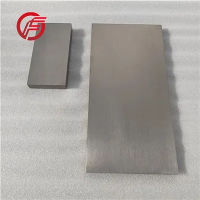
Now, let's talk about the different grades of niobium rods. We offer ASTM B392 UNS R04200 R04210 Pure Niobium Bar. These grades are known for their high purity and consistent quality. The density of these pure niobium bars is close to the standard density of niobium, around 8.57 g/cm³. However, small variations can occur due to factors like impurities and the manufacturing process.
It's also worth noting that the density of niobium can change under different conditions. For example, at extremely high temperatures, the atoms in the niobium rod start to vibrate more vigorously, which can cause the material to expand. As the volume increases while the mass remains the same, the density decreases. On the other hand, under high pressure, the atoms are pushed closer together, increasing the density.
If you're in the market for niobium rods, understanding the density is just one piece of the puzzle. You also need to consider other factors like the size, shape, and purity of the rod. At our company, we offer a wide range of niobium rods to meet different customer needs. Whether you're working on a small - scale electronics project or a large - scale aerospace application, we've got you covered.
We take pride in providing high - quality niobium rods at competitive prices. Our team of experts is always ready to help you choose the right product for your specific requirements. If you have any questions about the density of niobium rods or any other aspect of our products, don't hesitate to reach out. We're here to assist you every step of the way.
So, if you're interested in purchasing niobium rods for your project, get in touch with us. We can discuss your needs, provide samples if required, and give you a detailed quote. Let's work together to make your project a success!

References
- "Niobium: Properties, Applications, and Market Trends" - Journal of Materials Science
- "Aerospace Materials Handbook" - Aerospace Industry Association
- "Medical Implant Materials: A Review" - Journal of Biomedical Engineering