
Can I use a titanium elbow in high - temperature environments?
As a supplier of titanium elbows, I often receive inquiries from customers regarding the suitability of titanium elbows for high - temperature environments. This is a crucial question, as the performance of titanium elbows under high - temperature conditions can significantly impact the efficiency and safety of various industrial applications.
Titanium is well - known for its excellent corrosion resistance, high strength - to - weight ratio, and biocompatibility. However, its behavior at high temperatures is a complex topic that requires in - depth analysis.
Properties of Titanium at High Temperatures
Titanium has a relatively high melting point, around 1668°C (3034°F). This indicates that it can withstand high - temperature conditions to a certain extent. But as the temperature rises, several changes occur in its physical and chemical properties.
At elevated temperatures, titanium begins to react with oxygen in the air. This reaction forms a titanium oxide layer on the surface. While this oxide layer can provide some protection against further oxidation in mild conditions, at very high temperatures, the oxidation process can accelerate, leading to the degradation of the material.
The mechanical properties of titanium also change with temperature. As the temperature increases, the strength of titanium generally decreases. This reduction in strength can affect the structural integrity of the titanium elbow, especially if it is subjected to high pressure in addition to high temperature.
Applications in High - Temperature Environments
Despite the challenges posed by high temperatures, titanium elbows can still be used in certain high - temperature applications. For example, in some chemical processing plants, where the temperature may reach several hundred degrees Celsius, titanium elbows are used due to their corrosion resistance. In these environments, the ability of titanium to resist corrosion from various chemicals is more important than its high - temperature strength.
Another application is in aerospace. Although aerospace applications often involve extremely high - temperature conditions during re - entry or high - speed flight, titanium elbows are still used in some parts of the aircraft's hydraulic and fuel systems. These systems operate at relatively lower temperatures compared to the exterior of the aircraft, and the light weight and corrosion resistance of titanium make it an ideal material.

Factors Affecting the Use of Titanium Elbows in High - Temperature Environments
- Temperature Range: The maximum temperature that a titanium elbow can withstand depends on the grade of titanium. For example, Grade 2 titanium is commonly used in general applications and has a relatively good performance at moderate high temperatures. However, for extremely high - temperature applications, higher - grade titanium alloys may be required.
- Exposure Time: The longer the titanium elbow is exposed to high temperatures, the more likely it is to experience degradation. Continuous exposure to high temperatures can cause the oxide layer to thicken and the material to lose its strength over time.
- Atmospheric Conditions: The presence of oxygen, moisture, and other chemicals in the atmosphere can affect the oxidation process of titanium. In an oxygen - rich environment, the oxidation rate of titanium will be higher.
Comparing with Other Materials
When considering high - temperature applications, it is important to compare titanium elbows with other materials such as stainless steel and nickel - based alloys. Stainless steel is a common choice for high - temperature applications due to its relatively good high - temperature strength and corrosion resistance. However, titanium has a lower density than stainless steel, which can be an advantage in applications where weight is a concern.
Nickel - based alloys are known for their excellent high - temperature performance. They can withstand very high temperatures without significant loss of strength. But they are generally more expensive than titanium. Titanium elbows offer a balance between cost, weight, and performance in many high - temperature applications.
Our Titanium Elbow Products
We offer a wide range of titanium elbows, including ASME B16.9 90 Degree Gr12 Gr2 Titanium Elbows. These elbows are manufactured to meet the highest industry standards and are suitable for various applications, including high - temperature environments.
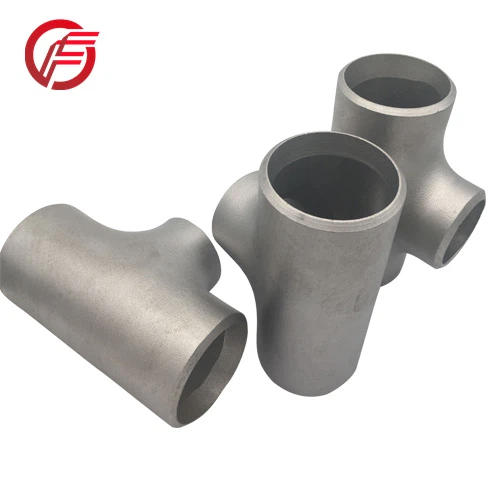
In addition, we also provide Grade 2 Titanium Straight Tee Pipe Tee Fittings, which can be used in conjunction with our titanium elbows to form a complete piping system.
We also offer Titanium Expansion Joint. These expansion joints are designed to absorb thermal expansion and contraction in high - temperature piping systems, ensuring the stability and safety of the system.
Conclusion
In conclusion, titanium elbows can be used in high - temperature environments, but careful consideration must be given to the specific temperature range, exposure time, and atmospheric conditions. Our company, as a professional titanium elbow supplier, can provide high - quality products and technical support to help you choose the most suitable titanium elbows for your high - temperature applications.
If you are interested in our titanium elbow products or have any questions about using titanium elbows in high - temperature environments, please feel free to contact us for further discussion and procurement negotiation.
References
- "Titanium: A Technical Guide" by John C. Williams
- "High - Temperature Materials and Their Applications" by Robert W. Cahn and Peter Haasen